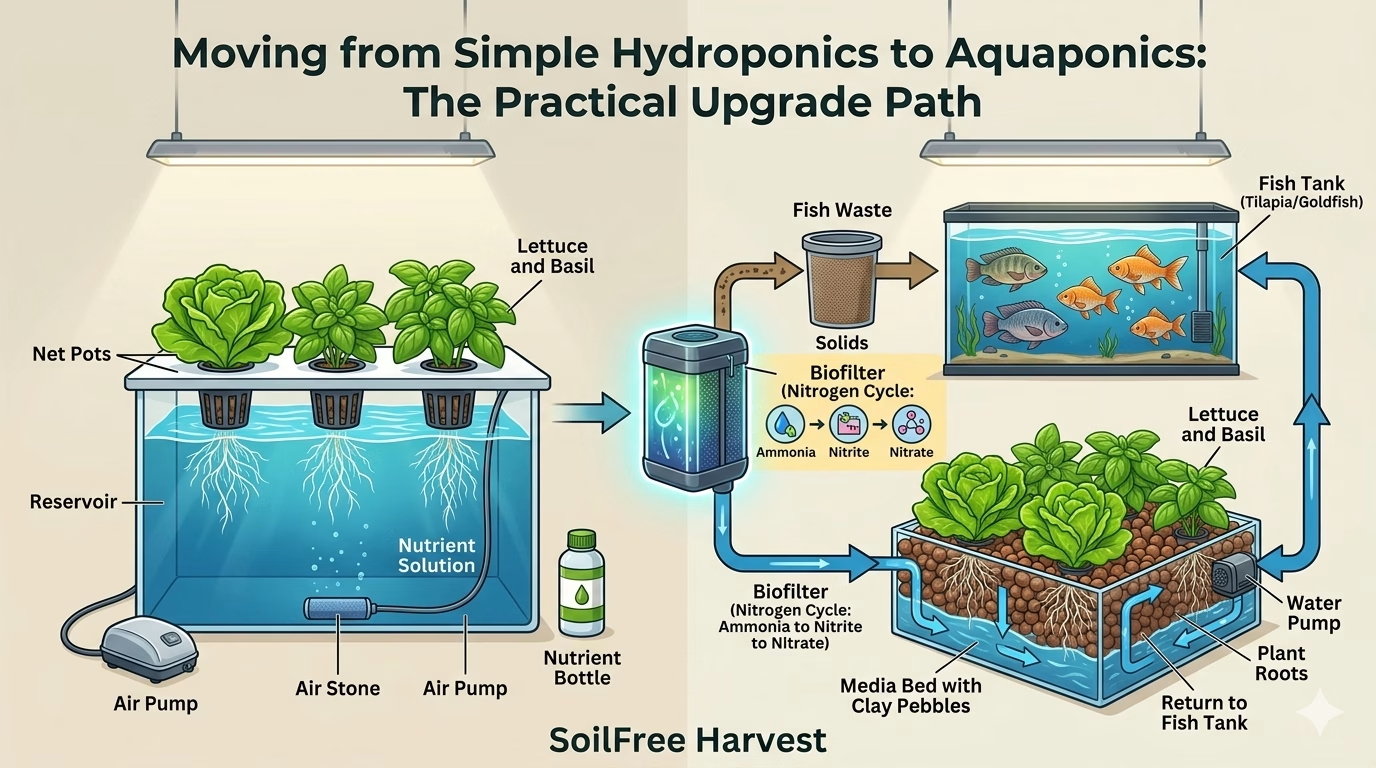
Moving from Simple Hydroponics to Aquaponics: The Practical Upgrade Path
If you already run a simple hydroponic system, going from hydroponics to aquaponics is the next logical upgrade when you want a living nutrient loop that uses fish waste instead of bottled fertilizer. The transition is very doable for beginners, but it works best when you move in stages rather than ripping out your hydro setup all at once.
TL;DR: Start with a stable hydroponic system, add biological filtration, then introduce fish only after the system cycles and pH stabilizes in the fish-safe range. In most home aquaponic systems, the sweet spot is a pH around 6.4 to 7.4, with many growers aiming for about 6.8 to 7.0 as a compromise between fish, plants, and bacteria.
What changes when you upgrade from hydroponics to aquaponics?
The biggest change is that nutrients stop coming from a bottle and start coming from fish waste that beneficial bacteria convert into plant-available nitrate. That means your reservoir becomes a small ecosystem instead of a purely controlled solution tank.
In hydroponics, you manage nutrient strength with EC and pH. In aquaponics, you still monitor water chemistry, but now ammonia, nitrite, nitrate, oxygen, and buffering capacity matter just as much as pH.
For many home growers, that is the real upgrade: less mixing fertilizer every week, but more attention to biology and water quality. The system can become more self-balancing over time, but it is less forgiving of neglect or sudden changes.
Why move to aquaponics at all?
Aquaponics makes sense when you want to combine food production with a more closed-loop style of growing. It can reduce fertilizer inputs, create a useful fish harvest, and support steady leafy-green production in small urban spaces.
The approach is especially attractive if you already enjoy hydroponics but want a more ecosystem-based setup. In my own DWC and hybrid-style trials, the most noticeable benefit has been steadier plant growth once the biofilter matures, along with less day-to-day fertilizer adjustment than a bottled nutrient system.
That said, aquaponics is not automatically easier. It is often more resilient once established, but the startup phase takes patience because you must cycle the biofilter before the system can carry a meaningful plant load.
How does aquaponics work?
Aquaponics links three living parts:
- Fish produce waste.
- Bacteria convert toxic ammonia into nitrite, then nitrate.
- Plants absorb nitrate and help clean the water.
This cycle depends on oxygen and a stable environment. The nitrification process consumes alkalinity and naturally pushes pH downward over time, so buffering and regular testing are important.
A good aquaponic system is not just a fish tank with plants attached. It needs mechanical filtration for solids, biological filtration for nitrifying bacteria, and a plant-growing section sized to match the fish load.
What hydroponic systems convert best to aquaponics?
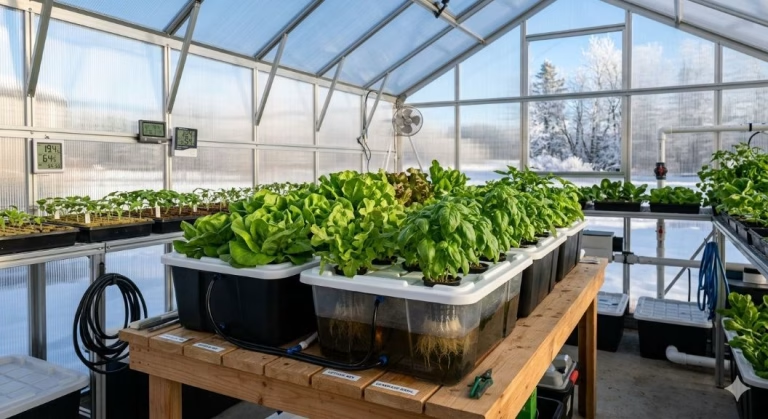
Some hydroponic systems adapt much more easily than others. Media beds are usually the easiest first step, raft systems are great for leafy greens, and NFT can work, but it is more clog-prone and less forgiving with organic solids.
Best system matches
| Hydroponic style | Aquaponics fit | Best crops | Main drawback |
|---|---|---|---|
| Media bed | Excellent | Herbs, greens, peppers, small tomatoes | Heavier, more plumbing volume |
| DWC / raft | Excellent | Lettuce, basil, bok choy, kale | Needs stronger solids filtration |
| NFT | Good with caution | Herbs, lettuce, small greens | Small channels clog more easily |
| Hybrid | Advanced | Mixed crops | More complex to design and tune |
For apartment gardeners, a compact media bed or small raft loop is often the easiest upgrade path. For hobbyists who already have a stable DWC setup, adding a proper biofilter and fish tank is often more practical than rebuilding everything from scratch.
Learn more about the different aquaponics systems: Aquaponics System Types Explained: Media Bed, Raft, NFT, and Hybrid
What should you grow first?
Start with plants that tolerate moderate nutrient levels and forgiving pH swings. Leafy greens are the safest first crops, especially lettuce, basil, spinach, kale, and bok choy.
Best crops by system type:
- Media beds: basil, mint, lettuce, kale, chard, peppers, dwarf tomatoes.
- Raft or DWC: lettuce, basil, spinach, bok choy, herbs.
- NFT: fast, light-rooted greens and herbs, with close monitoring.
- Advanced hybrids: fruiting crops after the system matures.
In practical terms, leafy greens often show useful harvests within 3 to 5 weeks once established, while fruiting crops need a stronger, more mature nutrient cycle.
What are the main pros and cons?
Aquaponics is excellent for growers who like a living system and are willing to test water regularly. It can be highly productive, but it is less plug-and-play than simple hydroponics.
Pros
- Lower dependence on bottled nutrients.
- Fish and plants share one recirculating loop.
- Great for leafy greens and herbs.
- Can be water efficient in small spaces.
- Strong educational value for families and hobby growers.
Cons
- More variables to monitor than hydroponics.
- Cycling can take several weeks.
- Fish health depends on stable water quality.
- NFT and small plumbing can clog more easily.
- Overfeeding or overcleaning can destabilize the biofilter.
For a more extensive comparison of hydroponics and aquaponics: Hydroponics vs Aquaponics: Water, Nutrients, and Complexity for Home Growers
What equipment do you need?
A simple starter aquaponics build needs a few core parts. You do not need a commercial-scale system to begin, but you do need reliable water movement and aeration.
Core equipment
- Fish tank or reservoir.
- Water pump.
- Air pump and air stones.
- Grow bed, raft tub, or NFT channels.
- Mechanical filter or solids removal stage.
- Biofilter or mature media surface.
- Net pots or plant holders.
- pH kit, ammonia test kit, nitrite test kit, nitrate test kit.
- Thermometer.
- Dechlorinator for tap water.
I have created a list of supplies on Amazon for an Aquaponics setup here: Dee’s Aquaponics Supplies to get Started (Affiliate Link)
Helpful extras
- Backup air pump.
- Test log or app.
- Buffering materials such as calcium carbonate or potassium bicarbonate.
- Shade cover or insulation if your room runs hot.
How to Convert a DWC or Simple Hydroponic System to Aquaponics
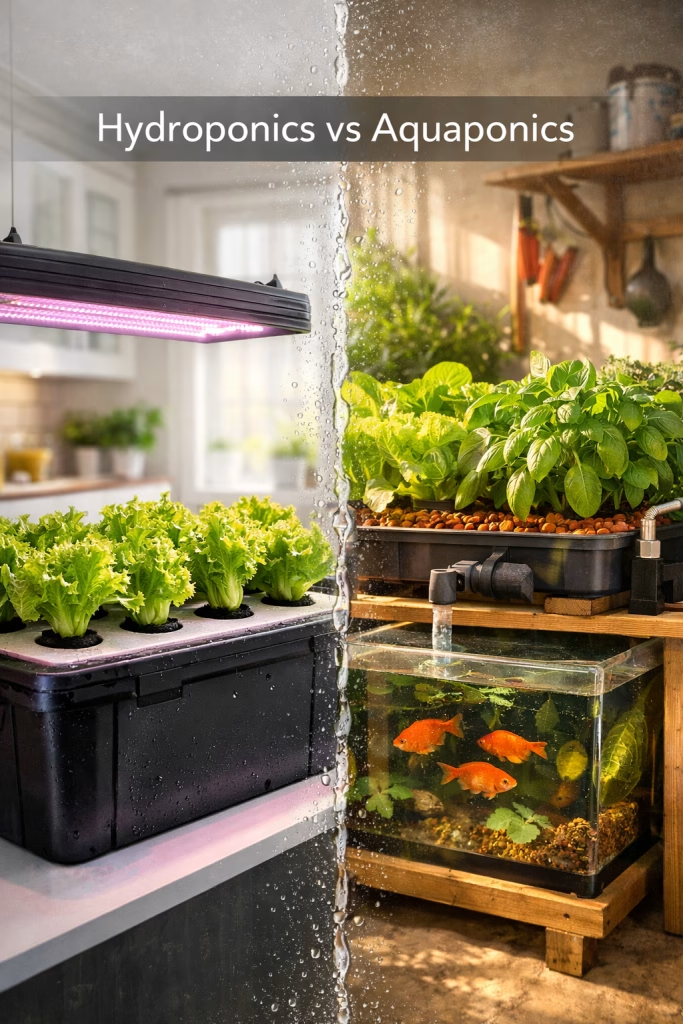
Description: This setup turns a basic recirculating hydroponic system into a fish-powered aquaponic loop by adding biological filtration, aeration, and a gradual cycling phase.
Materials/Tools:
- Existing hydroponic reservoir or grow system.
- Fish tank.
- Water pump and tubing.
- Air pump and air stones.
- Biomedia or grow media.
- Mechanical prefilter.
- Water test kit for pH, ammonia, nitrite, nitrate.
- Dechlorinator.
- Fish feed.
- Fish appropriate for your climate and local laws.
- Audit your current system.
Check how much water volume you already have, how water returns to the reservoir, and whether your current plumbing can handle solids. NFT-style lines often need more redesign than DWC or media beds. - Add a solids removal stage.
Fish waste is not the same as hydroponic nutrient salts, so suspended solids must be captured before they clog lines or smother roots. A simple swirl filter, screen filter, or settling chamber can make a big difference. - Install a biofilter.
Beneficial bacteria need surface area and oxygen to convert ammonia into nitrate. Media beds can serve as both plant support and biofiltration, which is why they are often the easiest transition system. - Fill with dechlorinated water and start circulation.
Chlorine and chloramine can damage bacteria, so treat tap water before beginning the cycle. Start pumps, air stones, and filtration before adding fish. - Cycle the system before stocking fish heavily.
Fishless cycling is the safest route for beginners because it lets bacteria establish without stress on animals. Many systems take roughly 2 to 6 weeks to cycle, depending on temperature, media, and whether you seed with established biofilm. - Introduce fish slowly.
Begin with a light stocking level and feed lightly at first. Common home-rule guidance often lands around 1 pound of fish for every 8 to 10 gallons in an established system, but that is a maturity target, not a launch target. - Match plant load to fish load.
Start with leafy greens and herbs rather than heavy fruiting crops. Young systems generally do best when plants are not demanding more nutrients than the fish population can supply. - Track pH, ammonia, nitrite, and nitrate daily at first.
The most workable pH compromise for fish, plants, and bacteria is often around 6.8 to 7.0, while a broader acceptable range is about 6.4 to 7.4. Ammonia and nitrite should stay near zero once the system matures. - Adjust gradually, not aggressively.
Aquaponics responds badly to big chemical swings. Small, steady corrections and patient observation work better than frequent heavy pH corrections or overfeeding.
What maintenance does aquaponics need?
The maintenance load is different from hydroponics, but not necessarily heavier once the system stabilizes. The main difference is that your routine focuses more on biology and less on nutrient mixing.
Weekly maintenance checklist
- Test pH, ammonia, nitrite, and nitrate.
- Check pump flow and air stone output.
- Remove solids from filters.
- Inspect roots for browning or slime.
- Feed fish conservatively.
- Top off evaporated water with dechlorinated water.
- Watch plant color and growth rate.
In my own hot-climate growing, systems tend to drift faster in summer because warmer water changes oxygen levels and can intensify ammonia toxicity if pH is too high. In indoor setups, consistent room temperature and strong aeration usually matter more than almost any other single factor.
What water numbers matter most?
Aquaponics runs best when you respect the chemistry instead of chasing perfect numbers. pH is the headline metric, but temperature, oxygen, and nitrogen forms are just as important.
Useful target ranges
| Metric | Practical home range | Why it matters |
|---|---|---|
| pH | 6.4 to 7.4, with 6.8 to 7.0 often ideal | Balances fish, plants, and bacteria |
| Ammonia | Near 0 ppm once cycled | Toxic to fish in excess |
| Nitrite | Near 0 ppm once cycled | Also toxic to fish |
| Nitrate | Present and plant-available | Main plant nutrient from fish waste |
| Oxygen | High and steady | Supports fish and nitrifying bacteria |
If you have ever run hydroponics with EC and pH only, aquaponics feels broader and more biological. You may still track EC in hybrid situations, but in pure aquaponics, nitrogen compounds and pH stability matter more than a nutrient-solution EC target.
What goes wrong most often?
Most aquaponics problems trace back to one of five issues: pH drift, ammonia spikes, nitrite spikes, low oxygen, or clogging from solids. Those are the first things to check when leaves yellow, fish gasp, or roots look unhealthy.
Common problems and fixes
- Ammonia rises: stop feeding, increase aeration, check whether the biofilter was disturbed, and test daily.
- Nitrite rises: reduce feeding, add salt only if appropriate for your fish species and system plan, and improve bacterial conditions.
- pH drifts down: the nitrification process consumes alkalinity, so buffering may be needed.
- Roots clog channels: enlarge filtration, clean solids catchers, and avoid undersized NFT plumbing.
- Plants look pale: the system may be understocked, immature, or lacking trace elements such as iron.
Is aquaponics harder than hydroponics?
At the start, yes. Once the system is cycled and stable, many growers find aquaponics easier to live with because fish waste continuously feeds the plants.
The tradeoff is control. Hydroponics gives you tighter nutrient precision, while aquaponics gives you a more natural loop with more biological variables to manage. For beginners, the best path is usually to master one stable hydroponic system first, then upgrade in a controlled way.
Best use scenarios
Aquaponics is best when your goals match the system strengths. It shines in home grow rooms, basements, garages, patios, and compact urban spaces where leafy greens and herbs are the main crop.
Best fit
- Apartment gardeners who want a compact edible setup.
- Hobbyists who already understand reservoirs, aeration, and pH.
- Families who want a learning-focused food system.
- Growers who prefer greens, herbs, and moderate fruiting crops.
- Indoor growers in controlled environments.
Not the best fit
- Growers who want exact nutrient control every day.
- People unwilling to test water regularly.
- Tiny NFT systems with narrow tubing and no solids management.
- Anyone who wants a fast, low-learning-curve setup.
FAQ
How much does it cost to upgrade to aquaponics?
A small DIY conversion can be relatively affordable if you already own tanks, pumps, and lights, but the cost rises quickly when you add proper filtration and backup aeration. Most home growers spend more on plumbing, test kits, and biofilter parts than they expect.
Is aquaponics harder than simple hydroponics?
It is usually harder at the beginning because you must cycle the system and balance fish health with plant growth. After that, many growers find it easier to maintain than mixing fertilizer every week.
How long does it take to cycle an aquaponics system?
A typical new system often takes about 2 to 6 weeks to cycle. Warmer water, seeded media, and established bacteria can speed it up, while cold water and poor aeration slow it down.
What plants are easiest for beginners?
Lettuce, basil, spinach, bok choy, kale, and mint are some of the easiest starter crops. They grow well in the nutrient profile created by fish waste and do not demand the heavy feeding that fruiting crops need.
What fish work best for home aquaponics?
Choose species that match your climate, tank size, and local regulations. The best fish are usually hardy, feed well, and tolerate moderate handling, but the exact choice depends on whether your system is indoors, outdoors, heated, or unheated.
What is the most common mistake new growers make?
Overfeeding fish is one of the fastest ways to destabilize the system. Another common mistake is adding fish before the biofilter is cycled, which leads to ammonia or nitrite spikes.
Can I use my existing hydroponic nutrients in aquaponics?
Pure aquaponics usually does not rely on bottled nutrient blends the way hydroponics does. Some growers use small supplements for trace elements, but the core nutrient engine should come from fish waste and bacterial conversion.
What pH should I keep aquaponics at?
A practical target is usually between 6.4 and 7.4, with many growers aiming near 6.8 to 7.0. That range tends to keep fish, plants, and nitrifying bacteria reasonably happy at the same time.
When will I see harvests?
Leafy greens can be ready in about 3 to 5 weeks once the system is established, while fruiting crops take longer and need a stronger nutrient base. The first real sign of success is often stable water chemistry, not the first harvest.
Author note
I write from hands-on experience with indoor and urban growing systems, including practical hydroponic setups in hot, dry Phoenix conditions and more seasonal growing in Central Michigan. That range taught me how much system design, aeration, and water management matter when you move from simple hydroponics into aquaponics. My focus is on beginner-friendly, space-efficient growing methods that work in apartments, basements, garages, and small backyard spaces.
Share this:

Discover more from Soil Free Harvest
Subscribe to get the latest posts sent to your email.






One Comment