Optimizing Photoperiod for Different Hydroponic Crops: A Beginner to Advanced Guide
Different hydroponic crops require different amounts of light exposure to thrive, flower, and produce fruit. By matching each plant’s natural photoperiod requirements, you can dramatically improve growth rates, shorten harvest cycles, and maximize yields indoors. The key is understanding whether your crop is a long-day, short-day, or day-neutral plant, then adjusting your grow lights and timers accordingly.
TL;DR: Most leafy greens and herbs perform best with 14-18 hours of light daily, fruiting crops typically need 12-16 hours, and photoperiod-sensitive plants like strawberries may require specific short-day conditions to flower. Use a simple timer and grow light to automate your lighting schedule.
What is Photoperiod and Why Does It Matter in Hydroponics?
Photoperiod refers to the duration of light exposure a plant receives in a 24-hour cycle. In nature, plants use day length as a seasonal signal to regulate flowering, fruiting, dormancy, and other growth stages. This phenomenon is called photoperiodism.
In hydroponic systems, you control photoperiod completely through artificial lighting and timers. Unlike outdoor gardens where day length changes seasonally, your indoor setup can deliver consistent light cycles year-round. This consistency allows you to replicate the ideal growing conditions for any crop, anytime.
Proper photoperiod management is one of the most powerful tools for indoor growers because it directly influences photosynthesis rate, plant development speed, and the timing of flowering and fruiting. Get it right, and you’ll see faster growth and more predictable harvests. Get it wrong, and plants may remain vegetative, bolt prematurely, or produce lower yields.
How Photoperiodism Works in Plants
Plants don’t simply count hours of light. Instead, they respond to the length of uninterrupted dark periods, using a protein called phytochrome to measure night length. This mechanism evolved to help plants predict seasonal changes and prepare for flowering, fruiting, or dormancy at the right time.
When plants receive light cues that match their evolved expectations, their metabolism aligns with their growth phase. For example, long-day plants grown under extended light periods show increased vegetative growth. Short-day plants kept under long light cycles may stay vegetative indefinitely and never flower.
The time of day light is delivered also matters for some crops. A night interruption (brief light flash during darkness) can signal a long day to some plants, even if the total light duration is short. This technique is used commercially to force early flowering in crops like poinsettias and chrysanthemums.
Long-Day vs. Short-Day vs. Day-Neutral Plants: Which Do You Have?
Understanding your crop’s photoperiod category is the foundation of successful indoor hydroponics.
Long-Day Plants
Long-day plants flower when exposed to more than 12 hours of light per day (or fewer than 12 hours of continuous darkness). These plants evolved in northern regions where summer days are long. Common hydroponic long-day crops include lettuce, spinach, chard, radishes, beets, carrots, and potatoes.
For long-day plants, use 16-18 hours of light daily to promote both vegetative growth and, when the time is right, flowering or bulb formation. In some cases like leafy greens, you keep them under long days to encourage leafy growth and delay bolting.
Short-Day Plants
Short-day plants flower when nights are long (more than 12 hours of uninterrupted darkness) or when day length is less than 12 hours. These plants evolved in tropical and subtropical regions. Examples include strawberries, chrysanthemums, poinsettias, and certain onion varieties.
For short-day crops grown in hydroponics, you typically run 12-14 hours of light daily to induce flowering and fruiting. If you’re growing short-day plants for vegetative biomass only (like growing young strawberry plants), you can use longer photoperiods.
Day-Neutral Plants
Day-neutral plants flower regardless of day length, as long as the plant reaches a certain age or size. Most fruiting crops grown hydroponically are day-neutral, including tomatoes, peppers, cucumbers, and beans. These plants give growers the most flexibility in photoperiod choice.
For day-neutral fruiting crops, a consistent 14-16 hour photoperiod works well throughout the growing cycle. Some growers use 18-24 hours during vegetative growth to maximize leaf development, then maintain steady 14-16 hours during flowering and fruiting.
Photoperiod Requirements by Crop Type
| Crop Type | Photoperiod Category | Recommended Hours | Notes |
|---|---|---|---|
| Lettuce | Long-day | 16-18 | 18-21 hours optimal for some varieties; shorter dark period reduces bolting risk |
| Spinach | Long-day | 14-16 | Higher light tends to delay bolting; good for commercial microgreens at 18+ hours |
| Chard | Long-day | 14-16 | Prefers consistent, steady lighting; tolerant of long photoperiods |
| Radish | Long-day | 12-14 | Matures quickly; can achieve harvest in 25-30 days under optimal conditions |
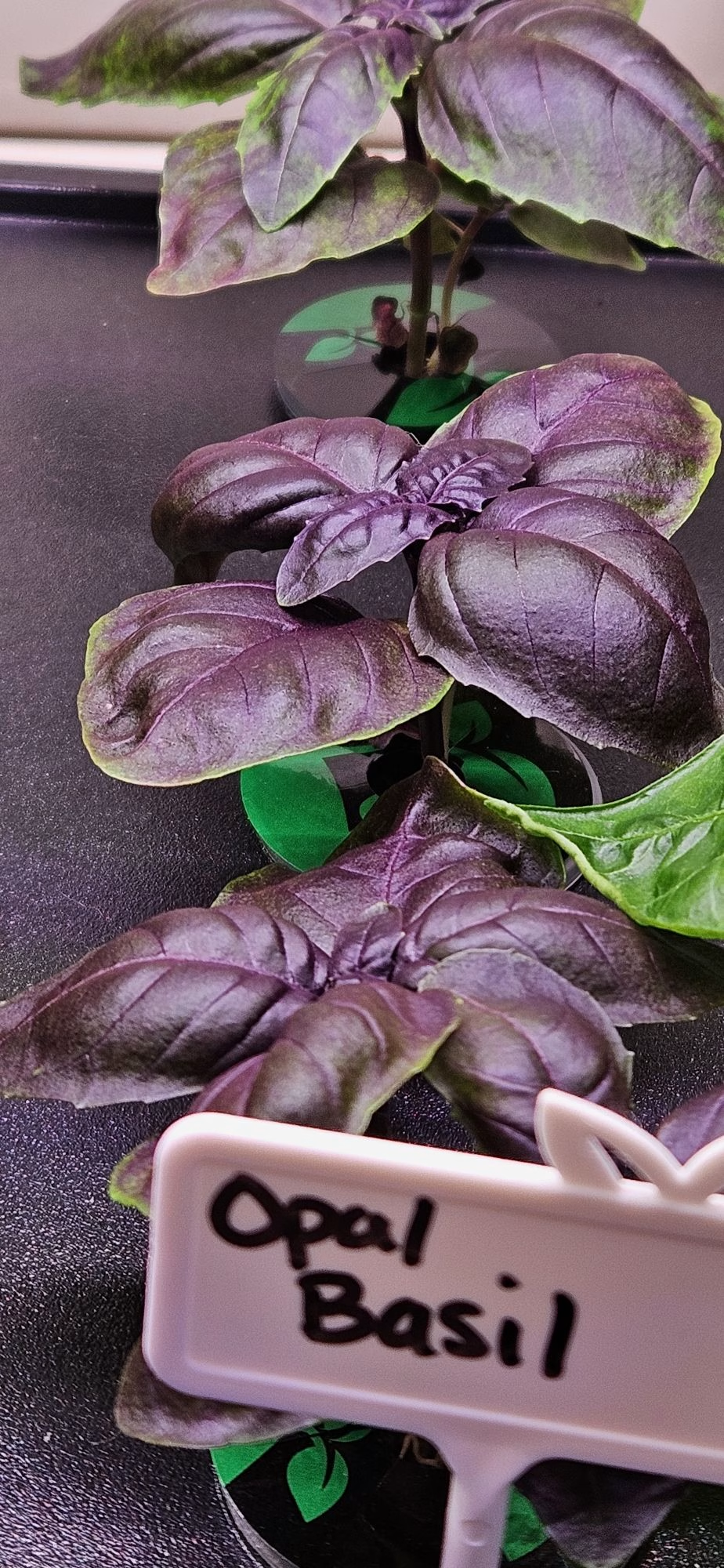
| Basil | Day-neutral | 14-16 | Highly productive; tolerates 12-24 hour range; faster growth with longer light |
| Chives | Day-neutral | 12-14 | Slower regrowth; maintain humidity and consistent nutrition |
| Microgreens | Varies | 10-18 | Most microgreens are day-neutral; 14-16 hours is standard; harvest in 10-12 days |
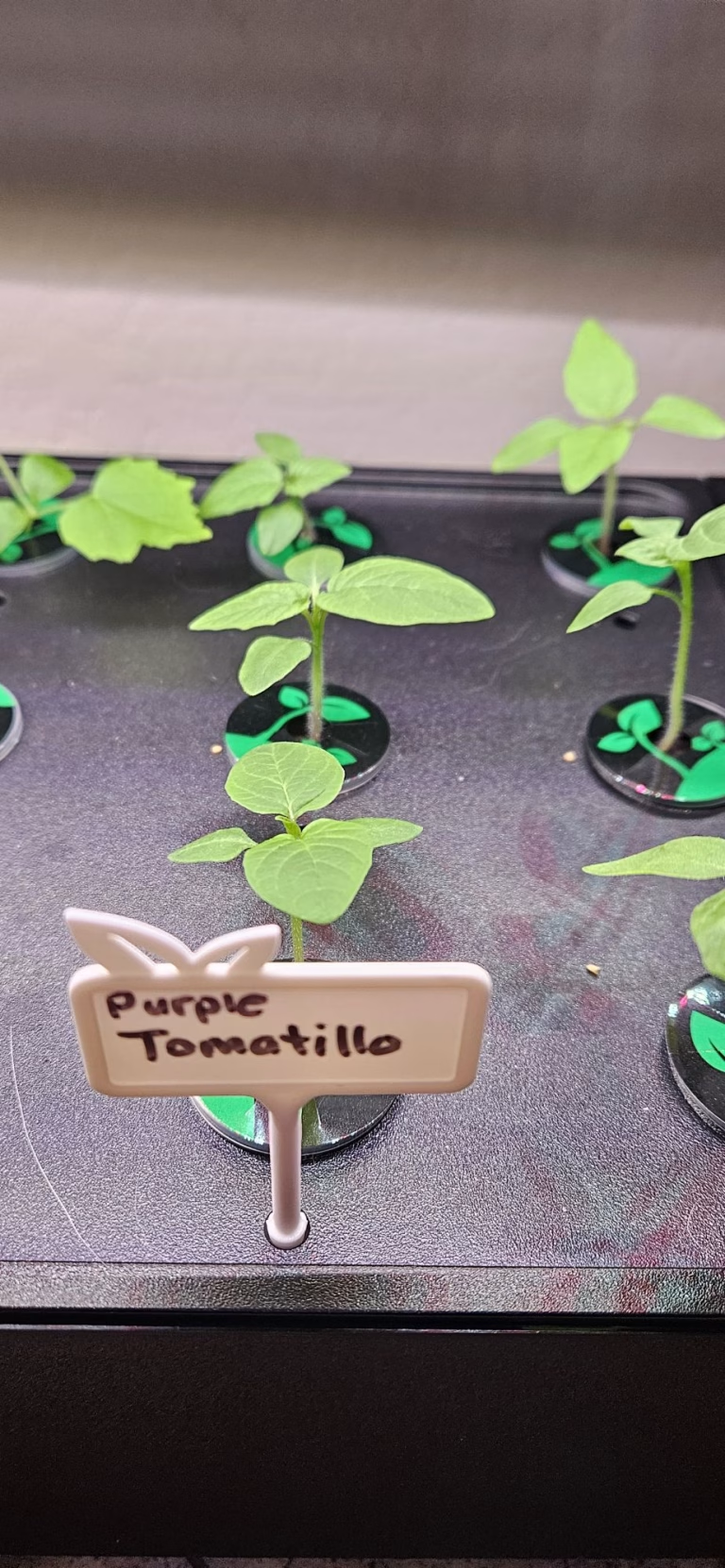
| Tomato | Day-neutral | 14-16 | Can handle up to 18-24 hours in vegetative phase; DLI >30 mol/m²/day required |
| Pepper | Day-neutral | 14-16 | Similar to tomato; benefits from longer photoperiods during vegetative growth |
| Cucumber | Day-neutral | 14-16 | Responds well to consistent lighting; higher light generally increases yield |
| Strawberry | Short-day | 12-14 | Requires short days to trigger flowering; challenging to force flower indoors |
| Bean | Day-neutral | 12-16 | Typically grown for vegetative leaves; tolerates wide photoperiod range |
[INTERNAL LINK: hydroponic basil growing guide → Complete Guide to Growing Basil Hydroponically]
Daily Light Integral (DLI): Beyond Photoperiod Hours
Photoperiod is only half the equation. Daily Light Integral (DLI) measures the total amount of light delivered over 24 hours, expressed in moles of light per square meter per day (mol/m²/day). Two systems with the same photoperiod but different light intensity will deliver different DLI values and produce different results.
For example, lettuce thrives under 14-21 mol/m²/day DLI. If your lights provide only 10 μmol/m²/s (photosynthetic photon flux density or PPFD), you’d need a 24+ hour photoperiod to hit that DLI target, which can cause stress. If your lights provide 40 μmol/m²/s, an 18-hour photoperiod gets you there easily.
High-light crops like tomatoes need 25-30 mol/m²/day. Low-light crops like mint and parsley thrive at 10-15 mol/m²/day. Most common hydroponic vegetables fall in the 12-20 mol/m²/day range.
To optimize photoperiod for your specific setup, measure your lights’ PPFD at canopy level using a PAR meter, calculate your current DLI, then adjust photoperiod (light duration) and/or light intensity (moving lights closer or using higher-powered fixtures) to hit your target DLI.
Photoperiod by Growth Stage
Most hydroponic crops benefit from different photoperiods at different life stages.
Seedling Stage (First 2-3 Weeks)
Seedlings are vulnerable and grow slowly. Extended photoperiods (16-18 hours) encourage strong, compact growth and prevent legginess (tall, weak stems). Many growers run 24-hour light for the first week or two, then drop to 16-18 hours as seedlings mature.
Some growers report that very short dark periods (4-6 hours) reduce stress on seedlings and allow roots to develop without slowing growth.
Vegetative Stage (3-8 Weeks Typical)
During this phase, plants focus on building leaves, stems, and roots. Long photoperiods (16-20 hours) maximize vegetative biomass. Many commercial hydroponic operations run 18-20 hours during vegetative growth to speed up the cycle and get to harvest faster.
Day-neutral fruiting crops (tomato, pepper) can handle 20-24 hours of continuous light if your nutrient and environmental management are solid. However, some growers believe plants need rest periods and use 16-18 hours to maintain long-term plant health and reduce stress.
Flowering and Fruiting Stage (4-12 Weeks, Depending on Crop)
This is where photoperiod becomes critical for photoperiod-sensitive plants (short-day crops).
For day-neutral fruiting crops like tomatoes and peppers, maintain 14-16 hours of light. Some high-production growers stay at 18+ hours throughout; others drop to 14-16 hours once flowering begins to reduce energy costs and stress.
For leafy greens and herbs, maintain the same long photoperiod (16-18 hours) throughout harvest to delay bolting and maximize leaf production.
For short-day crops like strawberries, switch to 12-14 hours to trigger flowering. If you keep strawberries under long days indefinitely, they’ll produce runners and vegetative growth but rarely flower.
Setting Up Your Photoperiod Control System
Required Equipment
Successful photoperiod management requires only a few inexpensive components:
- Grow lights: LED, HID, fluorescent, or any full-spectrum option suitable for your crop and space.
- Timer: A simple 24-hour mechanical or digital timer ($15-$30) plugs between your light and wall outlet. Digital timers offer 1-minute or 15-minute intervals; mechanical timers typically have 15-minute increments. For more advanced control, relay controllers allow multiple on/off cycles per day and cost $20-$200 depending on features.
- Reflective material or hood (optional): Maximize light efficiency by directing light downward. Mylar, white paint, or aluminum reflectors all work.
- PAR meter (optional but recommended): Measures light intensity at canopy level. Quantum sensors or PAR meters cost $100-$500 but allow precise DLI optimization.
LED grow lights for hydroponics comparison → Best LED Grow Lights for Indoor Hydroponics
Step-by-Step Photoperiod Setup
- Choose your crop and identify its photoperiod category (long-day, short-day, or day-neutral) and ideal photoperiod range.
- Calculate target DLI by researching your specific crop variety. Cross-reference with grow light specifications to estimate the light duration needed.
- Measure your lights’ PPFD at canopy level using a PAR meter (if available). Position lights at the distance recommended by the manufacturer.
- Set your timer: For most leafy greens and herbs, set 16-18 hours on / 6-8 hours off. For fruiting day-neutral crops, set 14-16 hours on / 8-10 hours off. For short-day plants destined to flower, use 12-14 hours on / 10-12 hours off.
- Program consistent on/off times: Plants respond best to consistent light schedules. Use the same wake and sleep times daily. For example, lights on at 6 AM, off at 10 PM (16 hours).
- Monitor and adjust: After 1-2 weeks, observe plant growth. If plants are stretching or pale, increase photoperiod or light intensity. If growth slows or leaves yellow, you may have too much light or insufficient nutrient uptake.
Photoperiod Best Practices for Apartment and Home Growers
Avoid Sudden Photoperiod Changes
Abrupt changes in photoperiod (e.g., extending day length by 4+ hours overnight) can stress plants, triggering a reactive oxygen species (ROS) response similar to a pathogen attack. Plants adapted to short days suddenly exposed to long days show reduced growth and stress markers.
If you need to adjust photoperiod, change it gradually (15-30 minutes per day) over a week or two to minimize stress.
Consistent Timing Matters More Than Duration
Plants perceive time through circadian rhythms. Keeping consistent on/off times (e.g., 6 AM to 10 PM) is more important than hitting an exact hour count. Irregular schedules stress plants and suppress growth.
Plan for Winter Daylight Changes
If your grow room has any natural light (e.g., a window), winter’s shorter days may disrupt your intended photoperiod. Use blackout curtains to block natural light and maintain your programmed schedule consistently year-round.
In Phoenix’s winter (Nov-Feb), natural daylight ranges from 9-10 hours. A 16-hour photoperiod indoor setup is fully independent of outdoor seasons.
Balance Photoperiod with Temperature and Humidity
Long photoperiods generate heat from lighting. In hot climates like Phoenix, 18-24 hour photoperiods may require active cooling (fans, exhaust, AC) to prevent heat stress. Short photoperiods (12-14 hours) reduce heat load but extend crop cycles.
Aim for 65-75°F during the day, 55-65°F at night. A 4-8 hour dark period helps plants cool down and recover.
High Photoperiods and Bolting Risk in Leafy Greens
Some operators run 24-hour continuous light for maximum productivity, but research shows this risks premature bolting and flowering in sensitive varieties like butterhead lettuce. A 16-18 hour photoperiod with a 6-8 hour dark period is safer for most home growers.
If you observe early bolting, reduce light intensity or photoperiod by 1-2 hours and monitor response.
Light Spectrum and Photoperiod: Do They Work Together?
Yes. Photoperiod (duration) and spectrum (color) are complementary tools.
Blue spectrum light (400-500 nm) promotes vegetative growth, compact stems, and chlorophyll production. Use higher blue during the seedling and early vegetative phases.
Red spectrum light (620-750 nm) promotes flowering, fruiting, and stem elongation. Red light also contributes more to photosynthesis on a per-photon basis.
For maximum efficiency, use a full-spectrum LED that blends red and blue. During vegetative growth, choose LEDs with a color temperature of 4000-5500K (more blue). During flowering, use warmer LEDs around 2700K or red-boosted supplemental lights.
Adjusting spectrum along with photoperiod is more powerful than adjusting photoperiod alone. For example, increasing red light + extending photoperiod to 16 hours dramatically accelerates flowering in day-neutral tomatoes compared to blue light + short photoperiod.
Photoperiod and Hydroponic System Type
Different hydroponic systems don’t require different photoperiods, but some systems are more sensitive to photoperiod errors.
Deep Water Culture (DWC)
In DWC, roots sit in nutrient solution with constant aeration. Longer photoperiods (18-24 hours) work well because the high oxygen availability supports fast growth even under extended light. DWC is forgiving; most photoperiod ranges (12-20 hours) produce good results.
Learn more about DWC → DWC Hydroponics or Build your Own DWC Bucket under $30
Nutrient Film Technique (NFT)
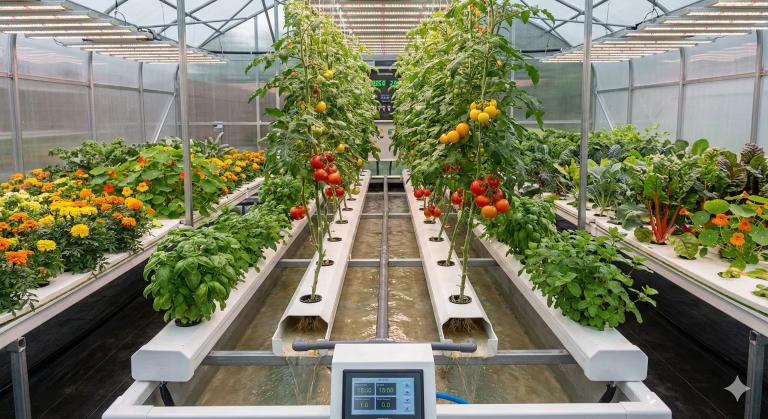
NFT relies on a thin film of nutrient solution flowing over roots. If photoperiod is too long and plants transpire heavily during extended light, the narrow nutrient channel may dry out, stressing roots. NFT is more sensitive to photoperiod-induced water stress than DWC.
Use 14-16 hours for NFT systems and monitor water levels carefully, especially during day cycles.
Learn more about NFT → All about NFT Systems
Ebb and Flow (Flood and Drain)
Ebb and flow cycles roots through flooded and drained periods, mimicking a natural wetting/drying rhythm. This system is flexible and tolerates photoperiods from 12-20 hours well. The built-in drying periods reduce waterlogging stress even under long photoperiods.
Learn more about Ebb & Flow Systems → Complete Guide to Ebb & Flow
Drip Systems
Drip systems deliver nutrients directly to the root zone. Long photoperiods work well as long as irrigation timing aligns with light cycles. If lights are on 18 hours but drip cycles are 12 hours, roots may dry out during extended light. Coordinate photoperiod with irrigation frequency.
Common Photoperiod Mistakes and How to Fix Them
Problem 1: Plants Stretching, Pale Leaves, Slow Growth
Cause: Insufficient light (too low PPFD or too short photoperiod).
Fix: Increase photoperiod by 2-3 hours, move lights closer (if safe for crop), or upgrade to higher-wattage lights. Measure DLI to confirm light levels are adequate for your crop.
Problem 2: Yellowing Leaves, Leaf Burn, Curling
Cause: Excessive light stress or photoperiod-induced stress.
Fix: Reduce photoperiod by 2-3 hours, move lights farther away, reduce light intensity, or gradually extend dark period. Check that light quality (spectrum) is appropriate for the growth stage.
Problem 3: Premature Bolting in Leafy Greens
Cause: High temperature + extended photoperiod, or light intensity too high.
Fix: Reduce photoperiod to 14-16 hours, lower temperature to 65-68°F, reduce light intensity slightly, or increase humidity. Bolting is also triggered by age, so harvest sooner if it’s a persistently early-maturing variety.
Problem 4: No Flowering in Short-Day Crops (e.g., Strawberries)
Cause: Photoperiod too long (>14 hours) for plants requiring short days.
Fix: Reduce photoperiod to 12-14 hours and maintain for at least 2-4 weeks. Ensure night temperature is 5-10°F cooler than day to support floral induction.
Problem 5: Low Yields Despite Good Plant Size
Cause: Photoperiod and DLI are too low for energy-intensive fruiting.
Fix: Increase photoperiod to 16-18 hours, boost light intensity (higher PPFD), and verify DLI meets crop requirements (tomatoes and peppers need 25-30 mol/m²/day). Also check nutrient strength and water quality.
Problem 6: Timer Malfunction or Drift
Cause: Timer battery died, power outage reset clock, or mechanical slider wore out.
Fix: Use a digital timer with battery backup to prevent time loss during power outages. Check timer settings weekly. For critical commercial setups, invest in a relay controller with redundancy.
Photoperiod Optimization for High-Yield Hydroponics
If you’re aiming to maximize yield per square foot, photoperiod tuning is one of the highest-ROI adjustments.
Research Your Exact Variety
Different lettuce varieties have different photoperiod optima. Some bolt at 16 hours; others thrive at 18+ hours. Before scaling up, run a small trial with your intended seed supplier’s recommendation.
Research shows that for many butterhead lettuce varieties, a 16-18 hour photoperiod with a 6-2 hour dark period (or 16/2 vs 16/8 split) produces 20-30% more biomass than traditional 16/8 schedules.
Measure DLI, Not Just Hours
Growers who optimize DLI see faster cycles and higher yields than those who optimize photoperiod alone. A crop receiving 14 mol/m²/day DLI over 18 hours will outperform one receiving the same 18 hours but only 8 mol/m²/day DLI.
Invest in a PAR meter ($100-$300) and track DLI weekly. Adjust photoperiod or intensity to hit your target range, then monitor yields over multiple crops to find your optimal sweet spot.
Stagger Photoperiods for Continuous Harvest
If you have multiple grow areas or shelves, run different photoperiods on each to spread demand for nutrients, cooling, and lighting. For example, grow one section on 14/10, one on 16/8, and one on 18/6. This staggered approach can increase total throughput by 15-25%.
Vertical farming setup → Multi-Tier Hydroponic Growing: Maximizing Yield in Apartment Spaces
Troubleshooting: Photoperiod Issues in Different Seasons
Winter
Natural daylight is 9-10 hours in Phoenix. Block all window light with blackout curtains, or your indoor photoperiod will be contaminated by stray light. Stray light of 50+ lux during intended darkness can reset plant clocks and disrupt cycles.
If heat is not a concern, winter is ideal for running longer photoperiods (18-20 hours) since ambient temperature is cool. Cooling costs drop.
Summer
Outdoor heat makes cooling critical. If your grow room is not sealed and air-conditioned, 18+ hour photoperiods may push temperature above 80°F, stressing plants and reducing yield. Stick to 14-16 hours in summer, run lights during cooler morning/evening hours, or invest in active cooling.
Spring and Fall
Moderate temperatures allow flexibility. Most growers run 16-18 hours during these seasons for balanced growth speed and energy efficiency.
Equipment Recommendation: Timers and Controllers for Photoperiod Management
Budget-Friendly Option: Mechanical or Basic Digital Timer ($15-$30)
A simple dual-outlet timer from brands like Autopilot or Hydrofarm plugs into the wall and controls two circuits independently. Perfect for home growers running one or two light fixtures. Mechanical timers use 15-minute pin increments; digital timers offer 1-minute precision.
Pros: Cheap, reliable, no batteries needed (mechanical).
Cons: Limited to one or two on/off cycles per day; won’t back up settings if power outages occur (mechanical models).
Mid-Range Option: Digital Timer with Battery Backup ($20-$50)
Brands like Titan Controls Apollo series offer digital timers with backup batteries, daylight-saving mode, and up to 8 on/off cycles per day. Good for running complex photoperiods (e.g., night interruption lighting).
Pros: Flexible scheduling, battery backup, affordable.
Cons: Still limited to basic schedules; overkill if you only need on/off once per day.
Advanced Option: Relay Controller ($100-$300)
Relay controllers like Titan Controls Apollo 11 or LTL Controls Master 8 offer complete light management with multiple on/off cycles, temperature sensors, humidity sensors, and phone app integration (some models). These allow precise DLI control and seasonal adjustments.
Pros: Professional-grade accuracy, integrates with environmental sensors, can run unlimited schedules.
Cons: Higher cost; steeper learning curve for beginners.
For home growers, a basic digital timer is usually sufficient. Upgrade to a relay controller only if you’re running multiple systems or want advanced environmental integration.
FAQ Section: Photoperiod Questions Home Growers Ask
How many hours of light do lettuce plants need in a hydroponic system?
Most lettuce varieties thrive under 16-18 hours of light per day. Some research suggests 18-21 hours is optimal for biomass production, but this risks slight premature bolting in some varieties. A safe starting point is 16-18 hours with a 6-8 hour dark period. If bolting becomes a problem, reduce to 14-16 hours and monitor whether growth slows or improves.
Can I run my grow lights 24 hours a day?
Yes, many growers run 24-hour continuous light without issues, especially in seedling and vegetative phases. However, some plants may experience stress, and 24-hour schedules offer no energy cost savings since lights never turn off. For most home growers, 16-18 hours is the sweet spot: almost maximal growth with a brief rest period and modest energy savings.
Leafy greens tolerate 24/0 well; short-day crops like strawberries do not.
What happens if I forget to turn off my grow lights?
If your lights stay on for one night longer than planned (25-26 hours instead of 18), most crops will recover without issue. A single extended photoperiod is not enough to reset plant clocks. However, if you run irregular schedules for days or weeks, plants will become confused, stress levels rise, and growth slows.
Use a reliable timer to prevent accidents.
Do I need different photoperiods for different plants in the same grow room?
Yes, if those plants have conflicting photoperiod requirements. A 16/8 lettuce cycle and a 12/12 strawberry cycle cannot run in the same room under the same lights. Solution: divide your grow room into two zones with separate timers and lights, or pick compatible crops (e.g., all day-neutral crops at 16/8, or all long-day plants at 18/6).
How long does it take to see results after adjusting photoperiod?
Most hydroponic crops show visible growth changes within 3-7 days of photoperiod adjustment. Photosynthesis rates respond immediately, but biomass changes take a week or two to show. If adjusting from 12 to 18 hours, you should see noticeably faster leaf expansion by day 5-7.
For photoperiod-sensitive plants (e.g., short-day crops), the shift to flowering/fruiting may take 2-4 weeks of consistent new photoperiod before flower buds appear.
Will a longer photoperiod increase my electricity bill significantly?
Yes. Light accounts for 40-60% of electricity use in indoor hydroponics. Running 24 hours instead of 16 hours increases that cost by 50%. Running 18 instead of 16 hours is a 12.5% increase.
Balance photoperiod against your energy budget and climate. In cool climates, long photoperiods save cooling costs. In hot climates, shorter photoperiods reduce overall energy use.
Can I use a standard household outlet for my grow lights?
Most standard US household outlets are 15A, 120V circuits, supporting up to 1800W continuous draw. A single LED grow light fixture (150-300W) is fine. Two large LED fixtures or an HID lamp can exceed safe limits.
Check your light’s wattage. If over 1500W, use a dedicated circuit or consult an electrician. Never overload a single outlet.
What’s the best photoperiod for growing microgreens indoors?
Microgreens are day-neutral and grow fastest under 14-18 hours of light daily. Most microgreens are harvested in 10-12 days, so photoperiod doesn’t influence flowering. A standard 16-hour photoperiod is efficient and safe.
Some growers use 18-24 hours to speed up the already-short harvest window by 1-2 days. The energy cost is small since microgreens are grown in shallow trays and don’t demand high light intensity.
Do I need to adjust my photoperiod seasonally if I’m growing indoors?
No, not required. Indoor hydroponic systems are fully controlled and independent of outdoor seasons. You can maintain the same photoperiod (e.g., 16 hours) year-round.
However, some growers adjust for energy efficiency: longer photoperiods in winter when cooling isn’t needed, shorter in summer to reduce heat and cooling load.
What’s the difference between photoperiod and “day length”?
Photoperiod is the duration of light in a 24-hour cycle controlled by you (e.g., 16/8). Day length is the natural duration of daylight at a given latitude and time of year (e.g., 10 hours in Phoenix in December). Indoor growers set photoperiod independent of natural day length using timers and lights.
How-To: Setting Up a Hydroponic Photoperiod Controller
Overview
This guide walks a beginner through installing a timer-controlled photoperiod for a simple home hydroponic system (DWC or NFT).
Materials and Tools
- Grow light fixture (LED or HID) and bulb
- Timer (mechanical or digital, dual-outlet preferred)
- Extension cord (grounded, 14 AWG minimum)
- Power strip (optional, for multi-outlet convenience)
- Blackout curtains or tarps (to block stray light)
- Tape measure
- Small screwdriver (if mounting curtain rails)
Steps
Step 1: Choose Your Timer and Outlet Location
Select a timer that fits your photoperiod needs. If running a single 16/8 on/off cycle daily, a basic dual-outlet mechanical timer is sufficient ($15-25). Position the timer near a safe outlet, away from water or humidity. Avoid outlets with other high-draw appliances.
Step 2: Plug the Timer into the Wall Outlet
Ensure the outlet is grounded (three holes). If using an older two-hole outlet, consult an electrician before proceeding. Insert the timer’s plug fully into the wall outlet and ensure the indicator light (if digital) comes on.
Step 3: Set the Current Time on the Timer
For a digital timer, set the current time using buttons. For a mechanical timer, rotate the 24-hour dial so the current hour marker aligns with the clock hand. Accurate time setting is critical for consistent photoperiods.
Step 4: Program Your Desired On/Off Times
Decide your photoperiod. For lettuce, use 6 AM to 10 PM (16 hours) has proven to be perfect for my setup. Set the timer to turn the light ON at 6 AM and OFF at 10 PM. Most timers have “on” and “off” setting buttons or pin sliders for each time.
Step 5: Connect Your Grow Light to the Timer
Plug the grow light’s power cord into one of the timer’s outlets (usually the “controlled” outlet, not the “always on”). The timer now controls the light’s on/off schedule. The other outlet (always-on) can power fans, pumps, or air stones if needed.
Step 6: Verify Functionality
Wait until the programmed on-time approaches (or manually advance the timer to test). The light should turn on at the set time. Wait for the off-time; the light should turn off. If not, recheck timer settings or try a different outlet on the timer.
Step 7: Install Blackout Barriers
If your grow room has windows or exterior light, install blackout curtains or tarps to prevent stray light from interfering with your programmed dark period. This is especially important for light-sensitive crops like short-day plants.
Step 8: Mount Your Grow Light at Optimal Height
Position the light above your plants at the distance recommended by the manufacturer (typically 12-24 inches for LED, depending on wattage). Ensure the light is stable and will not fall. Use hanging chains or a light rail if available.
Step 9: Monitor for One Week
Run the system for 7 days without plants to ensure the timer is reliable and the light is functioning. Check that the light turns on and off at the programmed times consistently.
Step 10: Add Plants and Observe Growth
Begin your photoperiod cycle with seedlings or young plants. After 7-10 days, observe growth rate, leaf color, and stem thickness. Adjust photoperiod or light intensity based on these observations (see troubleshooting section).
Tips
Use a reliable digital timer with battery backup if power outages are common in your area. Battery-backed timers retain settings during outages.
For a more advanced setup, replace the timer with a relay controller to automate multiple on/off cycles per day or integrate temperature and humidity sensors.
If running a 24-hour photoperiod trial, monitor plant stress (leaf curling, discoloration) and stop if symptoms appear.
Test your blackout barriers by entering the dark space during “off” time and confirming no light leaks exist. Even 50 lux of stray light during darkness can disrupt plants sensitive to day length.
Author’s Note
I’ve spent years experimenting with indoor hydroponics in Phoenix’s hot, dry climate. Through hundreds of crop cycles across DWC, NFT, and Kratky systems, I’ve learned that photoperiod is one of the highest-leverage variables a home grower can control. Dialing in the right light schedule for each crop has cut my cycle times by 15-25% and eliminated bolting problems that plagued my early attempts. Whether you’re growing lettuce in a closet, peppers in an apartment, or herbs on a sunny shelf, mastering photoperiod transforms inconsistent results into predictable, thriving harvests. Start with the crop-specific guidance in this guide, measure your DLI with a PAR meter if possible, and don’t hesitate to run small trials before scaling up. Your plants will reward precision.
Share this:

Discover more from Soil Free Harvest
Subscribe to get the latest posts sent to your email.







2 Comments