Hydroponic Apartment Garden: Vertical Systems for Balconies and Small Spaces
A hydroponic apartment garden is absolutely realistic on a balcony, windowsill, closet, or spare room, as long as you respect weight limits, manage water and electricity, and match the system size to your space. With vertical systems like towers, NFT rails, and rack farms, you can grow 50 to 100+ plants in under 10 square feet while keeping neighbors and landlords happy.
TL;DR: Start small with a compact vertical or DWC system rated for indoor use, verify your balcony or room can safely handle the weight, and focus on fast-turn crops like leafy greens, herbs, microgreens, and strawberries instead of large fruiting plants.
What is a hydroponic apartment garden?
A hydroponic apartment garden is a soilless growing setup built for tight spaces like balconies, windowsills, and spare rooms, using nutrient-rich water instead of heavy pots of soil. It is especially space efficient and uses less water than traditional soil gardening, which is why it is so popular for small indoor and urban environments.
Most apartment systems use one of a few formats: deep water culture (DWC) buckets, small Aerogarden-style all-in-one units, vertical towers, NFT (nutrient film technique) rails, or rack systems with LED lights. Because these systems concentrate lots of plants into a compact footprint, they are ideal for balconies and tiny rooms where floor space is at a premium.
How should you assess your apartment or balcony space?
Before buying anything, treat your space like a mini site survey: check structure, light, power, and rules. This prevents expensive mistakes like overloading a balcony or installing more lighting than the circuit can safely support.
How do you evaluate a balcony for hydroponics?
Most residential balconies in North America are designed for a specific live load per square foot, but the exact number varies by building age, height, and construction. The only safe answer is to confirm with your landlord, HOA, or building management instead of guessing.
Key balcony checks:
- Weight capacity: Add up system weight including full reservoirs, plants, and any containers, then stay well below the limits your building confirms and cluster heavier items closer to structural walls or columns where slabs are strongest.
- Wind exposure: Higher floors and corner units see stronger, more turbulent winds that can tip tall towers, so plan for anchoring and windbreaks.
- Sun hours: Track direct sun on the balcony over a clear day; full sun balconies can run passive outdoor systems, while shaded balconies will often need grow lights.
- Water management: You need secure drainage so spills do not drip onto neighbors or cause structural moisture issues.
- Rules: Many leases restrict fixtures, railing-mounted items, and visible equipment; get written approval for anything bolted, plumbed, or visible from the street.
How should you assess a windowsill or interior window?
South-facing windows in the northern hemisphere collect the most light and are ideal for low-profile Kratky jars, mini DWC tubs, or desktop systems. East or west windows can still work but may need supplemental lighting in winter or for light-hungry crops.
For windowsill setups:
- Measure sill depth so jars or trays sit securely without overhanging.
- Check for drafts or hot glass that can stress roots and foliage.
- Plan for a small clip-on or bar-style LED grow light for winter or cloudy periods.
What about closets, spare rooms, and garages?
Closets and spare rooms are ideal controlled environments, especially in hot or cold climates where outdoor conditions swing hard. With a closed room you can control light cycles, temperature, and humidity much more precisely than in a living room or open-plan space.
Key checks for enclosed spaces:
- Electrical capacity: A typical 15 amp 120 volt circuit can only safely support a limited continuous wattage once other devices on the same circuit are considered, so budget for lights, pumps, fans, and dehumidifiers together.
- Ventilation: Closed rooms need an exhaust path or at least a cracked door and small fan to avoid mold or heat buildup.
- Water access: Short hose runs or nearby sinks reduce mess and make top-ups and reservoir changes far easier.
Which hydroponic systems fit each apartment space size?
Here is how common apartment spaces map to practical hydroponic system choices.
What systems work in 2–5 square feet?
For a balcony corner, small landing, or windowsill plus a tiny stand, focus on ultra-simple systems:
- Kratky jars or totes:
- Mason jars or food-grade containers with net cups and static nutrient solution for 4 to 6 plants.
- Zero pumps, ideal for leafy greens and herbs that finish in 30 to 40 days.
- Single-bucket DWC:
- One 3 to 5 gallon bucket with an air pump and stone, good for 1 to 3 larger plants or a small cluster of lettuce heads.
- Aerogarden-style all-in-one:
- Enclosed countertop units with integrated LED, pump, and timer, perfect for renters who want a plug-and-play experience.
Kratky method guide → complete beginner guide to Kratky hydroponics
DWC bucket tutorial → how to build a single bucket DWC system
What systems fit 5–10 square feet?
If you can dedicate a balcony corner plus a windowsill, or a short wall indoors, you can step into real vertical production:
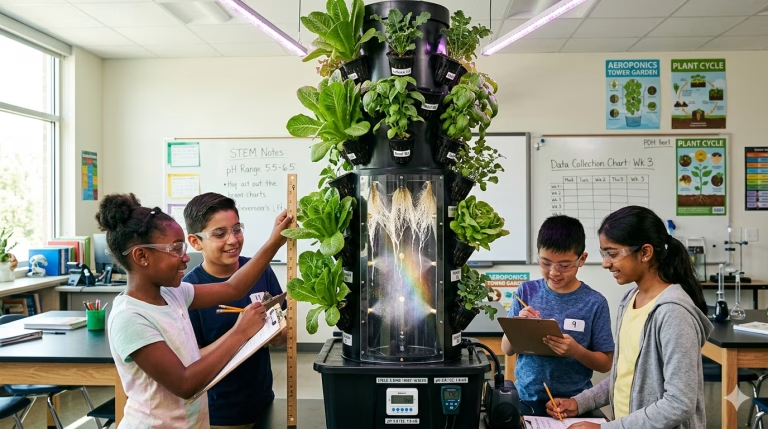
- Vertical towers (50–100 plants): Stacked columns or pocket towers can host dozens of leafy greens, herbs, and strawberries in about 3 square feet of floor space.
- Vertical NFT rails: Two to four stacked horizontal channels fed from a single reservoir, ideal for uniform crops like lettuce or basil.
- Compact drip systems: A small frame or shelf with drip emitters feeding each site, recirculating back into a reservoir.
What works in 10–20 square feet?
For a spare room corner, small garage bay, or walk-in closet, think in terms of rack farming:
- Multi-tier rack systems:
- Metal shelves plus LED bars on each tier can support several shallow trays for leafy greens or microgreens.
- DWC arrays (9–16 buckets):
- Linked bucket systems sharing a central reservoir, better for consistent nutrient management when growing larger plants.
What about 20+ square feet and rooftops?
On a larger private rooftop or big terrace, you can move toward semi-commercial production:
- Dense vertical towers: Multiple towers fed from a central reservoir to grow 50+ heads of greens or strawberries at a time.
- Long NFT runs: Longer channels are possible as long as slopes, flow rates, and return paths are designed correctly.
- Modular drip tables: Tables with multiple irrigation lines can support high-density leafy greens or herbs in net cups or small pots.
NFT system design → Complete Guide to NFT Hydroponics Systems
Space size and system pairing table
| Space size | Typical location | Recommended system types | Approx plant count per cycle |
|---|---|---|---|
| 2–5 sq ft | Balcony corner, sill | Kratky jars, 1-bucket DWC, small countertop unit | 4–12 |
| 5–10 sq ft | Balcony plus windowsill | One tower, short NFT rail, compact drip frame | 30–100 |
| 10–20 sq ft | Closet, spare room, garage | 2–3 tier rack, DWC bucket array | 40–150 |
| 20+ sq ft | Rooftop, large terrace | Multiple towers, long NFT, semi-commercial drip | 100+ |
What unique challenges do apartment hydroponic gardens face?
Hydroponic systems in apartments face constraints that backyard greenhouses do not: limited structural capacity, neighbors on every side, and tight power and water access. Each of these has straightforward mitigation strategies.
How do you manage system weight safely?
Water is heavy at roughly 8.3 pounds per gallon, and reservoirs plus hardware add up quickly. Residential balconies for smaller buildings are often designed around a specified pounds per square foot rating, while higher capacity structures and newer codes may be rated higher, but you should always verify instead of assuming.
Weight control strategies:
- Use thinner vertical reservoirs or distributed smaller buckets instead of one large tank on a balcony.
- Spread systems along walls instead of concentrating everything at the outer edge of a cantilevered slab.
- Choose lightweight plastics and composites instead of filled ceramic or concrete wherever possible.
- Consider placing the reservoir indoors just inside the balcony door to offload some weight to the interior slab.
How do you deal with wind and vibration on balconies?
Balconies and rooftops often experience higher wind speeds than ground-level gardens, which can topple vertical systems or stress mounts. Wind also dries out plants faster, increasing irrigation needs.
Mitigation tips:
- Anchor towers and NFT frames to balcony walls or railings with brackets, or use broad, weighted bases for freestanding systems.
- Install semi-permeable windbreaks such as mesh screens, slatted panels, or bamboo screens to reduce wind speed behind them.
- Choose compact, low-profile varieties rather than tall, top-heavy plants in the windiest spots.
How can you prevent water spills and leaks?
Because even a small leak can drip onto neighbors or damage building materials, containment is non-negotiable. Hydroponic systems that recirculate nutrient solution also need stable water levels to protect pumps.
Best practices:
- Set all reservoirs and towers inside waterproof trays or plant boot trays sized to hold at least several gallons.
- Use mechanical float valves or overflow lines to route excess water back to a secondary container instead of onto the floor.
- Test every new setup with plain water for 24 hours before adding nutrients or plants.
How do you reduce pump and fan noise?
Small air and water pumps hum, and thin apartment walls can amplify vibration. Quiet operation matters if you share walls, ceilings, or floors with neighbors.
Noise reduction tips:
- Select pumps with low decibel ratings and slightly oversize them so you can run them at reduced output where possible.
- Place pumps on dense foam pads or rubber feet to decouple vibration from floors and walls.
- Use timer-based irrigation (for drip or NFT) so pumps cycle instead of running constantly when crops allow it.
What are the key electrical considerations?
Most apartments have 120 volt circuits rated at 15 or 20 amps, and you must treat the entire circuit, not just a single outlet, as the limit. Grow lights are usually the largest draw, with pumps and fans being modest.
Electrical safety:
- Add up nameplate wattage for lights, pumps, and fans, and target no more than about 80 percent of the circuit’s safe capacity.
- Use quality power strips with surge protection and integrated switches, and keep all power strips and plugs elevated away from water.
- Keep extension cords as short as possible and avoid chaining strips.
How should you handle landlord and HOA rules?
Leases and HOA bylaws often restrict modifications, visible changes, or plumbing and electrical work. Many specifically mention balconies and façades.
Good practices with property managers:
- Ask for written permission before drilling into walls, slabs, or railings.
- Offer a restore on move-out commitment, including patching holes and repainting.
- Choose freestanding, non-bolted systems wherever possible to keep your setup clearly temporary.
Which crops are best for hydroponic apartments?
Not every plant is apartment friendly. Focus on crops that are compact, quiet, and quick to harvest.
Why are leafy greens ideal for apartments?
Leafy greens like lettuce, spinach, and kale thrive in hydroponics and have short cycles of roughly 30 to 45 days from transplant to harvest. They are shallow rooted, do not need intense light compared to fruiting crops, and can be tightly packed in vertical towers or shallow trays.
Best-use scenarios:
- Staggered plantings for weekly harvests of salad mixes.
- Multi-tier rack systems with two to three shelves of baby greens in shallow channels or trays.
Best lettuce varieties for hydroponics → choosing plants for indoor systems
Why are herbs such a strong choice?
Herbs like basil, parsley, cilantro, mint, thyme, and chives are high-value crops with compact form factors. Many herbs tolerate indoor light levels well, especially under modest LED fixtures.
Benefits in apartments:
- High flavor and economic value per plant.
- Frequent harvests from cut-and-come-again varieties.
- Great candidates for selling to neighbors or small local food businesses due to strong demand.
Are microgreens good for small spaces?
Microgreens are one of the most apartment-friendly crops: they use shallow trays, finish in 7 to 21 days, and require no flowering. They work well with passive or simple pump-driven systems and can be grown under relatively low-power LEDs.
Advantages:
- Extremely high yield per square foot and short turnaround.
- Strong potential for small-scale sales to neighbors or a building deli.
- Minimal odor and no large root systems.
Why are strawberries a smart vertical crop?
Strawberries perform well in vertical towers and NFT channels because of their relatively small root zones and compact growth. They have premium retail prices, so a small vertical system can produce fruit that would be expensive to buy at the store.
Best-use notes:
- Keep towers in the brightest available location or under strong full-spectrum LEDs.
- Protect flowers and fruit from harsh wind on balconies using partial windbreaks and stable supports.
Why should you skip tomatoes and peppers in most apartments?
Tomatoes and peppers tend to demand more light, heat, and airflow, which usually means larger fans and higher-power lighting. They also grow tall and require trellising, which is challenging in compact indoor spaces and can increase balcony wind load.
For most apartment growers, the equipment and space required to do hydroponic tomatoes and peppers properly is better spent producing a larger volume of greens, herbs, microgreens, or strawberries.
What are realistic buildout options and budgets?
Hydroponic apartment gardens can start as a low-cost DIY project or a polished, ready-made vertical farm kit. Your choice depends on your skill, tools, and how visible or furniture-like you want the system to be.
How do you build a DIY PVC vertical tower?
A DIY PVC tower for a balcony typically costs in the 50 to 150 dollar range in materials if you already own basic tools. A typical build uses a vertical PVC pipe with holes cut for net cups, with nutrient solution pumped from a reservoir at the base to the top and allowed to trickle down.
Cost drivers:
- PVC pipe, fittings, and glue.
- Small submersible pump and tubing.
- Net cups, growing media, and reservoir container.
What about a vertical NFT rail system?
A vertical NFT rail build for a balcony or spare room usually runs 200 to 500 dollars, depending on the number of channels, frame materials, and pump quality. It uses slightly sloped channels with a thin film of nutrient solution flowing along the bottom to bathe plant roots.
Things that add cost:
- Multiple channels and frame hardware.
- Reliable pump and plumbing hardware.
- Quality LED lighting if indoors.
When does a pre-built vertical farm kit make sense?
Pre-built vertical kits with integrated support frames, irrigation, and sometimes lighting typically cost in the 300 to 1,000 dollar range. These are ideal for renters who want something that looks like finished furniture and do not want to drill, cut, or glue.
Advantages:
- Matched components with documented capacity and maintenance schedules.
- Often easier to justify to landlords because they look like appliances rather than construction projects.
- Good candidates for affiliate recommendations: towers, compact LEDs, and plug-and-play control systems.
Hydroponic kit buyer’s guide → how to choose a hydroponic kit for apartments
How can an apartment hydroponic garden generate income?
Apartment hydroponics can be more than a hobby: with the right crops and neighbors, it can become a micro-business.
Can you sell microgreens or herbs to your building’s deli?
Many small delis and cafes like the marketing value of grown in this building produce, especially microgreens and herbs that are delivered fresh multiple times a week. In practice, this usually starts informally: sharing samples, then offering a simple weekly subscription or standing order.
Basic steps:
- Dial in consistent microgreen or herb production at home first.
- Approach the deli or cafe with labeled samples and a simple one-page pricing sheet.
- Start small with one or two products instead of an entire menu.
How do you scale toward restaurant partnerships?
If you can reliably produce consistent, clean product from a 20+ square foot rooftop or spare room, local restaurants may be interested in weekly deliveries of basil, specialty greens, or strawberries. Hydroponics is attractive because of predictable yields and clean, soil-free harvests.
This progression is common:
- Apartment balcony for personal use.
- Microgreen trays for neighbors and a building deli.
- Larger rack or tower systems serving a handful of local restaurants.
Sell to restaurants guide → how to pitch hydroponic produce to restaurants
How to set up a basic balcony vertical hydroponic system
Title: Balcony Vertical Tower Hydroponic Setup
Description: A step-by-step process to install a compact vertical tower system on an apartment balcony safely and efficiently.
Materials and tools list
- Vertical tower body (DIY PVC or pre-built tower)
- Reservoir (15–25 gallon food-grade container with lid)
- Submersible pump and tubing sized for tower height
- See our guide to sizing submersible pumps for towers
- Quiet air pump and stone if using aeration
- Net cups and inert growing media (clay pebbles or similar)
- pH and EC meter; hydroponic nutrients suitable for leafy greens
- Timer for pump, if intermittent irrigation is used
- Waterproof containment tray for reservoir
- Anchoring hardware or weights for tower base
- Basic tools: drill, hole saw, utility knife, zip ties
Step 1: Plan the balcony layout
Measure your balcony corner and sketch where the tower, reservoir, and hoses will sit relative to the door, railings, and electrical outlet. Keep heavy items as close as possible to a structural wall or support column to reduce load at the slab edge. Ensure there is a comfortable walking path and that doors can fully open.
Step 2: Confirm weight and safety limits
Estimate total weight: tower, reservoir, water, and any additional containers, then compare this to whatever design information or guidance you can obtain from building management or a professional. If you are uncomfortably close to likely design loads, downsize the reservoir or move it indoors just inside the threshold.
Step 3: Assemble and anchor the tower
Assemble the tower according to manufacturer or DIY plans, ensuring joints are fully seated and watertight where required. Anchor the base to a weighted stand, balcony wall, or railing using brackets or heavy planters so the tower cannot tip in gusty winds.
Step 4: Install the reservoir and plumbing
Place the reservoir inside a waterproof tray on level ground and route pump tubing up to the top of the tower, securing the line so it cannot kink or whip in wind. Install a return path from the base of the tower back into the reservoir and, if possible, add an overflow line that dumps into the tray or a secondary container.
Step 5: Mix and balance the nutrient solution
Fill the reservoir with water and add hydroponic nutrients following the manufacturer’s dosing chart for leafy greens, then measure and adjust pH to roughly 5.5 to 6.5. Check EC to confirm nutrients are in the recommended range for your crop and growth stage.
Step 6: Test run the system
Run the pump for at least several hours to confirm even distribution, stable flow, and leak-free returns, making adjustments to flow rate and return paths as needed. Observe how quickly the system drains if the pump shuts off, and confirm that roots will not be left dry for unsafe periods.
Step 7: Transplant seedlings and set timers
Transplant healthy seedlings with established root systems into net cups filled with rinsed inert media and place them into tower sites. Set the pump timer to cycle frequently enough to keep roots moist without waterlogging, which in many vertical systems means frequent short cycles during the day and fewer cycles at night.
Step 8: Maintain, monitor, and harvest
Check reservoir levels, pH, and EC several times per week and top up with plain water as needed to maintain stable concentrations. Harvest outer leaves or entire heads as they reach maturity and replant promptly to keep the tower fully utilized.
Apartment hydroponics FAQ
Will a balcony hydroponic system violate my lease?
Most leases care about permanent changes, safety hazards, and visible clutter, not about plants themselves. A freestanding, clearly temporary system that does not damage structures or cause leaks is usually easier to approve, especially if you agree in writing to return the balcony to its original state when you move out.
How do I know if my balcony can handle the weight of a hydroponic system?
Balconies are designed for a certain live load per square foot, but the only reliable number is what your building management or a structural professional confirms. Keep systems as light as possible, cluster heavier items near walls, and avoid oversized reservoirs or massive planters on cantilevered edges.
What if I get a water leak from my balcony system?
If a leak happens, the key is fast containment and communication. Always use trays under reservoirs, test systems with plain water first, and shut down pumps immediately if you notice drips, then fix the issue and, if appropriate, let your downstairs neighbor or management know before it becomes a bigger problem.
Can I hide a grow light from neighbors?
Yes, by using blackout curtains, reflective film on the balcony side of windows, or placing grow tents or racks away from direct line of sight, you can keep glow to a minimum. Compact, high-efficiency LEDs also let you run fewer fixtures with better beam control, reducing stray light.
How much does it cost to start an apartment hydroponic garden?
A simple Kratky or single-bucket DWC setup can be under 100 dollars, a DIY vertical tower or NFT rail often lands in the 150 to 500 dollar range, and pre-built vertical kits usually sit between 300 and 1,000 dollars. Expect to add modest ongoing costs for nutrients, seeds, and a small amount of electricity for lights and pumps.
How difficult is hydroponics for beginners in apartments?
System operation itself is straightforward if you start with simple crops like lettuce and basil, but there is a learning curve around pH, EC, and sanitation. Starting with a small, forgiving system and one or two crop types makes troubleshooting easier and builds confidence before scaling.
How long until I can harvest from an apartment hydroponic system?
Leafy greens and many herbs can be ready for first harvest about 3 to 5 weeks after transplanting, while microgreens can be harvested in as little as 7 to 21 days. Strawberries will take longer to establish but can then fruit over extended periods with good light and nutrition.
What are the most common apartment hydroponic mistakes?
The biggest problems are overloading balconies, underestimating wind, skipping leak containment, and pushing large fruiting crops in systems and spaces that are too small. Others include ignoring pH, cranking lights too close to plants, and neglecting simple hygiene like wiping down equipment and rinsing reservoirs between cycles.
Can hydroponic systems grow without any natural light?
Yes, many apartment growers run fully artificial setups in closets or interior rooms using LED grow lights as the sole light source. The key is matching light intensity and spectrum to your crop and ensuring that heat from fixtures is managed with fans or ventilation.
Author note
This article is written from the perspective of an indoor and urban growing specialist based in Phoenix, Arizona, where hot, dry conditions make controlled hydroponic apartments and balconies especially attractive. Multiple balcony, windowsill, and spare-room systems have been tested in arid climates, including DWC buckets, vertical towers, NFT rails, and microgreen racks. The focus is always on practical builds that respect structural limits, stay landlord friendly, and can scale from hobby use to small commercial or restaurant supply.
Share this:

Discover more from Soil Free Harvest
Subscribe to get the latest posts sent to your email.