DIY Aeroponics Tower Garden Plans for Classrooms: Free STEM Experiments, Seed Charts & Setup Guide
Aeroponics tower gardens are vertical growing systems that mist bare plant roots with nutrient solution inside a tall column, using very little floor space and water while producing fast growth for leafy greens and herbs. In small classrooms they pair especially well with STEM learning because students can measure pH, EC, mist timing, light intensity, and growth rates in real time. With a simple high-pressure pump, fine mist nozzles, and a 15 to 20 gallon reservoir, you can build a classroom tower that supports 16 to 24 plants with predictable, repeatable experiments.
TL;DR: A DIY aeroponics tower garden for grades 4 to 8 is a vertical column with misting nozzles that spray nutrient solution directly on plant roots on a timer, ideal for lettuce and herbs at pH 5.5 to 6.5 and EC around 1.0 to 1.8 mS/cm. Below you will find step by step tower plans, a downloadable seed starting chart, and ready to use STEM experiment templates for classroom use.
What is an aeroponics tower garden?
An aeroponics tower garden is a vertical growing system where plant roots hang in air inside a tall column and are periodically misted with a nutrient solution. Unlike deep water culture or media based hydroponics, the roots are not submerged or packed in media, which gives them high oxygen exposure and very efficient nutrient uptake.
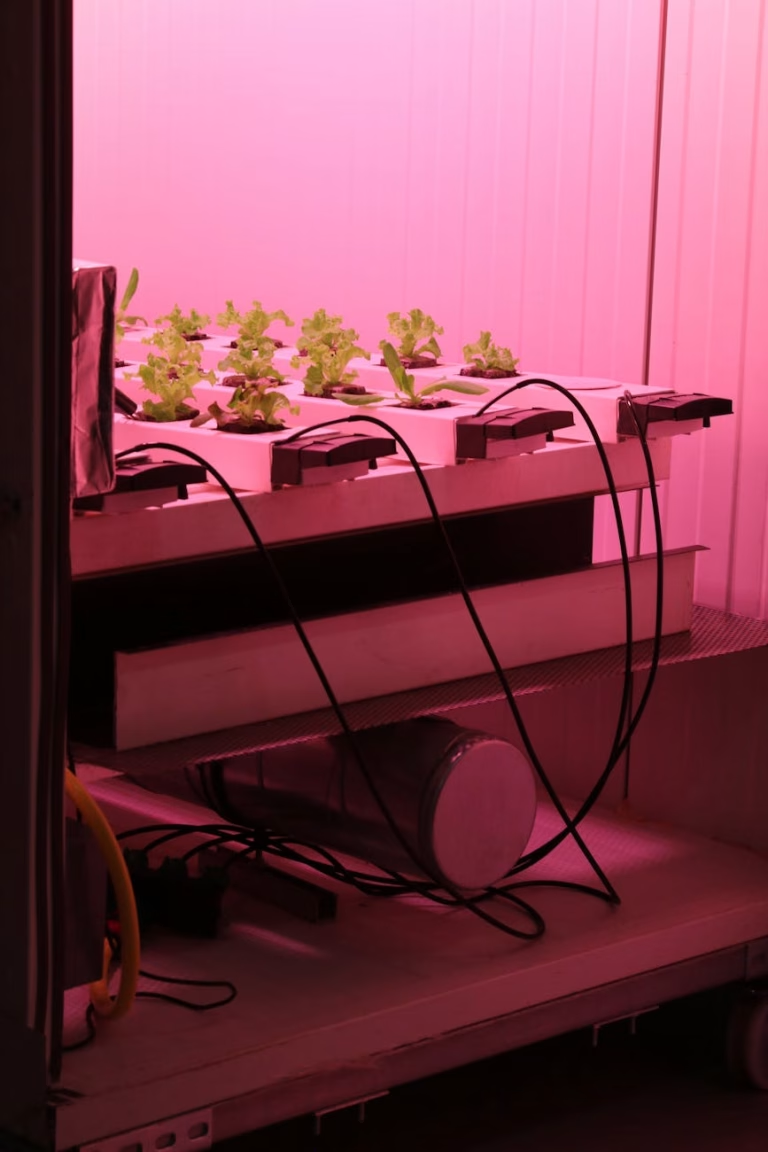
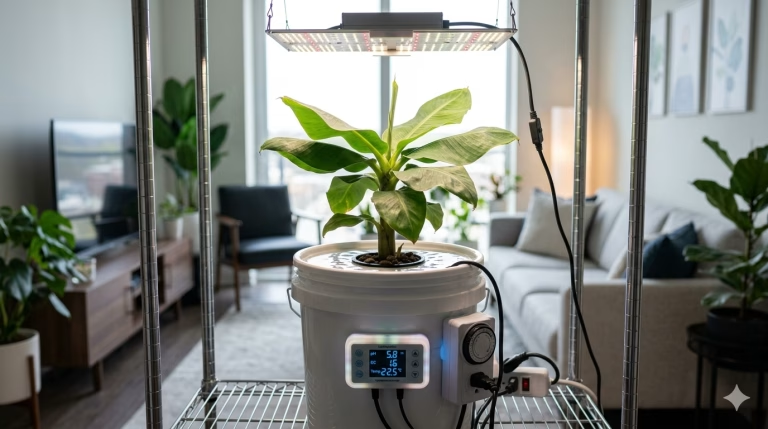
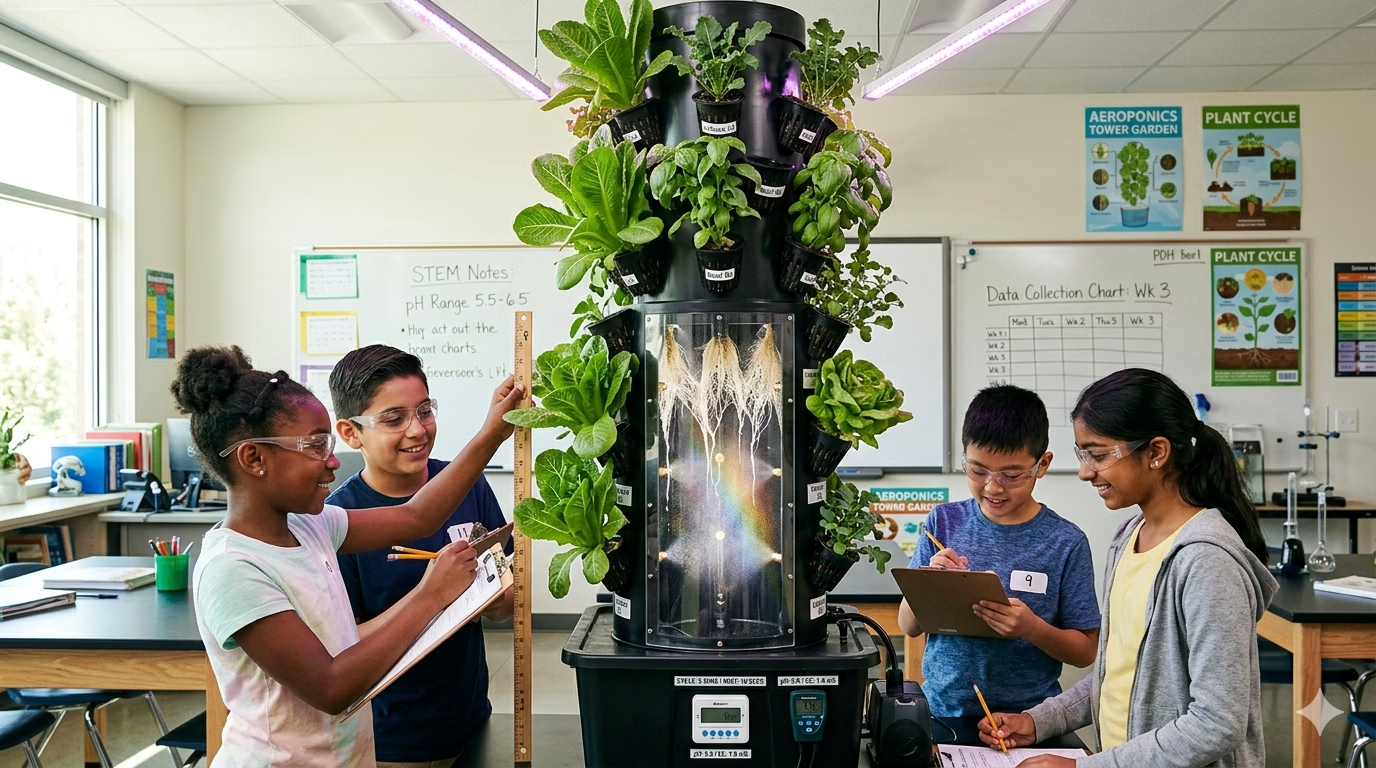
These systems can be commercial kits or DIY builds made from stacked PVC or modular food safe stackers that route mist from a reservoir up through the tower. In classrooms, towers are often paired with LED grow lights and simple timers so students can see the full system cycle: water pumping up, misting the roots, and draining back down.
What is hydroponics → hydroponics beginner guide
How does an aeroponics tower work?
In a typical classroom tower, a submersible or external pump pushes nutrient solution from a bottom reservoir up to a manifold inside the column. High pressure misting nozzles convert that flow into a fine mist with droplet sizes roughly 50 to 140 microns, which clings to the roots and then drains back down by gravity.
A digital cycle timer controls the misting pattern, for example 5 to 10 seconds of mist followed by 3 to 5 minutes off, so roots stay moist but well oxygenated. Students can adjust timer settings, pH, and EC to see how plant growth and root structure respond over a few weeks.
How nutrient film technique works → NFT system guide
Why use aeroponic towers in small classrooms?
Aeroponic towers pack a lot of growing area into a tiny footprint, often 4 square feet or less, which matters in small classrooms and apartments. A single 5 to 6 foot tower with 16 to 24 sites can provide a full class with tasting samples of lettuce or herbs without needing outdoor beds or large tables.
Because the system is clean and soil free, you avoid potting soil spills and pests that can be disruptive in indoor learning spaces. Towers are also visually engaging: students see roots, condensate, lights, and moving water, which makes abstract STEM vocabulary like “transpiration” and “mass transfer” much more concrete
What STEM concepts can students learn from tower gardens?
Aeroponics towers are rich platforms for real STEM vocabulary and practice, especially in grades 4 to 8. You can connect:
- Science: photosynthesis, plant anatomy, transpiration, nutrient cycles, pH and acidity, dissolved oxygen
- Technology: sensors (pH, EC, temperature), timers, LED lighting, data logging
- Engineering: pump sizing, nozzle selection, flow rate, closed loop design, water conservation
- Mathematics: graphing growth over time, calculating percent water savings, analyzing pH drift per day
Research on classroom tower gardening notes that students gain appreciation for science content when they manage real variables like light cycles and nutrient dosing instead of only reading from textbooks. You can also tie in nutrition, food systems, and sustainability by comparing water use of the tower to soil based pots in the same room.
pH and EC for hydroponics → nutrient management guide
Which plants grow best in aeroponics towers?
Aeroponics towers are excellent for shallow rooted, fast growing plants that harvest in 30 to 60 days. Common classroom friendly choices include:
- Leaf lettuce and romaine at pH 5.5 to 6.0 and EC around 0.8 to 1.2 mS/cm
- Basil, mint, and lemon balm at pH 5.5 to 6.5 and EC around 1.0 to 1.6 mS/cm
- Kale, Swiss chard, and spinach where cooler rooms help prevent bolting and bitterness
- Dwarf cherry tomatoes and strawberries for advanced groups that can manage higher EC and stronger lighting
Lettuce and basil are usually the best first crops because they germinate in about 10 to 14 days and are harvestable 30 to 45 days after transplant, which fits nicely into a grading period. Heavier fruiting crops like tomatoes and bush beans may need extra support and slightly higher nutrient strength, so they are better as a second or third project once the class is comfortable with the basics.
Best leafy greens for hydroponics → crop selection guide
Growing herbs hydroponically → basil and mint indoors
What are the pros and cons of classroom aeroponics towers?
A quick at a glance table helps you plan.
| Aspect | Benefits | Drawbacks |
|---|---|---|
| Space use | 16–24 plants in 4 sq ft, fits near a window or in a corner | Height may be challenging in rooms with low ceilings |
| Water use | Can use significantly less water than soil pots at similar yield | Reservoir needs checking and refilling weekly |
| Learning value | Strong STEM connections, data rich experiments, visible roots | Requires adult oversight for safety and troubleshooting |
| Complexity | Modern pumps, timers, and LEDs automate most tasks | More moving parts than simple Kratky or wick systems |
| Cost | DIY builds reduce cost and can use donated parts | Initial pump and light investment is higher than seed trays |
For new schools or home educators, a tower can be a capstone system after students have tried simpler bins or Kratky jars. The complexity means more opportunities for applied engineering, but also more need for simple checklists and student jobs so nothing critical is forgotten.
Low cost Kratky systems → passive hydroponics intro
What equipment do you need for a DIY aeroponics tower?
A basic classroom tower shares the same core components as commercial kits but can be built with off the shelf parts.
Key items:
- Vertical tower body: PVC or modular stackable planters with cutouts for net cups
- I am working on a 3D print for this one but here some others that will work if you have a 3D printer available:
- Reservoir: a 15 to 20 gallon food safe tote or barrel with a tight lid
- High pressure pump: capable of driving misting nozzles near 80 to 100 psi
- Misting nozzles: aeroponic nozzles producing 50 to 140 micron droplets at about 80 to 100 psi
- Tubing and fittings: high pressure hose, manifolds, and quick disconnects
- Control: digital cycle timer with second level control for ON and OFF duration
- Lighting: LED grow light bars or a ring light rated for leafy greens and herbs
- Monitoring: pH test kit or meter, EC meter, thermometer for water temperature
- If you are good with tools a clear panel added for viewing the roots is a nice addition
For your class you can download three ready to use resources: detailed tower plans, a seed starting chart aligned to tower friendly crops, and STEM experiment templates for grades 4 to 8. These downloadable files make it easier to plug the tower into your existing curriculum instead of starting from a blank page.
Choosing LED grow lights → Canopy Sizing Guide
How should you design misting cycles and nutrients?
Because roots are in air, your main controls are misting frequency, droplet size, pH, and EC.
Typical starting targets for leafy greens and herbs:
- pH: 5.5 to 6.5, checked twice per week, adjusted with pH up or down
- EC: 1.0 to 1.8 mS/cm, on the low side for young seedlings and higher for mature plants
- Mist duration: 5 to 10 seconds ON
- Rest duration: 3 to 5 minutes OFF during the light period
- Droplet size: 50 to 140 microns, using ceramic orifice aeroponics nozzles around 80 to 100 psi
From my own towers in hot, dry climates like Phoenix, running slightly shorter ON times and slightly shorter OFF times kept roots moist without overheating near 26 to 28 °C room temperatures. In cooler Central Michigan classrooms you may find a longer OFF window still keeps roots moist, especially if the tower is partly enclosed.
How do you set up a classroom aeroponics tower step by step?
Here is a general sequence that works well for a new build.
- Assemble the tower body
Dry fit all PVC or modular stacker sections, align net cup holes, and mark one side of the tower as the “viewing window” for students. Ensure the height fits under your classroom ceiling with at least 12 inches of clearance for lights and maintenance. - Prepare the reservoir and pump
Rinse the reservoir, mount the pump so it stays upright, and route the power cord through a grommet in the lid. Label the reservoir with “nutrient only” and basic safety rules so students know not to pour unknown liquids into it. - Install the misting manifold and nozzles
Mount a vertical or ring manifold inside the tower, then thread in 8 to 16 misting nozzles evenly around the root zone. Aim for even coverage across all planting sites so no roots stay dry between cycles. - Wire the timer and lights
Plug the pump into a digital cycle timer and the lights into a simple on off timer, then mount both high on the wall or tower frame. A starting light schedule of 14 to 16 hours on and 8 to 10 hours off works well for greens and herbs. - Fill, mix, and test the nutrient solution
Fill the reservoir with water, add hydroponic nutrients to reach about 1.0 to 1.2 mS/cm for seedlings, then adjust pH to 5.5 to 6.0. Record starting values on a whiteboard so students can track how they drift through the week. - Start the system and check for leaks
Run the pump continuously for a few minutes, then switch to your misting cycle and inspect all fittings and nozzles. Fix any leaks before students plant to keep the classroom floor dry and safe. - Transplant seedlings and label plants
Move 10 to 14 day old seedlings in rockwool or foam collars into the net cups, then label each site with plant name, sow date, and student group. This is a good time to introduce variables like “upper level vs lower level” or “higher vs lower EC treatment.” - Set student roles and observation routines
Assign rotating jobs like pH checker, EC recorder, leak inspector, and growth measurer so students share responsibility. Plan quick 5 minute observation blocks at the start or end of class two to three times per week.
How do you maintain an aeroponics tower in a classroom?
Routine maintenance can be broken into daily, weekly, and monthly tasks so it fits into busy schedules.
- Daily: quick visual check for leaks, pump noise, wilted plants, and nutrient level in the reservoir window or sight tube
- Two times per week: measure and log pH, EC, and water temperature, topping up with plain water as needed
- Weekly: add nutrients to bring EC back into target range, wipe down tower surfaces, and prune overgrown plants
- Monthly or between crops: flush the system with a mild sanitizing solution, run clear water, and inspect nozzles for clogs
In my own high use classroom systems, planning a 30 to 45 minute “tower reset” between units reduced random failures more than any other practice. Having a student checklist on a clipboard next to the tower also kept maintenance from depending on a single adult’s memory.
Cleaning hydroponic systems → sanitizing between crops
How should you troubleshoot common aeroponics tower problems?
Most classroom tower issues fall into a few patterns that students can learn to diagnose.
- Wilting plants during the light period
- Check: Is the pump cycling, or did a timer or GFCI trip
- Action: Verify misting schedule, inspect nozzles for clogs, and confirm water level in reservoir
- Yellowing leaves or slow growth
- Check: EC too low, pH outside of 5.5 to 6.5, insufficient light intensity
- Action: Adjust nutrients, correct pH, move tower closer to light or increase light hours.
- Brown slimy roots
- Check: Water temperature above 72 °F or low dissolved oxygen, misting intervals too long
- Action: Add an aquarium air stone, shorten OFF times, and consider a chiller or cooler reservoir location.
- Uneven growth between tower levels
- Check: Nozzle layout and flow, light distance from upper vs lower levels
- Action: Rotate plants between levels for fairness or rework nozzle placements as an engineering challenge.
Turning troubleshooting into guided inquiry builds systems thinking instead of panic. Encourage students to propose hypotheses, run small changes, and report back with data rather than making many changes at once.
Diagnosing nutrient deficiencies → leaf symptom guide
How can you use the free plans, seed charts, and experiment templates?
To make classroom implementation faster, you can download three ready made resources shared with this article:
- DIY Classroom Aeroponics Tower Plans with target heights, site counts, and operating ranges, written for small rooms
- Aeroponics Seed Starting Chart listing good tower crops, days to transplant, and days to harvest with pH and EC ranges
- STEM Experiment Templates for Grades 4–8 including pH vs growth, light distance vs leaf color, nozzle layout design, and water conservation activities
These files are provided in simple text and spreadsheet formats so you can edit them for your own standards and grade levels. You can print them as is, copy them into your learning management system, or adapt them for home and apartment towers.
How-To: Build a DIY Classroom Aeroponics Tower
Title: Build a DIY Aeroponics Tower Garden for a Small Classroom
Description: A beginner friendly guide to building and running a vertical aeroponics tower for grades 4 to 8 in tight spaces.
Materials and tools
- 15 to 20 gallon lidded food safe reservoir
- PVC pipe or modular stackable tower sections (5 to 6 feet tall total)
- 16 to 24 net cups and starter plugs
- High pressure pump and 8 to 16 aeroponic misting nozzles rated near 80 to 100 psi
- Digital cycle timer and basic on off light timer
- LED grow light bars or ring with mounting frame
- High pressure tubing, fittings, Teflon tape, and hose clamps
- pH test kit or meter and EC meter
- Standard hand tools: drill with hole saws, screwdriver, utility knife, and zip ties
Step 1: Plan your tower footprint and location
Decide where the tower will live so you know the maximum height and footprint available. Measure ceiling height and nearby outlets, avoiding doors that open into the tower and spots with heavy traffic.
Step 2: Cut and drill the tower body
Cut PVC or stack modular sections to reach about 5 to 6 feet, then mark and drill holes for net cups at staggered heights so plants do not shade each other. Sand the edges and rinse the pieces to remove plastic shavings before assembly.
Step 3: Build the reservoir and pump assembly
Position the reservoir under the tower, mount the pump inside near one corner, and cut a small notch or grommet hole in the lid for the power cord and outlet tubing. Secure the pump so it cannot tip, and label the reservoir with its maximum fill line.
Step 4: Install the misting manifold and nozzles
Run tubing from the pump outlet up through the tower to a manifold with evenly spaced nozzle ports. Thread in the misting nozzles, apply Teflon tape on threaded parts if recommended, and aim them toward the center root zone.
Step 5: Mount lights and wire the timers
Attach LED light bars or a ring to a simple frame or directly to the tower, keeping a 6 to 12 inch gap from the plants at mid height. Plug lights into a basic timer set for 14 to 16 hours on, and plug the pump into a cycle timer set for about 5 to 10 seconds on and 3 to 5 minutes off.
Step 6: Fill, mix, and tune your nutrient solution
Fill the reservoir with water, add hydroponic nutrients until EC reads around 1.0 mS/cm for seedlings, then adjust pH to between 5.5 and 6.0 with pH up or down. Run the pump briefly, recheck pH and EC, and record starting values on a tracking sheet for students.
Step 7: Test run and check for leaks
Run the system on its mist cycle for at least 15 to 20 minutes before adding plants and watch for drips around fittings and nozzle bases. Go over each connection with students and have them help identify and fix leaks as a simple engineering exercise.
Step 8: Transplant seedlings and start observations
Move seedlings into net cups, spacing similar crops together to keep nutrient needs consistent. Have students record plant type, level of the tower, and start date, then begin regular measurement and photo routines.
Step 9: Establish maintenance and safety routines
Post a laminated checklist near the tower with daily and weekly tasks and assign rotating student teams. Include simple safety rules such as “dry hands before touching plugs” and “do not open electrical boxes” so expectations are clear.
FAQ: Aeroponics Tower Gardens for Classrooms and Small Spaces
Is an aeroponics tower too advanced for beginners?
A well planned tower is approachable for motivated beginners, especially if you start with simple crops like lettuce and basil and follow a clear checklist. The main learning curve is managing pH, EC, and mist cycles, which quickly becomes routine with weekly practice.
How much does a DIY aeroponics tower cost to build?
Costs vary by region and what you can salvage, but many classroom friendly towers can be built in the low hundreds of dollars using off the shelf pumps, nozzles, and totes. Commercial all in one towers tend to cost more but arrive with tested parts, curriculum, and support.
How often do I need to refill the reservoir?
A 15 to 20 gallon reservoir in a classroom tower usually needs a top up once or twice per week, with full nutrient changes less often. Hotter, drier rooms and larger plants will increase water use, which makes a good math investigation for students.
What are the biggest risks with an aeroponics tower in a classroom?
The main risks are water leaks, electrical safety around pumps and lights, and nutrient spills if the reservoir is opened carelessly. You can reduce these by using GFCI outlets, keeping all electrical connections above water level, and posting clear safety and cleanup procedures.
How long before students see results?
If you pre start seeds, most classes see visible new growth in the first week and significant size changes in 2 to 3 weeks. Harvests for lettuce and herbs typically come 4 to 6 weeks after transplant, which keeps students engaged across a unit.
Can I run a tower without specialized meters?
You can get started with pH test strips and a simple EC pen, which are inexpensive and robust for student use. For more advanced classes, adding continuous sensors and logging data to spreadsheets opens up deeper STEM and data science projects.
Do aeroponics towers make noise or disturb the class?
Most classroom appropriate pumps and timers make a quiet hum similar to a fish tank, which fades into background noise. If noise is a concern, look for pumps with lower decibel ratings and consider placing the reservoir in a padded cabinet.
What happens during school breaks or vacations?
For short breaks a well topped reservoir and functioning timers can keep plants alive with minimal attention, especially if you reduce light hours slightly. For long vacations it is better to schedule harvests before the break, clean the system, and restart with new seedlings afterwards.
Is aeroponics better than other hydroponic systems for kids?
Aeroponics offers more knobs to turn, such as mist cycles and nozzle patterns, which is great for older students and engineering projects. For very young students or first exposures, simpler systems like Kratky jars or deep water buckets may be less intimidating before graduating to towers.
Author note
The author has run multiple hydroponic and aeroponic systems in both hot, dry Phoenix, Arizona and cooler, cloudier Central Michigan, with a focus on keeping systems stable for beginners and school groups. Over years of tinkering with pumps, nozzles, and lighting, classroom towers have become a favorite way to turn abstract STEM terms into living, measurable systems. Current work centers on compact indoor and urban growing setups that fit into apartments, small classrooms, and shared community spaces. The goal is always the same: simple, reliable systems that invite students and hobbyists to experiment without fear of failure.
Downloadables:
Share this:

Discover more from Soil Free Harvest
Subscribe to get the latest posts sent to your email.