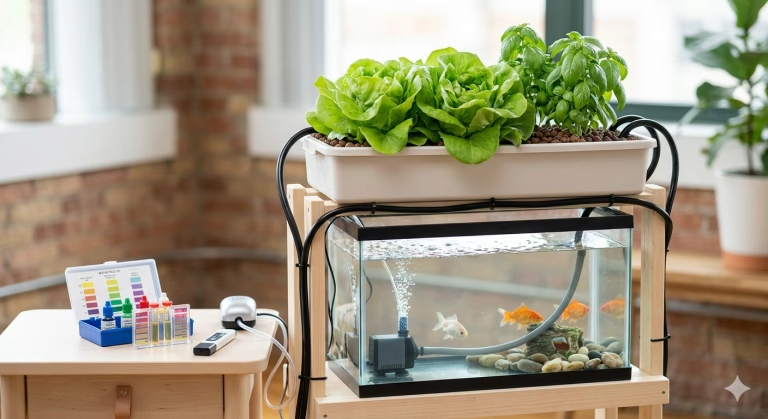
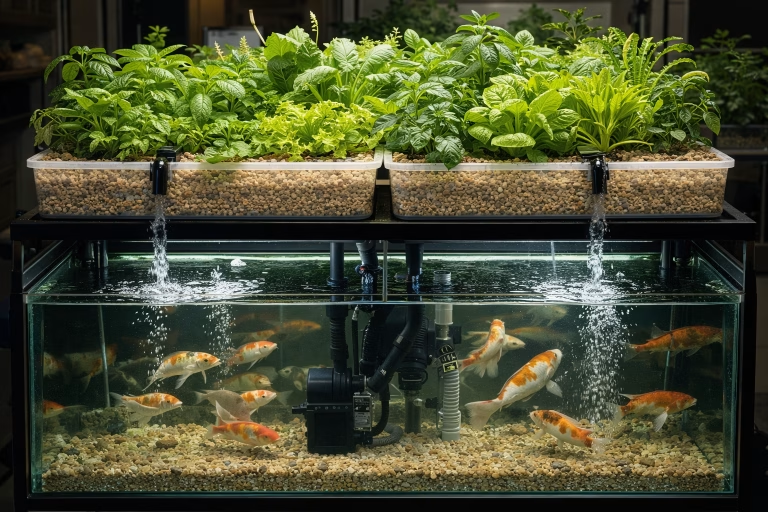
Aquaponics Water Temperature: Stable Ranges For Home Systems
Water temperature is one of the main control knobs in aquaponics, affecting fish health, nitrifying bacteria, plant growth, and whether your system stays stable or crashes. Most home systems run well with water between about 68 and 82 F, with daily swings kept under about 3 F so fish and bacteria are not stressed. If you choose fish and plants that share a comfortable temperature band, it becomes much easier to keep the whole system steady.
TL;DR: Aim for a stable water temperature around 70 to 78 F for mixed home aquaponics, match fish and plants to that range, and prevent daily swings larger than 2 to 3 F. Use insulation, shading, heaters or chillers where needed, and a simple daily temperature log so you can catch problems before fish or plants show stress.
You can also download a one page Aquaponics Temperature Cheat Sheet plus a printable Daily Temperature Log template that pair with this guide.
What does temperature do in an aquaponics system
Temperature controls fish metabolism, how quickly they eat, and how well their immune system works, so water that is too hot or too cold slows growth and increases disease risk. Temperature also changes how much oxygen water holds, with warmer water carrying less oxygen, which is why hot tanks need stronger aeration to keep fish and roots from suffocating.
Nitrifying bacteria that convert ammonia to nitrite and then nitrate have their own preferred temperature band, and their activity slows sharply in cold water. At the same time, higher temperatures increase the fraction of total ammonia that is in the more toxic un ionized form, so warm water with high pH and high ammonia is especially dangerous for fish.
Plants are also temperature sensitive at the root zone, and many leafy greens grow best in cooler water, while warm water can push them to bolt or develop weak, leggy growth. Because aquaponics ties fish, bacteria, and plants together, temperature management is always about compromise and matching species that like similar ranges.
Aquaponics basics → Beginner Aquaponics Equipment Checklist: Essential Gear for Your First Home System
What is a stable temperature range for home aquaponics
Across many sources, the workable water temperature range for most home aquaponics systems is roughly 68 to 86 F, although specific fish and plant choices narrow that band. Warm water fish like tilapia are typically run in the 70 to 85 F range, while cool water species such as trout or perch are kept closer to 50 to 70 F.
For mixed home systems with leafy greens and herbs, a practical target is often 70 to 75 F, which keeps fish comfortable, bacteria active, and roots happy. In addition to the absolute temperature, experienced growers recommend limiting daily swings to no more than about 3 F in 24 hours to avoid stressing fish, especially when water is already near the edge of their comfort zone.
Best plants for aquaponics → leafy greens, herbs, and fruiting crops
Key temperature ranges at a glance
| Component | Typical preferred range | Notes |
|---|---|---|
| Whole system water | 68 to 86 F | Most home systems operate somewhere in this band. |
| Warm water fish (tilapia, koi) | 70 to 85 F | Growth slows and stress rises as you drop into the low 60s F. |
| Cool or cold water fish (trout) | 40 to 70 F | Good for cold climates and minimally heated systems. |
| Leafy greens and herbs | 65 to 75 F | Cooler water reduces bolting and root disease. |
| Fruiting crops (tomatoes etc.) | 70 to 80 F | Ensure strong aeration to offset lower oxygen. |
| Nitrifying bacteria peak | 77 to 86 F | Activity slows sharply below about 50 F. |
| Recommended daily swing | 0 to 3 F per 24 hours | Larger swings increase stress and disease risk. |
Use this cheat sheet as a quick reference near your system so you can compare your readings to these ranges.
Which temperatures do fish, plants, and bacteria prefer
Warm water fish
Warm water species such as tilapia, catfish, and koi generally do best between about 70 and 85 F. Tilapia in particular are often run around the mid 70s to low 80s F for fast growth, but they become stressed and may die if temperatures fall into the low 50s F for long.
These fish pair well with plants that tolerate warmer roots, including basil, some lettuces, chard, and many fruiting crops like tomatoes and peppers. Warm water systems are especially popular in greenhouses or garages that already tend to run hot in summer, as long as cooling and aeration are addressed.
Cool and cold water fish
Cold water species such as trout and some perch are adapted to temperatures roughly between 40 and 70 F, with many trout strains growing best around the mid 50s to upper 60s F. These fish can handle near freezing conditions if cooled gradually, which makes them well suited to cold climate aquaponics with limited heating.
They pair naturally with cool loving leafy greens and brassicas such as lettuce, spinach, kale, and cabbage. For growers in regions with long winters, cool water systems can use the ambient climate to their advantage while focusing on crops that like cool roots.
Plant temperature preferences
Most common aquaponic plants like lettuce, spinach, and herbs prefer water temperatures between about 65 and 75 F. Many leafy greens can tolerate somewhat cooler water, especially in unheated greenhouses, while very warm water can cause bitterness or early bolting.
Fruiting crops such as tomatoes, peppers, and cucumbers like slightly warmer conditions around 70 to 80 F, which support faster nutrient uptake and growth. Because warmer water holds less oxygen, these systems need strong aeration and careful monitoring for root disease.
Nitrifying bacteria and temperature
The main nitrifying bacteria in aquaponics typically reach peak activity somewhere around 77 to 86 F. They continue to function at lower temperatures, but their growth and conversion rate slow down as water gets colder, especially below about 50 F.
Temperature also interacts with pH to change how much of total ammonia is in the toxic un ionized form, with warmer water and higher pH both increasing toxicity at a given total ammonia level. This is why high temperature, high pH, and high ammonia is a dangerous combination, particularly in young systems that are still cycling.
Cycling an aquaponics system → establishing nitrifying bacteria and managing ammonia
Why temperature stability beats temperature perfection
In practice, a stable water temperature slightly outside the textbook ideal usually causes fewer problems than a temperature that swings wildly within the ideal band. Fish and bacteria can adapt to a moderately cool or warm system if the change happens gradually and does not yo yo every day.
Rapid shifts, such as a 6 to 10 F drop overnight from a cold snap or a sudden heater failure, are often what trigger disease outbreaks or fish losses. This is why many experienced growers emphasize limiting daily swings to about 3 F or less and adjusting equipment slowly instead of chasing a specific number hour by hour.
How does climate affect aquaponics temperature
In hot desert climates like Phoenix, the main challenge is preventing water from overheating during long sunny days, especially in shallow or dark colored tanks. Shade cloth, reflective tank covers, buried plumbing, and sometimes active cooling such as chillers or heat exchangers are critical for keeping water in a safe range.
In colder northern climates like Michigan, the focus shifts to preventing water from dropping toward freezing and avoiding big swings between sunny daytime highs and freezing nights. Insulation, greenhouse structures, tank covers, and backup heat sources become more important, especially if you want to keep fish growing through winter rather than shutting the system down.
How to control and stabilize water temperature in small systems
Small systems, such as apartment or backyard setups, are more vulnerable to temperature swings because they have less water volume to buffer change. Increasing total water volume with a larger sump or additional tank is one of the simplest ways to slow down temperature changes.
Insulating tanks and plumbing, covering exposed pipes, and using lids or floating covers on fish tanks and sumps all reduce heat gain in summer and heat loss in winter. For more active control, submersible heaters, inline heaters, or aquarium chillers can be added, ideally sized for the total volume and controlled by reliable thermostats.
For outdoor systems, locating tanks in shaded areas or partially burying them can use the soil as natural insulation to limit extremes. In greenhouses, double poly walls, interior energy curtains, and perimeter insulation around the base help retain heat when outside air is very cold.
How to set up a temperature monitoring routine
Successful growers treat temperature like any other critical water parameter and measure it regularly, not just when something looks wrong. A simple routine is to check and log water temperature at least once daily, ideally at the same time, plus during known stress periods such as heat waves or cold snaps.
Using a floating thermometer, digital probe, or inline sensor, record fish tank temperature, ambient air temperature, and whether heaters or chillers are on when you take the reading. Over time, the log will show patterns, such as how fast your system cools overnight, which helps you decide whether you need more insulation, shading, or equipment upgrades.
The included Daily Temperature Log template is designed around these habits, with columns for time of day, tank temperature, air temperature, and notes about weather or equipment changes.
How to stabilize aquaponics temperature in a home system
Title: Stabilize water temperature in a small home aquaponics system
Description: Simple improvements any home grower can make to keep aquaponics water temperature within a safe, stable range for fish, bacteria, and plants.
Materials and tools
- Reliable aquarium or pond thermometer
- Optional digital temperature controller with probe
- Insulation material (rigid foam board, wrap, or blankets rated for damp areas)
- Tank cover or lid (solid, insulated, or reflective)
- Shade cloth or reflective tarp if outdoors or in hot climate
- Submersible heater or aquarium chiller sized to your total water volume (if needed)
- Zip ties, tape, or straps to secure insulation and shade
Steps
- Measure your baseline temperatures
Spend at least three to seven days checking and logging water and air temperature morning and evening so you understand your current pattern. Look for peak highs, overnight lows, and the size of daily swings before changing anything. - Reduce direct sun and wind on tanks
If tanks sit in direct sun, add shade cloth or move them so they receive bright but indirect light, which reduces daily overheating. For cold climates, reduce wind exposure around tanks and plumbing to slow heat loss and prevent rapid cooling. - Insulate tanks and exposed plumbing
Wrap the sides of fish tanks and sumps with suitable insulation and cap exposed pipes where possible so water is not constantly losing or gaining heat. Focus especially on long pipe runs and any sections that sit in hot sun or freezing air. - Add or improve tank covers
Use a rigid lid, insulated panel, or floating cover to reduce evaporation and heat exchange at the water surface, while leaving openings for aeration and feeding. In hot climates, reflective covers can limit solar heating, while in cold climates insulated covers help retain warmth overnight. - Install a heater or chiller if needed
If your baseline data shows temperatures regularly outside your fish comfort range, install an appropriately sized heater or chiller controlled by a reliable thermostat. Start with conservative settings and adjust a degree at a time so you do not shock fish or bacteria with sudden changes. - Increase water volume where practical
Add a larger sump or auxiliary tank to increase total water volume, which acts like a thermal flywheel that slows how fast temperature changes. This is especially helpful for small balcony or patio systems that otherwise swing quickly with the weather. - Improve aeration when water runs warm
As water warms up, its oxygen carrying capacity drops, so add extra air stones or a larger pump to maintain strong dissolved oxygen when running warm water fish or summer greenhouses. Good aeration also helps blend warmer and cooler layers so fish do not encounter sudden temperature pockets. - Keep logging and fine tuning
Continue daily logging for at least a few weeks after your upgrades so you can see if daily swings are staying under about 3 F and if highs and lows are now in the safe range. Make small adjustments as needed, such as adding more insulation on the coldest side of the tank or increasing shade during heat waves.
Common temperature problems and how to fix them
Summer overheating is common in hot climates or greenhouses when water climbs into the upper 80s F or higher. Solutions include adding shade cloth, improving ventilation, using reflective tank covers, and installing a chiller or heat exchanger for critical systems.
Winter chilling occurs when cold snaps drive water toward freezing, especially at night. Adding tank and perimeter insulation, using interior energy curtains in greenhouses, and running backup heaters can keep water safely above fish specific minimums.
Rapid temperature swings often follow equipment failures, unprotected tanks, or sudden weather changes. The best prevention is insulation, adequate water volume, and automated temperature control, plus alarms where possible so you can intervene quickly.
Stratified tanks, where surface water is much warmer or colder than deeper water, can occur in larger tanks with limited circulation. Strong aeration and good plumbing layout that pulls water from different levels help maintain a more uniform temperature so fish are not surprised when they change depth.
Best temperature strategies by system type
Media bed systems
Media bed systems have large, exposed surfaces and often sit higher off the ground, so they tend to track air temperature more closely. Insulating the sides of grow beds, covering media when possible, and protecting plumbing from sun or frost are especially valuable.
The water volume in the sump tank and fish tank becomes your main buffer, so sizing these generously helps smooth out swings from flood and drain cycles. Media beds are flexible for either warm or cool water species when you design for your climate from the start.
Raft / deep water culture systems
Raft systems usually have large, shallow troughs of water, which can gain or lose heat quickly without insulation. Insulating the sides and underside of troughs, limiting direct sun on water, and using greenhouse structures or covers are key stabilizing measures.
Because rafts hold a lot of water, they can be excellent thermal mass if insulated, helping buffer daily swings for both fish and plants. Many commercial raft systems run cool water leafy greens, which align well with moderate temperature targets.
NFT and vertical systems
Nutrient film technique and vertical towers move thin films or small streams of water through exposed channels, which can pick up heat in summer and lose it quickly in winter. Shading channels, insulating supply lines, and sometimes cooling water before it enters the loop become important design choices.
Because water volume is often low, pairing NFT with a relatively large, insulated sump and fish tank helps stabilize overall system temperature. NFT is often used for herbs and greens at moderate temperatures, where stability and aeration matter more than chasing a specific warm or cool water target.
Indoor and apartment systems
Indoor systems in apartments and basements benefit from relatively stable room temperatures, which makes water temperature easier to manage. Small aquarium heaters are often enough to hold water in the low to mid 70s F for mixed fish and greens, especially when tanks are insulated and covered.
LED grow lights add gentle heat, which can nudge water a bit warmer, so factor that into your target. Indoor setups are ideal for warm water fish and leafy greens that thrive around 70 to 75 F, where both plants and bacteria remain active with minimal equipment.
Aquaponics temperature and stability FAQ
How much does it cost to control temperature in a small aquaponics system
For a small indoor or balcony system, many growers get by with basic insulation, a simple aquarium heater, and shade cloth, which might cost a modest amount up front depending on sizes and brands. Larger outdoor or greenhouse systems may need more substantial heaters, chillers, or greenhouse improvements, which can raise costs, so it often pays to design for your climate from the beginning.
Is temperature management hard for beginners
Temperature management is mostly about habits rather than advanced gear, so beginners can do well by checking water daily and making gradual changes. Adding insulation, simple covers, and choosing species that match your climate makes things much easier than fighting nature with undersized equipment.
What is the biggest temperature mistake new growers make
A common mistake is focusing only on the ideal number for a species and ignoring how quickly the water gets there. Rapid swings of more than a few degrees in a day, especially during heat waves or cold snaps, stress fish and bacteria far more than a steady temperature that is a couple of degrees off target.
How long does it take to see results from better temperature control
Fish behavior and plant vigor often improve within days once temperature swings are reduced and water stays within a safe range. Over a few weeks, you will usually see more consistent feeding, steadier water test results, and fewer disease issues, which translate into better growth and survival.
Can I run aquaponics outdoors in winter
Outdoor winter aquaponics is possible, but it requires planning, insulation, and usually some form of heating, especially in cold climates. Many growers either move systems indoors, run cold tolerant fish and greens with partial heating, or accept a slower winter mode rather than trying to push for summer like growth.
Do I need both a heater and a chiller
You only need both if your climate regularly swings to both very hot and very cold extremes while you are trying to keep the same fish species year round. Many home growers choose species and a season that match their climate, then use either a heater or a chiller plus insulation and shade instead of installing both.
How does temperature affect pH and nutrient availability
Temperature does not change pH directly, but it does affect how quickly bacteria work and how much ammonia is in the toxic un ionized form at a given pH. Root uptake of nutrients also varies with temperature, so keeping water in a moderate range helps plants access what they need without pH chasing.
What temperature should I aim for with mixed fish and leafy greens
For warm water species such as tilapia combined with lettuces and herbs, many growers target roughly 72 to 76 F as a practical compromise. If you prefer trout and strictly cool loving greens, you might instead aim for the upper 50s to mid 60s F and design your system and insulation for that cooler band.
Author note
This guide is written from the perspective of a home scale aquaponics grower who has worked in both extreme desert heat in Phoenix, Arizona and colder conditions in Michigan. Over multiple system builds, I have run media beds, raft systems, and compact indoor units focused on reliable kitchen harvests rather than maximum yield at any cost. My main interest is making temperature, pH, and equipment choices simple enough that beginners can keep fish alive and plants thriving without needing a commercial budget. At SoilFree Harvest, the focus stays on practical, apartment friendly, and backyard friendly systems that survive real weather, not just ideal charts.
Share this:

Discover more from Soil Free Harvest
Subscribe to get the latest posts sent to your email.