
Best Water Testing Kits for Aquaponics
If you want one water testing kit that covers the basics for most home aquaponics systems, a liquid drop kit is usually the best starting point because it gives you repeatable readings for pH, ammonia, nitrite, and nitrate, which are the core values that drive fish health, bacterial activity, and plant performance.
TL;DR: The best aquaponics water testing kits are the ones that help you catch ammonia spikes, nitrite buildup, pH drift, and nitrate changes before fish or plants show stress. For most home growers, that means starting with a liquid kit, then adding GH/KH testing, temperature monitoring, and possibly a digital meter as your system gets more advanced.
Affiliate Disclosure: This article contains affiliate links. If you purchase through these links, soilfreeharvest.com may earn a small commission at no extra cost to you.
What makes a water testing kit good for aquaponics?
A good aquaponics water test kit does more than check whether water looks clean. It needs to help you monitor the biological relationship between fish waste, nitrifying bacteria, and plant nutrient uptake, which is why ammonia, nitrite, nitrate, and pH matter so much in daily management.
For home growers, the most useful kit is usually one that is easy to read, easy to repeat, and affordable enough that you will actually use it on schedule. In practical terms, that means liquid reagent kits often beat cheap strips for core testing because they are better suited to regular monitoring when you are cycling a new system or troubleshooting a mature one.
Which water parameters matter most?
For most aquaponics systems, the core parameters are:
- pH, because it affects fish comfort, bacterial efficiency, and nutrient availability to plants.
- Ammonia, because the ideal target is 0 ppm and elevated ammonia can quickly become dangerous.
- Nitrite, because the ideal target is also 0 ppm and spikes often show up during cycling or biofilter stress.
- Nitrate, because it is the main plant-available nitrogen end product and is often kept around 20 to 50 ppm in balanced systems.
- Temperature, because fish metabolism, oxygen levels, and bacterial performance all shift with water temperature.
- GH and KH, because hardness and buffering capacity influence pH stability and mineral balance.
Which water testing kits are best for aquaponics?
The best kit depends on your system size, budget, and how much precision you need. Most home growers do well with a layered approach: one primary liquid kit for the nitrogen cycle, then one or two add-ons for hardness, temperature, or digital pH checks.
Best overall for most home growers
API Freshwater Master Test Kit
The API Freshwater Master Test Kit measures pH, high-range pH, ammonia, nitrite, and nitrate, and it includes four test tubes plus a color card for reading results. Those are the same core parameters most hobby aquaponics growers track every week, especially when starting fishless cycling, adding fish, or diagnosing yellowing plants and stressed fish.
Why it stands out for aquaponics:
- Covers the main day-to-day chemistry values in one kit.
- Widely used and beginner-friendly, which makes it easier to find guides and comparison advice.
- Works well for weekly routine testing and fits the needs of most stable home systems.
Best for:
- Beginners setting up their first backyard or indoor aquaponics system.
- Apartment growers running a compact media bed or raft setup.
- Hobbyists who want a practical baseline kit before buying digital meters.
Tradeoffs:
- It does not cover GH or KH in the same box, so many growers will want a separate hardness kit.
- Like other color-match tests, it depends on good lighting and careful technique for consistent readings.
Best aquaponics-specific option
Sera water testing lineup
Instead of buying one more specialized all-in-one kit, many aquaponics growers do better with a modular testing setup. Sera offers individual tests and quick-test options for key parameters including pH, KH, GH, nitrate, nitrite, ammonia, oxygen, iron, and chlorine, which makes it useful for growers who want to build a testing routine around the exact issues they are monitoring. These can be found at most specialty fish stores. Some of their products include:
Why it stands out:
- Lets you test specific parameters without paying for tools you may not use right away.
- Covers more than just the nitrogen cycle, which is helpful when troubleshooting pH drift, buffering problems, iron issues, or source-water concerns.
- Works well for growers who want to start with the basics, then add more targeted tests as their system becomes more advanced.
Best for:
- Intermediate growers who already track pH, ammonia, nitrite, and nitrate and want deeper troubleshooting options.
- Home growers dealing with seasonal source-water changes.
- Aquaponics hobbyists growing a wider range of crops, including fruiting plants that may require closer nutrient observation.
Tradeoffs:
- A modular setup can be more complicated than buying one master kit and learning a single process.
- If you are a complete beginner, managing separate tests for multiple parameters may feel less convenient than starting with one simple liquid master kit.
- You still need a consistent routine and a good logbook, because more data only helps if you track trends over time.
Best add-on tests and tools
Most growers will eventually need more than one testing tool. Common add-ons include:
- GH/KH test kit, because hardness and alkalinity help explain pH drift and buffering issues.
- Water thermometer, because temperature affects dissolved oxygen, fish stress, and biofilter speed.
- Digital pH meter, because it can make frequent pH checks faster once calibrated.
- TDS or EC meter, especially if you also grow hydroponically and want more data points, though EC is less central in pure aquaponics than in hydroponics.
Cycling water for aquaponics fish and plants → Fishless Cycling for Aquaponics: How to Start Your System Safely]
How does water testing work in an aquaponics system?
Aquaponics works because fish waste produces ammonia, nitrifying bacteria convert that ammonia into nitrite and then nitrate, and plants take up nitrate as a major nutrient source. Water testing shows whether that loop is working smoothly or whether one part of the system is falling behind.
In a new system, testing often needs to happen every two to three days during cycling so you can watch ammonia and nitrite rise and then fall as beneficial bacteria establish. In established systems that are already balanced, testing every three to seven days or at least weekly is a common routine, especially when fish feeding, weather, stocking density, or plant load changes.
What are the target ranges to watch?
The following ranges are a useful starting point for many home systems:
| Parameter | Practical target range | Why it matters |
|---|---|---|
| Ammonia | 0 ppm | Protects fish and confirms the biofilter is keeping up |
| Nitrite | 0 ppm | Prevents fish stress and cycling-related toxicity |
| Nitrate | 20 to 50 ppm | Indicates plant-available nitrogen in a productive range |
| pH | 6.4 to 7.8 | Balances fish health, bacterial activity, and nutrient access |
| GH | 50 to 100 ppm | Supports mineral balance |
| KH | 70 to 100 ppm | Supports buffering and pH stability |
In my own writing and system planning for small indoor and backyard setups, I treat those numbers as operating ranges rather than rigid rules because fish species, source water, temperature, and planting density all shift the sweet spot. The key is consistency. Sudden swings usually cause more trouble than a value that sits slightly high or low for a short time.
What are the benefits and drawbacks of different testing methods?
No single method is perfect. The best option is the one that matches the way you actually garden.
Liquid test kits
Benefits
- Good coverage of the most important chemistry values for aquaponics.
- Better suited than basic strips for routine monitoring and troubleshooting.
- Usually cost-effective over many tests.
Drawbacks
- Slower than dip strips.
- Requires careful drop counting, shaking, and wait times for accuracy.
- Color matching can be subjective in poor lighting.
Test strips
Benefits
- Fast and easy for quick screening.
- Good for growers who want a rough check between full tests.
Drawbacks
- Often less precise for the values that matter most during cycling or fish stress.
- Not my first choice as a primary aquaponics kit when fish are involved.
Digital meters
Benefits
- Fast readings for pH or temperature.
- Helpful for growers who test frequently.
Drawbacks
- Need calibration and maintenance.
- Usually do not replace a full nitrogen-cycle test kit.
pH meters → Best pH Meters for Hydroponic Systems – Top Picks for 2025
How-To: Test aquaponics water the right way
Test aquaponics water accurately at home
Use a consistent routine to measure the key water values in your aquaponics system so you can catch fish, bacteria, and plant problems early.
Materials and tools
- Liquid water test kit for pH, ammonia, nitrite, and nitrate
- Clean test tubes or sample vials
- GH/KH test kit if you are tracking buffering and mineral balance
- Water thermometer
- Notebook or digital log for recording results
- Good lighting for reading color charts
Steps
- Choose a consistent testing time
- Test at roughly the same time of day so your readings are easier to compare over time. I prefer before feeding fish because recent feeding can complicate how you interpret system stress.
- Collect a clean water sample
- Pull water from the system, not from a dirty tray or stagnant corner. Fill each vial to the marked line because reagent ratios matter for accurate results.
- Run the pH test first
- Check pH before making any chemical or buffering adjustments. Aquaponics growers track it closely because it affects fish, bacteria, and nutrient availability.
- Test ammonia and nitrite carefully
- Follow the drop count and shaking directions exactly, especially when using liquid kits. In a healthy established system, both should read 0 ppm, so any reading above that is worth attention.
- Test nitrate and note trends
- Nitrate gives you a sense of whether the nitrogen cycle is producing plant-available nutrition. Many balanced systems operate around 20 to 50 ppm, though your crop load and fish stocking will affect what looks normal.
- Check temperature, GH, and KH when needed
- Temperature matters in every system, and GH/KH become especially important when pH seems unstable or plants show deficiency patterns. This step is often what separates guessing from real troubleshooting.
- Log every reading
- Write down the date, fish feeding rate, any recent water top-off, and unusual observations. Over time, your log becomes more valuable than any single test because it reveals patterns.
- Respond slowly, not dramatically
- If pH, ammonia, or nitrite are out of range, avoid sudden corrections that can shock fish. Small adjustments followed by retesting are safer than chasing a perfect number in one day.
What equipment do you need besides the kit?
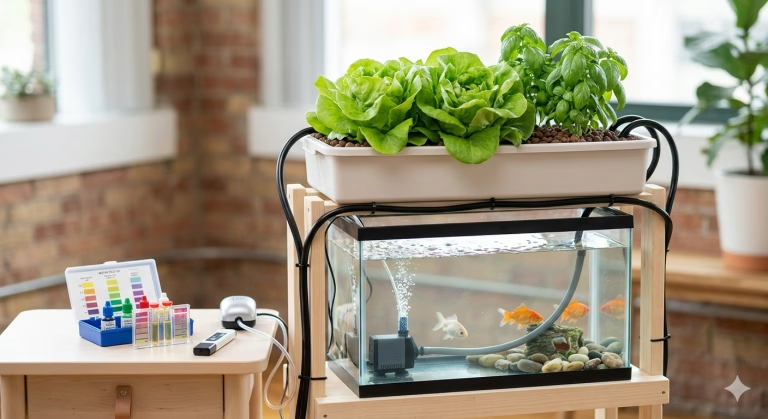
A water test kit is the center of your monitoring routine, but a few supporting tools make the process much more reliable. For most home systems, I recommend building a simple testing station rather than tossing reagents in a random drawer.
Useful supporting equipment includes:
- A dedicated notebook or spreadsheet to track trends.
- A thermometer for quick water temperature checks.
- A GH/KH kit for pH stability workups.
- A small flashlight or bright white task light for color comparison.
- Clean syringes or pipettes if your kit benefits from more careful sample handling.
- Labels for reagents, especially if you keep hydroponic and aquarium supplies together.
Aquaponics essential equipment checklist → Beginner Aquaponics Equipment Checklist: Essential Gear for Your First Home System
Which growers and systems benefit most from regular water testing?
Every aquaponics grower benefits from testing, but some systems depend on it more than others. Small systems, indoor systems, heavily stocked fish tanks, and fast-growing leafy green setups usually swing faster, so regular monitoring matters even more there.
Best fit plant types
These crops usually benefit from close water monitoring because they respond quickly to nutrient and pH changes:
- Lettuce
- Basil
- Mint
- Bok choy
- Kale
- Swiss chard
- Other leafy greens and herbs
Fruit-heavy crops like tomatoes, peppers, and cucumbers can also work in aquaponics, but they often demand tighter management, stronger nutrient support, and closer watching for deficiencies. In beginner systems, I usually see the smoothest results when growers start with leafy greens and herbs, then expand after the biofilter and fish routine are stable.
Best fit system types
Water testing is especially important in:
- Media bed systems, because solids handling and fish loading can vary a lot.
- Deep water culture and raft systems, because root-zone conditions affect a large plant mass quickly.
- NFT-style aquaponic hybrids, because small water volumes can change fast.
- Indoor and apartment systems, where volume is limited and temperature can swing from room conditions.
Media bed vs raft aquaponics → Media Bed Aquaponics: How Media Beds, Rafts, and Towers Compare
What common water testing mistakes cause bad decisions?
Most water testing mistakes are not about buying the wrong kit. They come from inconsistent technique, poor record keeping, or reacting too fast to a single reading.
Common mistakes include:
- Testing only when fish or plants already look bad.
- Ignoring GH and KH when pH keeps drifting.
- Misreading colors under yellow room lighting.
- Skipping vigorous shaking or required wait times on liquid tests, which can distort results.
- Forgetting that new systems need more frequent testing during cycling.
- Making large pH changes too quickly, which can stress fish.
From experience with controlled indoor growing and hot-climate planning, I can say that trend lines matter more than one isolated result. A slightly high nitrate reading is usually easier to manage than a system where pH has been sliding downward for two weeks and nobody noticed because there was no written log.
How do you troubleshoot results from your water kit?
A test result only helps if it leads to the right next step. The goal is not to chase perfect numbers but to identify the system imbalance behind the reading.
If ammonia or nitrite is above zero
Start by reducing feeding, increasing aeration, and checking whether your system is newly cycled, overstocked, or carrying excess waste. Partial dilution with fresh water can also help when toxicity is building, but changes should be gradual to avoid further stress.
If nitrate is too high
High nitrate often points to too few plants, excess feeding, or a system carrying more fish waste than the crop load can absorb. Adding more plants and diluting with fresh water are common responses when levels climb beyond your normal operating range.
If pH keeps falling
Look at KH and overall buffering before assuming the fix is more additives. In many home systems, chronic pH drift is really a buffering issue, not just a random pH problem.
If plants look deficient but fish look fine
The water may be biologically safe but still not ideal for nutrient availability. That is where pH trend data, temperature notes, plant type, and growth stage help you decide whether the issue is iron, potassium, crop load, or seasonal slowdown rather than a fish-side emergency.
FAQ
What is the best water testing kit for beginner aquaponics?
For most beginners, a liquid master kit is the best place to start because it covers pH, ammonia, nitrite, and nitrate in one box. The API Freshwater Master Test Kit is a strong beginner option because those are the exact readings most new growers need during setup, cycling, and routine weekly checks.
How often should I test aquaponics water?
New systems should usually be tested every two to three days while cycling so you can track ammonia and nitrite changes as beneficial bacteria establish. Established systems are often tested every three to seven days or weekly, especially when the system is stable.
Are water test strips good enough for aquaponics?
They are useful for quick checks, but I would not rely on strips alone for managing fish health in a new or unstable system. For most growers, strips work better as a backup or convenience tool than as the main testing method.
Do I need to test GH and KH too?
Yes, especially if your pH drifts a lot or your source water changes through the year. GH and KH help explain mineral balance and buffering capacity, which often reveal why pH problems keep coming back.
What pH should aquaponics water be?
A common operating range is about 6.4 to 7.8, though the ideal point inside that range depends on fish species, bacteria, and crop choice. The goal is usually a stable compromise rather than chasing the exact perfect number every day.
What should ammonia, nitrite, and nitrate read in aquaponics?
Ammonia should be 0 ppm, nitrite should be 0 ppm, and nitrate is often kept around 20 to 50 ppm in balanced systems. Those values give you a practical way to judge whether the nitrogen cycle is protecting fish while still feeding plants.
Can I use an aquarium test kit for aquaponics?
Yes, many home growers do exactly that, especially with liquid kits that cover the core nitrogen-cycle values. The main limitation is that you may still need separate GH/KH testing and possibly a thermometer or digital meter depending on how advanced your system is.
How much does a good aquaponics water testing setup cost?
A practical setup usually starts with one liquid master kit, then grows with add-ons like GH/KH testing, a thermometer, and maybe a digital pH meter. The exact cost varies by brand and retailer, but beginners can usually start small and expand once they know which readings they use most often.
What happens if I do not test the water regularly?
Problems usually show up later and in a more stressful way, such as fish stress, stalled growth, yellowing leaves, or sudden cycling issues. Regular testing helps you catch pH drift and toxic nitrogen compounds before the system gives you visible warning signs.
Author note
Soil Free Harvest focuses on practical hydroponics and aquaponics advice for home growers, apartment gardeners, and urban food producers. The perspective behind this article is shaped by hands-on system planning, indoor growing experience, and years of translating technical growing concepts into clear, usable advice for real setups in both hot, dry Phoenix, Arizona conditions and the colder seasonal rhythms of Michigan. That combination matters because water behavior, source water, and seasonal management can feel very different across climates, especially for growers balancing fish health, plant growth, and limited space. The editorial approach stays grounded in reliable testing, simple routines, and scalable methods that help beginners grow with confidence while still giving intermediate and advanced readers useful technical depth.
Share this:

Discover more from Soil Free Harvest
Subscribe to get the latest posts sent to your email.







One Comment