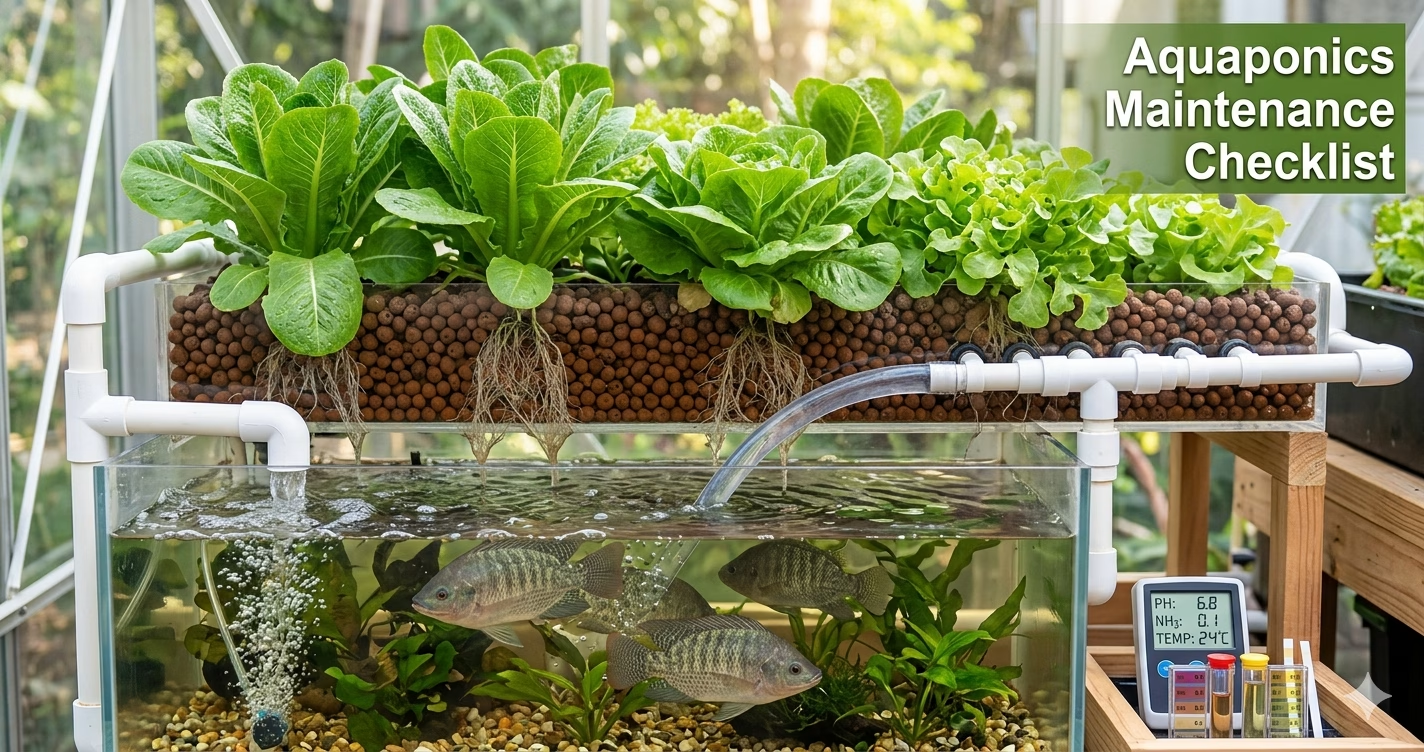
Aquaponics Maintenance and Troubleshooting Checklist
Aquaponics works best when the fish, plants, and biofilter stay in balance, so the real job is steady maintenance and fast troubleshooting. If you keep water quality stable, protect the bacteria colony, and catch small issues early, most systems will stay productive with only a modest weekly time commitment.
TL;DR: Test water often, feed fish lightly, clean filters before they clog, and never overclean the biofilter. Most common aquaponics problems trace back to pH drift, ammonia or nitrite spikes, low oxygen, clogged plumbing, or an off-balance fish-to-plant ratio.
What is aquaponics maintenance?
Aquaponics maintenance is the routine care that keeps the fish tank, grow beds, plumbing, pumps, and beneficial bacteria working as one system. The goal is not sterile cleanliness, but stable water, healthy fish, and enough plant uptake to process the nutrients created by fish waste.
In practical terms, that means checking water chemistry, removing solid waste before it breaks down, making sure water and air keep moving, and watching for stress signals in fish and plants. A well-run system usually needs more observation than labor, especially once it is mature.
How does aquaponics work?
Fish produce waste, bacteria convert toxic ammonia into nitrite and then nitrate, and plants absorb those nitrates as food. In a balanced system, the fish feed the plants, the plants help clean the water, and the bacteria do the chemical conversion in the middle.
That is why maintenance is really about protecting the cycle. If oxygen drops, pH crashes, solids build up, or the biofilter gets disturbed, the whole chain slows down and trouble follows fast.
Why is routine maintenance so important?
Aquaponics systems can look self-sustaining, but they are actually sensitive to small shifts. A clogged pump or neglected filter can quickly lead to low oxygen, ammonia spikes, and stressed fish.
Routine care also improves yields. Healthy water chemistry supports stronger roots, steadier plant growth, and better feed conversion, while neglected systems tend to stall, yellow, or smell off before they visibly fail.
What should you check every day?
Daily checks should take 5 to 10 minutes and focus on anything that can fail quickly. This is where you catch the expensive problems early.
- Check that water is moving normally through the system.
- Confirm the air pump, air stones, and circulation pump are running.
- Look at fish behavior during feeding for lethargy, gasping, flashing, or refusal to eat.
- Remove uneaten food and obvious debris.
- Scan for leaks, unusual noise, overflowing beds, or clogs.
In my own small systems, the fastest warning sign is often behavior, not water tests. If fish stop acting normal at feeding time, something is already drifting out of range.
What should you check every week?
Weekly maintenance is where most home growers stay on track. It usually takes 15 to 30 minutes and covers chemistry, waste removal, and basic equipment care.
- Test pH, ammonia, nitrite, nitrate, and temperature.
- Rinse mechanical filters or prefilters with system water, not tap water.
- Inspect pump output, tubing, and water distribution.
- Remove dead leaves, algae mats, and settled solids where accessible.
- Top up evaporated water with dechlorinated water.
A stable log matters as much as the test itself. If you write down readings weekly, pattern changes become obvious before plants or fish show stress.
What should you check every month?
Monthly work is deeper but still gentle. This is the time to prevent sludge buildup, catch worn parts, and correct small imbalances before they become system-wide problems.
- Inspect impellers, fittings, valves, and clamps for wear.
- Check biofilter flow without aggressively scrubbing it.
- Look for root crowding or root rot in dense grow beds.
- Review feeding rate and fish load against plant uptake.
- Record harvests, fish growth, and any recurring problems.
If nitrate stays high for long periods, the system may need more plant mass, fewer fish, or a larger grow bed. New growers often assume “more fish means more food,” but in aquaponics it can also mean more waste than the plants can process.
What is the ideal water range?
Most home aquaponics systems do best when pH stays roughly between 6.4 and 6.8, or in a broader practical band of about 6.0 to 7.5 depending on your fish and plants. Very low pH slows nitrification, while very high pH can push toxic ammonia higher.
Useful reference ranges for beginners:
| Parameter | Practical target | Why it matters |
|---|---|---|
| pH | 6.4 to 6.8, workable up to about 7.5 | Supports fish, bacteria, and plants reasonably well |
| Ammonia | As close to 0 as possible | Toxic to fish and a sign of cycling trouble |
| Nitrite | As close to 0 as possible | Also toxic and often appears during cycling |
| Nitrate | Moderate, not constantly high | Useful plant nutrient, but persistent excess suggests imbalance |
A continuously rising nitrate level with low ammonia and nitrite often means the biofilter is working, but plant uptake may not be keeping up.
What is the best way to troubleshoot aquaponics problems?
The fastest method is to diagnose by symptom, then confirm with water tests. Most aquaponics failures are caused by one of five issues: poor water quality, clogged flow, low oxygen, overfeeding, or an unbalanced fish-to-plant ratio.
If fish are gasping or hanging near the surface
Start with oxygen and flow. Check the air pump, airstones, pump output, and any blockage in plumbing or filters. Low dissolved oxygen can stress fish quickly and also slow the bacteria that convert waste.
Then test ammonia and nitrite right away. If either is elevated, reduce feeding, increase aeration, and consider partial water correction using dechlorinated water matched to system temperature.
If plants are yellowing or stalling
First verify pH and nitrates. If pH is too high or too low, nutrient availability changes even if the water contains plenty of nitrate.
If nitrates are low and fish are healthy, the system may simply be understocked or underfed. Leafy greens can do well in lighter systems, while heavy fruiting crops usually need a stronger nutrient supply and a more mature setup.
If ammonia or nitrite spike
This usually means the biofilter is not keeping up, the system is still cycling, or the bacteria were disturbed. Overcleaning filters, sudden chemical exposure, and major temperature swings can all weaken bacterial colonies.
Use a test kit, stop overfeeding, improve aeration, and avoid scrubbing biomedia with chlorinated water. If the system is new, remember that cycling can take several weeks before readings stabilize.
If nitrate is too high
High nitrate is less immediately dangerous than ammonia or nitrite, but it often shows that plant uptake is too weak for the current fish load. One source notes that nitrate above about 150 ppm can indicate not enough plants are present for the amount of waste produced.
Fixes include adding more plants, harvesting some fish, or expanding grow capacity. For many home systems, this is a good problem to have, but it still needs correction if it persists.
If the pump stops or flow drops
Check for clogged intakes, jammed impellers, kinked hoses, and biofilm buildup. Mechanical issues usually show up as weaker circulation before they become a full outage.
Keep a spare pump if possible, especially in warm rooms or enclosed apartments where oxygen loss can become an emergency fast. In my hot-climate experience, a backup pump is one of the cheapest forms of insurance you can buy.
What equipment do you need?
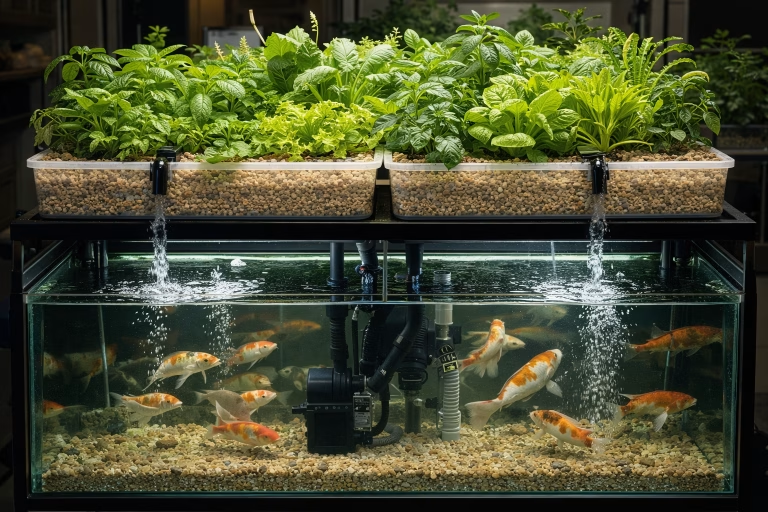
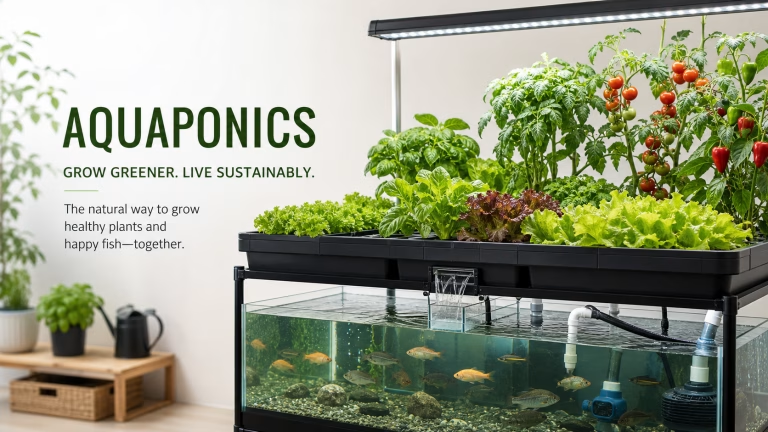
A basic aquaponics system needs a fish tank, grow bed or plant bed, water pump, air pump, plumbing, and some form of filtration or biofiltration. Larger or more complex layouts may also use sump tanks, radial filters, or separate loops.
For maintenance, you will also want:
- Liquid test kit for pH, ammonia, nitrite, and nitrate.
- Thermometer.
- Bucket dedicated to system use.
- Fish net and algae scraper.
- Spare tubing, valves, and pump parts.
- Logbook or spreadsheet.
Which system types are easiest to maintain?
Flood and drain media beds are often the simplest for beginners because they are forgiving and handle solids well. Floating raft systems can be easier to inspect visually, while NFT-style systems require cleaner water and tighter flow control.
| System type | Maintenance level | Best for | Main challenge |
|---|---|---|---|
| Media bed | Beginner-friendly | Herbs, lettuce, leafy greens | Media cleaning and solids management |
| Raft | Moderate | Lettuce, basil, spinach | Water quality and root health |
| NFT | Moderate to advanced | Greens, herbs | Clogging and flow consistency |
| Dual-loop or complex systems | Advanced | Larger mixed production | More valves, pumps, and failure points |
For most home growers, a media bed or simple raft system is the easiest place to build habits before moving into more complex plumbing.
What are the best plants and fish?
Leafy greens and herbs are the easiest plants for most aquaponics systems, especially in beginner and intermediate setups. Lettuce, basil, spinach, kale, and Swiss chard usually perform well because they can thrive in moderate nutrient levels and tolerable pH ranges.
Common beginner-friendly fish include tilapia, perch, goldfish, koi, bluegill, and some catfish species, depending on local legality and temperature control. Tilapia is often recommended because it is hardy and fast-growing, while perch are also noted as adaptable starter fish.
How do you set up a maintenance routine?
Aquaponics Maintenance Routine
A practical maintenance routine for home aquaponics. Follow these steps to keep water quality stable, protect fish health, and reduce equipment failures.
Materials and tools
- Liquid water test kit for pH, ammonia, nitrite, and nitrate.
- Thermometer.
- Net, algae scraper, and dedicated bucket.
- Spare pump parts, tubing, and fittings.
- Logbook or spreadsheet.
- Dechlorinated water for top-offs.
- Inspect the whole system.
Start with a visual sweep of the fish tank, grow beds, pump, and plumbing. Look for leaks, odd sounds, reduced flow, or dead zones where water is not reaching. - Check fish behavior.
Watch how fish respond to feeding and movement near the tank. Healthy fish usually move normally, eat predictably, and stay near their usual depth. - Test the water.
Measure pH, ammonia, nitrite, nitrate, and temperature. Record the numbers every time so you can see drift instead of guessing. - Clean the mechanical filters.
Rinse prefilters and solids traps with system water, not tap water. This removes waste while preserving the beneficial bacteria you need for nitrification. - Remove waste and debris.
Scoop out uneaten food, dead leaves, and visible sludge before they decompose. This helps prevent ammonia spikes and odor problems. - Confirm aeration and circulation.
Make sure the air pump, stones, and water pump are working at full output. Oxygen supports both fish health and bacterial activity. - Top up water carefully.
Replace evaporated water with dechlorinated water that is close to system temperature. Sudden changes can stress fish and slow the biofilter. - Adjust feeding if needed.
If water quality is slipping, reduce feeding for a day or two rather than forcing the system to process more waste. Smaller feed corrections often solve problems faster than chemical fixes. - Log what changed.
Note anything unusual, including weather shifts, new plants, water additions, and filter cleaning. This makes future troubleshooting much faster. - Review plant and fish load monthly.
If plants are crowded or nitrate stays elevated, rebalance the system by harvesting, thinning, or adding grow capacity.
What are the most common mistakes?
The biggest mistake is overfeeding. More food creates more waste than the bacteria and plants can handle, and the result is often cloudy water, poor oxygenation, and ammonia issues.
Other common mistakes include overcleaning the biofilter, ignoring pH drift, using chlorinated water for rinsing, and trying to grow too many heavy-feeding crops too soon. New systems need time to mature, and fast fixes can sometimes make the problem worse.
Which setups are best for home growers?
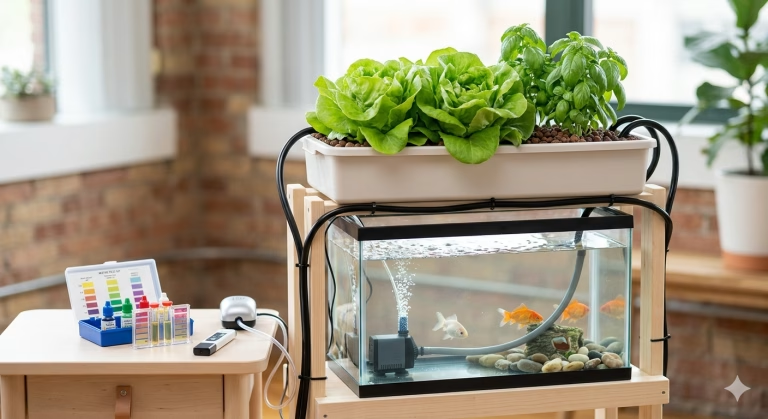
For apartment gardeners and hobbyists, small media beds, compact raft systems, and tabletop units are usually the most practical. They are easier to inspect, easier to maintain, and less expensive to power than larger outdoor builds.
If your goal is fresh herbs and leafy greens, keep the system simple. If your goal is fish production plus larger fruiting crops, expect more monitoring, stronger lighting, and a more careful nutrient balance.
What should you track in a log?
A good aquaponics log helps you spot patterns before they become failures. Track test results, feeding amounts, fish behavior, plant growth, maintenance tasks, and any equipment changes.
Useful log fields include:
- Date and time.
- pH, ammonia, nitrite, nitrate, and temperature.
- Feed amount.
- Fish behavior notes.
- Plant color, growth, and harvest.
- Filter cleaning or pump service.
- Any corrective action taken.
In my own experience, the best logs are the boring ones. A simple weekly record becomes incredibly valuable when you need to figure out why a system suddenly changed after months of stability.
FAQ
How often should I check my aquaponics system?
Check it daily for flow, aeration, and fish behavior, then test water at least weekly. New systems or unstable systems may need more frequent testing until readings stop swinging.
Is aquaponics hard to maintain?
It is not hard once the system is balanced, but it does require consistency. Most problems come from skipping small tasks until they turn into water quality issues.
How much does aquaponics maintenance cost?
For a small home system, the main costs are fish feed, test supplies, replacement tubing, and occasional pump parts. Ongoing costs are usually modest, but the exact amount depends on system size, electricity use, and how often parts wear out.
What is the biggest risk in aquaponics?
The biggest risk is a water quality crash, especially ammonia or nitrite spikes. These can happen fast after overfeeding, pump failure, or overcleaning the biofilter.
How long does it take to see results?
Leafy greens can show visible growth in a few weeks once the system is stable, while the full nitrogen cycle may take several weeks to mature. Many sources note cycling can take about 4 to 6 weeks or longer depending on conditions.
Can I use tap water?
You can, but it must be dechlorinated before it enters the system. Chlorine and chloramine can harm fish and beneficial bacteria, so always treat water before top-offs or refills.
Why do my plants look pale even when the fish are healthy?
That often points to pH, iron, or nutrient availability rather than fish waste alone. If pH is off, plants may not absorb nutrients efficiently even when nitrates are present.
What plants are easiest for beginners?
Lettuce, basil, spinach, kale, and Swiss chard are among the easiest choices. They do well in moderate nutrient conditions and are commonly recommended for raft or media-bed systems.
What fish are easiest for beginners?
Tilapia, perch, koi, goldfish, and some bluegill or catfish setups can work well depending on climate and local rules. Tilapia are often praised for their hardiness and fast growth, while perch are also adaptable starter fish.
Author note
I’ve built and maintained hydroponic and aquaponic systems in both hot, dry Phoenix, Arizona conditions and the more seasonal climate of Central Michigan. That mix taught me how strongly water temperature, evaporation, and seasonal light changes affect indoor and urban growing. My focus is practical home production, especially for growers who want reliable harvests from compact systems without unnecessary complexity.
Share this:

Discover more from Soil Free Harvest
Subscribe to get the latest posts sent to your email.







One Comment