CO2 Enrichment for Indoor Hydroponics: Simple Guide
Carbon dioxide enrichment is one of the most effective ways to boost plant growth and yield in indoor hydroponic systems. By supplementing CO2 levels from the ambient 400 ppm to 1,000-1,500 ppm, home growers can expect a 30-50% increase in growth rates and faster harvests. This guide walks you through everything you need to know about CO2 supplementation for soil-free gardening.
TL;DR: CO2 enrichment accelerates photosynthesis in enclosed hydroponic environments, increasing plant growth by 30-50% when maintained at 1,200-1,500 ppm. Tank-and-regulator systems work best for home growers; proper ventilation and monitoring are essential for safety and results.
Before implementing CO2 enrichment, understand the serious health and safety considerations. Elevated CO2 concentrations above 5,000 ppm can cause dizziness, headaches, confusion, and loss of consciousness in humans. CO2 is an odorless, colorless gas that accumulates silently; you cannot detect dangerous levels by feel or sight alone. Children, elderly individuals, and pets are at higher risk due to their lower body mass and higher respiratory rates. Never work in or remain in a CO2-enriched space for extended periods without proper ventilation and monitoring. Keep all CO2 equipment properly maintained, use a controller with automatic shutoff, and always maintain at least one escape route from your grow space. Consider this system unsuitable for homes with young children or individuals with respiratory conditions without professional guidance. Post clear warning signs on any enclosed space using CO2 enrichment.
Affiliate Disclosure: This article contains affiliate links. If you purchase through these links, soilfreeharvest.com may earn a small commission at no extra cost to you.
Why CO2 Enrichment Matters for Indoor Hydroponics
What is CO2 enrichment and how does it work in hydroponics?
CO2 enrichment involves increasing the concentration of carbon dioxide in the air around your plants beyond the natural atmospheric level of approximately 400 ppm. During photosynthesis, plants use CO2, light, and water to create glucose and oxygen. In enclosed indoor environments, natural air exchange is limited, which means plants often cannot access enough CO2 to maximize their photosynthetic rate. Supplementing additional CO2 removes this bottleneck.
The science is straightforward: more available CO2 allows plants to produce more energy through photosynthesis, leading to faster cell division, larger leaves, stronger stems, and heavier harvests. Research consistently shows that when other growing conditions are optimized (light, nutrients, temperature, and water), CO2 enrichment produces dramatic visible results.
How much does CO2 enrichment actually increase growth?
When properly administered, CO2 enrichment can increase plant growth and yield by 30-50% compared to plants grown in ambient CO2 levels. Some studies document increases as high as 150%, though results vary based on which crops you’re growing and how carefully you manage your system.
Key growth improvements include:
- Faster time to harvest (often 1-2 weeks earlier for seedlings)
- Larger plant biomass and leaf size
- Increased flowering and fruiting sites
- More nutritious, vibrant produce
- Enhanced stress resistance
The gains are most dramatic when other environmental factors are already dialed in. If your lighting, nutrients, or temperature are suboptimal, CO2 enrichment will provide smaller returns.
Is CO2 enrichment right for your hydroponic system?
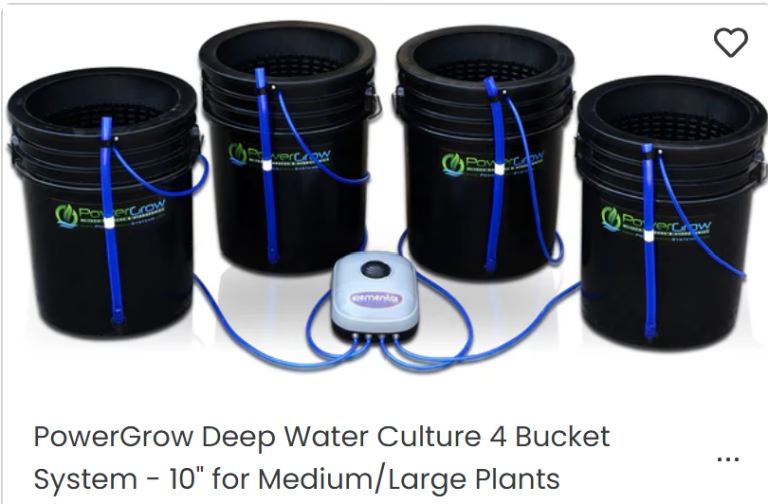
CO2 enrichment is compatible with virtually all indoor hydroponic systems: Deep Water Culture (DWC), Nutrient Film Technique (NFT), Kratky method, flood-and-drain, aeroponic, and others. However, it’s most cost-effective and practical for growers who:
- Grow high-value crops like tomatoes, peppers, cucumbers, or fresh herbs
- Run their systems in well-sealed, climate-controlled spaces
- Can monitor and maintain consistent CO2 levels
- Are willing to invest in basic safety monitoring
For small, passive systems with minimal light or in spaces with poor ventilation, the cost and effort of CO2 supplementation may not justify the investment. Similarly, very large commercial operations may require specialized equipment beyond the scope of home growing.
Learn about DWC systems → Deep Water Culture Hydroponics Guide
NFT hydroponic technique → Nutrient Film Technique Setup
Optimal CO2 Levels for Hydroponic Plants
What are the ideal CO2 levels for indoor growing?
The optimal CO2 concentration for most indoor hydroponic crops is between 1,000 and 1,500 ppm. Many growers target 1,200-1,500 ppm as the sweet spot, which provides strong growth stimulus while remaining cost-effective.
Key CO2 thresholds to remember:
- Below 400 ppm: Severely limits plant growth; essentially ambient CO2 levels
- 400-1,000 ppm: Still well below optimal; noticeable growth improvements possible
- 1,000-1,500 ppm: Optimal range for most crops; best cost-benefit ratio
- 1,500-2,000 ppm: Diminishing returns; expensive to maintain but still safe
- Above 2,000 ppm: Risk of toxicity, leaf damage, and reduced nutrient absorption
- Above 5,000 ppm: Potentially lethal to humans; extreme toxicity to plants
Start at 1,000 ppm and adjust upward based on your plant response and budget. It takes time and observation to dial in the right level for your setup.
Do all crops benefit equally from CO2 enrichment?
While all plants use CO2 during photosynthesis, some respond more dramatically to enrichment than others. Plants with a C3 photosynthetic pathway (the most common type) show stronger responses to elevated CO2 than C4 or CAM plants.
Best crops for CO2 enrichment in hydroponics:
- Lettuce and leafy greens (Romaine, butterhead, oak leaf varieties)
- Tomatoes (both full-size and cherry varieties)
- Cucumbers
- Peppers (bell peppers and hot peppers)
- Basil and culinary herbs (oregano, thyme, rosemary)
- Strawberries
- Radishes
These crops typically show 30-50% yield increases with proper CO2 supplementation. Tomatoes and peppers, in particular, respond strongly to enrichment and will reward your investment with larger fruit and more abundant harvests.
Leafy greens like lettuce are popular for CO2 enrichment because they mature quickly (25-40 days), making it easy to see the impact of your CO2 system on growth speed and final product quality.
Indoor hydroponic herbs → Hydroponic Herb Garden Setup
Does light intensity affect CO2 utilization?
Yes, absolutely. CO2 enrichment works hand-in-hand with light intensity. Plants can only use elevated CO2 levels effectively when they receive sufficient light energy. If your grow lights are weak or positioned too far from the canopy, plants won’t be able to capitalize on extra CO2.
The general rule is: higher light intensity allows plants to use higher CO2 concentrations more efficiently. Growers using high-intensity LED grow lights see better returns from CO2 supplementation than those using lower-power lighting. Temperature also matters; slightly warmer conditions (75-80°F) support faster photosynthesis when CO2 is elevated.
This is why CO2 enrichment is most commonly paired with strong LED or HPS lighting systems. Without that light energy, the extra CO2 won’t translate into faster growth.
Types of CO2 Enrichment Systems for Home Growers
What are the main CO2 supplementation methods?
There are three primary ways to add CO2 to your indoor hydroponic environment, each with pros, cons, and ideal use cases.
1. Compressed CO2 Tank and Regulator Systems
This is the most popular method for home and hobbyist growers. The system consists of a pressurized CO2 tank (typically 5-50 pounds), a regulator to control pressure, tubing to distribute the gas, and ideally a controller to automate release based on a timer or sensor.
How it works:
- CO2 tank stores compressed gas at high pressure (around 800 psi when full)
- A dual-stage regulator reduces pressure to usable levels (usually 15-30 psi for injection)
- Tubing delivers CO2 into the grow space or directly above the plant canopy
- A solenoid valve controls when CO2 is released
- A timer or monitor activates the valve during daylight hours when photosynthesis is active
Advantages:
- Precise control over CO2 levels
- No heat byproduct (unlike combustion methods)
- No safety concerns with burning fuel
- Tanks are relatively compact and can sit outside the grow space
- Easy to refill at local welding or homebrewing supply shops
- Very popular in the hydroponic community; lots of DIY information available
Disadvantages:
- Ongoing cost for tank refills (typically $15-25 per fill, depending on location)
- Requires initial investment in regulator and controller ($50-200+)
- Pressure can fluctuate as the tank empties (“end of tank dump”), especially with single-stage regulators
- Requires regular monitoring and occasional maintenance of tubing and connections
Best for: Home growers with 10-400 sq ft grow spaces; anyone wanting reliable, programmable CO2 control without heat concerns.
Cost ballpark:
- 20 lb CO2 tank: $50-100 (one-time; often rented)
- Dual-stage regulator: $50-100
- Solenoid valve and tubing: $20-40
- Timer or controller: $50-300+ (depending on automation level)
- Tank refills: $15-25 each, every 1-3 months depending on usage
2. CO2 Generators and Burners
CO2 generators work by burning propane or natural gas, which produces CO2 as a combustion byproduct. The burning process also releases water vapor and heat into the grow space.
How it works:
- A propane or natural gas line connects to the generator
- The burner ignites the fuel
- Combustion produces CO2, water, and heat
- Gas is directed into the grow room via a vent or diffuser
- Controllers can regulate burn cycles based on CO2 sensors
Advantages:
- Very cost-effective for large grow spaces (1000+ sq ft)
- Continuous CO2 generation without tank refills
- Heat byproduct can reduce heating costs in winter
- High CO2 output; can reach 2,000 ppm quickly
Disadvantages:
- Requires a fuel supply line (propane or natural gas)
- Produces heat, which can raise grow room temperature 5-10°F
- Must ensure complete combustion to avoid toxic carbon monoxide
- Not ideal for spaces without proper ventilation
- More complex to set up and maintain
- Recommended only for experienced growers with spaces larger than 10×10 feet
- Safety concerns if fuel lines develop leaks
Best for: Larger commercial or semi-commercial operations; growers in cold climates who can benefit from the heat; spaces with excellent ventilation and monitoring.
Cost ballpark:
- Generator/burner unit: $300-2,000+
- Installation and fuel line setup: $200-1,000
- Ongoing propane or natural gas costs: variable
- CO2 controller: $100-500
3. Chemical CO2 Generators
This is the lowest-cost, lowest-tech option. Chemical reactions (typically baking soda and vinegar, or commercial pellet-based products) produce CO2 gas over time.
How it works:
- Two chemicals are mixed or placed in a chamber
- A chemical reaction produces CO2 gas
- Gas diffuses slowly into the grow space
- Some systems use a drip timer to release chemicals at intervals for controlled CO2 production
Advantages:
- Extremely affordable ($10-50)
- No electricity or fuel supply needed
- Silent operation
- Good for very small spaces or temporary setups
- Simple, beginner-friendly
Disadvantages:
- Uncontrolled, unpredictable CO2 levels
- No way to monitor or adjust concentration
- Can produce uneven CO2 distribution
- Requires frequent chemical purchases and replacement
- Not suitable for serious growers seeking consistent results
- Minimal yield impact compared to tank or generator systems
Best for: Casual experimenters; very small setups; temporary trials before investing in a tank system.
Cost ballpark:
- Initial setup: $10-50
- Ongoing chemical costs: $5-15/month
How to Set Up a CO2 Tank and Regulator System
Step-by-step CO2 system installation for home growers
The CO2 tank and regulator system is the most practical choice for home growers. Here’s how to assemble and install one in your hydroponic setup.
Materials and Tools You’ll Need:
- Compressed CO2 tank (20-50 lb aluminum tank; can be rented or purchased)
- Dual-stage CO2 regulator (strongly recommended over single-stage to avoid end-of-tank dump)
- Solenoid valve (controls on/off flow)
- Tubing (clear vinyl, sized to fit regulator outlet and solenoid inlet)
- Tubing fittings and connectors (barbed or threaded, depending on your regulator)
- CO2 controller (timer-based, sensor-based, or simple outlet timer)
- Photocell (optional; lets controller know when lights are on)learn.
- Dish soap and water (for testing connections)
- Adjustable wrench or hex key (depending on regulator design)
- Small clamps or hose clamps (to secure tubing)
Installation Steps:
- Locate your CO2 tank outside or at the edge of your grow space. CO2 is heavier than air and will naturally settle, so tank placement matters less than tubing placement. Position the tank so it’s accessible for future refills but stable and away from high traffic areas. Ensure the valve on top of the tank points downward or sideways, not straight up.
- Attach the regulator to the tank. Use an adjustable wrench or hex key to tighten the regulator inlet connection to the tank’s main valve. Hand-tighten first, then use the wrench for a snug (not cranked) fit. Over-tightening can damage threads; snug is sufficient. Always use a dual-stage regulator if possible; they provide more stable pressure as the tank empties.
- Connect tubing from the regulator to the solenoid valve. Take clear vinyl tubing sized to fit your regulator’s outlet and solenoid inlet (often 1/4 inch diameter). Barbed fittings slide into tubing and are held in place with hose clamps. Push the tubing firmly onto the barred outlet of the regulator’s low-pressure gauge port (not the high-pressure port).
- Connect the solenoid valve to your grow space. Attach more tubing to the solenoid outlet. This tubing will distribute CO2 into your grow space. Many growers run tubing to a fan, point it along the underside of the fan blades, and let the fan distribute CO2 evenly throughout the space. Alternatively, you can use a diffuser or airstones to bubble CO2 into the room.
- Set up the controller and photocell. Plug the photocell into your controller, then plug the controller into an outlet. Set the photocell to receive light from your grow lights (mount it where it can “see” the lights). Attach the controller’s output cord to the solenoid valve. When the lights turn on and the photocell detects light, the controller activates the solenoid and CO2 begins flowing. When lights turn off, the solenoid closes and CO2 stops.
- Adjust the regulator pressure. Before turning on the tank, ensure the regulator’s adjustment knob is fully open (counterclockwise). Then, slowly open the tank’s main valve (top of tank) by turning it counterclockwise. You’ll see the high-pressure gauge (tank pressure) climb. Close the tank valve again.
- Set your target CO2 concentration. This is where a controller with a monitor is ideal. If you’re using a simple timer, adjust the regulator’s low-pressure gauge screw by turning it clockwise to increase output. Many growers experiment with small adjustments (quarter-turn) and observe plant response over a few days. Start conservatively at 1,000 ppm equivalent and increase gradually.
- Test all connections for leaks. Mix a small bowl of dish soap and water. Apply it to all connection points: tank to regulator, regulator to tubing, tubing to solenoid, solenoid to room diffuser. Bubbles indicate a leak. Tighten the fitting slightly or reseat the tubing. Never use PTFE tape on barbed fittings; it can prevent proper seating.
- Check your grow room ventilation. Ensure your exhaust fan, intake, and circulation fans are running as normal. Proper air circulation prevents CO2 pockets and ensures even distribution. An oscillating fan in the center of the room helps distribute enriched air throughout the canopy.
- Monitor CO2 levels and plant response over 1-2 weeks. A CO2 monitor ($50-200) gives you real-time feedback. Without a monitor, watch for signs of too much CO2 (thick, curled leaves, discoloration) or too little (slow growth compared to your expectations). Adjust the regulator slightly and observe for several days before making another change.
Maintenance Tips:
- Check the tank pressure monthly. When pressure drops below 300-400 psi, plan for a refill soon.
- Inspect tubing for cracks, kinks, or discoloration every 3-6 months; replace if damaged.
- Clean the solenoid valve and diffuser every 1-2 months, especially if mineral deposits appear.
- Keep the regulator dry and away from condensation; moisture can damage internal seals.
- Never let the tank sit in direct sunlight or near heat sources.
Troubleshooting hydroponic systems → Common Hydroponic Problems and Solutions
CO2 Safety and Monitoring
What are the dangers of CO2 enrichment?
CO2 enrichment is safe when properly managed, but there are real risks to be aware of.
Risks to plants:
- CO2 above 2,000 ppm can reduce nutrient uptake and cause leaf damage
- Levels above 2,000 ppm may cause iron, zinc, and vitamin C depletion in plants
- Poor distribution creates hot spots where CO2 reaches toxic levels while other areas stay deficient
- Overfeeding CO2 wastes money with minimal yield gains
Risks to humans:
- CO2 levels above 5,000 ppm are dangerous to human health
- At 5,000+ ppm, symptoms include dizziness, confusion, headaches, and rapid breathing
- Prolonged exposure above 10,000 ppm can cause unconsciousness or death
- CO2 is heavier than air, so it settles near the floor; children and pets are more susceptible to exposure
- In poorly ventilated spaces, CO2 can accumulate silently without obvious warning signs
Best safety practices:
- Use a CO2 monitor to track levels. A digital CO2 monitor costs $50-200 and provides real-time feedback.
- Always keep your grow room well-ventilated. An exhaust fan running periodically (even during CO2 enrichment) removes excess gas and brings in fresh air.
- Keep CO2 levels below 1,500 ppm. This provides strong plant benefits while leaving a safety margin.
- Never stay in a CO2-enriched room for extended periods without fresh air access.
- Set up your system so you can easily turn off CO2 and ventilate the space if needed.
- Use a photocell-based controller that turns off CO2 during dark hours. Plants don’t need CO2 without light, and this reduces wasted gas and keeps nighttime levels safe.learn.
- Post warning signs on your grow room door alerting others to the CO2 enrichment system.
- Store CO2 tanks upright in a cool, stable location away from heat and direct sunlight.
How do I monitor CO2 levels?
There are three main monitoring approaches:
1. Digital CO2 Monitor with Controller (affiliate link) – Best for serious growers)
- Continuously displays CO2 ppm in the room
- Can be set to automatically control your solenoid valve or generator
- Plugs into your regulator/solenoid system
- Cost: $100-500floraflex+2
- Examples: Titan Controls CO2 monitors, GeoFlora controllers
2. Timer-Based System (Good middle ground)
- Uses a simple outlet timer to activate CO2 for set intervals during light hours
- No real-time feedback, but low cost and very reliable
- Requires manual adjustment based on plant observation
- Cost: $20-50htgsupply+1
- Works best in small, well-sealed spaces with consistent air circulation
3. Observation and Adjustment (Budget option for very small setups)
- Watch plants for signs of adequate or excess CO2
- Adjust regulator every few days based on growth rate
- No monitoring equipment needed
- Cost: $0
- Least precise; works only for small hobby setups where you can carefully observe plants daily
For most home growers, a timer-based system combined with periodic observation is sufficient. If you want precise control and real-time feedback, invest in a CO2 controller with a monitor.
CO2 Enrichment Maintenance and Troubleshooting
Common CO2 system problems and solutions
Problem: CO2 isn’t flowing (solenoid remains closed, no gas reaches the room)
- Check that your controller is plugged in and powered on
- Verify the photocell is placed where it can detect your grow lights
- Test the solenoid valve by plugging the controller directly into the wall outlet (not a surge protector) to ensure adequate power
- Inspect the solenoid for mineral buildup; soak it in distilled water for 30 minutes and rinse
- Confirm that the tank’s main valve is open
- Check for tubing kinks or blockages between the regulator and solenoid
Problem: CO2 levels spike and then crash (inconsistent levels, poor plant response)
- You likely have a single-stage regulator that’s experiencing end-of-tank dump. Upgrade to a dual-stage regulator for stable pressure
- Ensure the solenoid valve is not stuck open; it should click on and off with your controller’s cycles
- Check for a tubing leak or faulty connection that causes pressure loss
- Verify that your circulation fan is running to distribute CO2 evenly; stagnant air creates pockets of high and low CO2
Problem: Tank runs empty quickly; CO2 consumption is excessive
- Your regulator may be stuck open, releasing gas constantly. Turn off at the tank and have it inspected
- Solenoid valve may be leaking. Apply soapy water to all connections to find leaks
- You may be running CO2 during dark hours when plants can’t use it. Ensure your photocell controller is working correctly
- Your grow space may be too large for your current CO2 output; consider upgrading to a larger tank or generator
Problem: Tubing has discoloration or feels brittle
- Replace the tubing immediately; it’s degrading and will eventually fail
- Use clear vinyl tubing rated for CO2 use; some tubing types react with CO2 or become brittle over time
- Store extra tubing in a cool, dark place to extend its life
Seasonal adjustments and best practices
In winter: CO2 enrichment is most beneficial when your grow room is sealed tight for heating efficiency. Run enrichment at full capacity during daylight hours. Some growers use CO2 generators to provide both CO2 and supplemental heat.
In summer: If your grow space is climate-controlled, CO2 enrichment works year-round. However, in hot climates or if using a generator (which produces heat), you may need to reduce CO2 levels or add cooling capacity. Balance the benefits of CO2 with the cost of additional cooling.
During dormancy or dark season: If you’re growing light-dependent crops, CO2 enrichment provides minimal benefit during short daylight hours. Save refill costs by running enrichment only during peak daylight hours (typically 10 AM to 2 PM for best results).
Regular maintenance checklist:
- Monthly: Check tank pressure; inspect tubing for damage
- Every 2-3 months: Clean solenoid valve and diffuser; test all connections
- Every 6 months: Replace regulator seals if they show signs of wear; inspect photocell for dirt/debris
- Annually: Replace old tubing; have regulator professionally serviced if it’s high-use
Hydroponic maintenance guide → Complete Hydroponic System Maintenance Schedule
CO2 Enrichment and Plant Nutrient Management
How does CO2 enrichment affect nutrient uptake?
When plants grow faster due to CO2 enrichment, they consume nutrients more rapidly. Studies show that CO2-enriched plants can use significantly more water and nutrients than plants growing at ambient CO2 levels.
The practical implication: You must adjust your fertilizer dosage upward when enriching with CO2. Most growers using enrichment follow their nutrient manufacturer’s “aggressive feeding” recommendations rather than standard dosages.
Monitor your plants closely for:
- Early yellowing of lower leaves (sign of nitrogen depletion accelerating)
- Stunted growth despite adequate CO2 (possible nutrient lockout)
- Signs of micronutrient deficiencies like calcium or magnesium (blossom end rot in tomatoes, interveinal chlorosis in new leaves)
In hydroponic systems, test your nutrient solution’s EC (electrical conductivity) or PPM (parts per million) every 3-5 days when using CO2. Maintain your target nutrient level consistently. With DWC and other closed systems, this is easier than soil growing because you can see and test the exact nutrient concentration.
Adjust your reservoir’s nutrients based on plant uptake and regular testing, not just a fixed schedule. Fast-growing CO2-enriched plants deplete nutrients faster than you might expect.
FAQ: CO2 Enrichment for Hydroponic Growers
1. Is CO2 enrichment worth the cost for a small home hydroponic garden?
For very small systems (under 50 sq ft) with low-value crops like lettuce or herbs, the return on investment is modest. If you’re growing high-value crops like tomatoes or peppers, or you want to maximize your harvest from a limited space, CO2 enrichment typically pays for itself in one or two growing cycles. A tank-based system costs $150-300 to set up and $15-25 per refill. If your enhanced yields are worth more than $30-50 per month, it’s economically justified.
2. How long does a CO2 tank last before it needs a refill?
A 20 lb tank lasts 2-8 weeks depending on how often you run your system and how large your grow space is. Most home growers refill every 4-6 weeks. A 50 lb tank lasts proportionally longer. You’ll develop a feel for refill timing after the first couple of cycles.
3. Can I use a fish tank CO2 system for my hydroponic garden?
Not effectively. Aquarium CO2 systems are designed for much smaller spaces and produce minimal CO2 output. They won’t raise CO2 levels in a grow tent or room to therapeutically beneficial levels. A hydroponic or horticultural CO2 system is necessary.
4. What’s the best time of day to run CO2 enrichment?
CO2 enrichment should coincide with your grow lights. Run enrichment only during daylight hours (or when lights are on). Plants use CO2 during photosynthesis, which requires light. Running CO2 during dark hours wastes gas and can create safety concerns. Use a photocell-based controller to automate this.learn.
5. Can I enrich CO2 in an outdoor garden?
Practical effectiveness is very low. Outdoor air naturally exchanges, and CO2 diffuses away quickly. CO2 enrichment is designed for enclosed, controlled indoor environments where the gas can build up and be retained. Outdoor growers don’t typically use CO2 supplementation.
6. How do I know if my plants are getting too much CO2?
Signs of excessive CO2 include thickened, waxy leaves; leaf curling or slight discoloration; and stunted growth despite other optimal conditions. If you notice these signs, reduce your CO2 level by 200-300 ppm and observe the plants for 3-5 days. They should recover.
7. Do I need a CO2 monitor, or can I just use a timer?
A monitor provides precise feedback and is ideal if you have the budget. A timer is simpler, cheaper, and works fine for most small home operations. If you choose a timer, start conservatively at 15-30 minutes of CO2 injection per hour during light hours. Adjust based on plant growth and visual feedback over 1-2 weeks.
8. How often should I replace my CO2 regulator or solenoid valve?
With proper maintenance, a quality regulator lasts 5-10 years. Solenoid valves typically last 3-5 years before they become unreliable or stick open. Inspect them annually for corrosion or mineral buildup. If they fail, replacement is straightforward and inexpensive ($30-100 for solenoid, $50-100 for regulator).
9. What’s the difference between a single-stage and dual-stage regulator?
A single-stage regulator reduces tank pressure in one step. As the tank empties, pressure fluctuates, causing inconsistent CO2 output (end-of-tank dump). A dual-stage regulator reduces pressure in two steps for much more stable output throughout the tank’s life. Dual-stage is strongly recommended and is worth the extra $20-30 cost.
10. Can I use CO2 enrichment with outdoor greenhouse growing?
Yes, but it’s most effective in sealed or heavily covered greenhouses where you can retain the CO2. Open-sided or naturally ventilated greenhouses lose CO2 too quickly for enrichment to be economical. A poly-covered greenhouse with controlled ventilation is ideal for CO2 supplementation.
Pairing CO2 Enrichment with Other Growth Strategies
CO2 enrichment works best when other growing conditions are already solid. Before investing in a CO2 system, ensure you have:
- Adequate lighting: At least 300-400 micromoles per square meter per second (umol/m²/s) for leafy crops; 600-1,000 umol/m²/s for fruiting crops like tomatoes
- Stable temperature: 70-80°F (ideally 75-80°F when CO2 is enriched)floraflex+2
- Proper humidity: 40-70%, with ventilation fans running
- Balanced nutrients: Stable EC (electrical conductivity) at appropriate levels for your crop
- Good air circulation: Oscillating fans to distribute enriched CO2 evenly
LED grow light selection → Best LED Grow Lights for Indoor Hydroponics
Hydroponic nutrients → Hydroponic Nutrient Solutions: Selection and Management
When all these factors align, CO2 enrichment becomes a powerful multiplier of your yields and growth rates. It’s not a magic bullet, but it is a proven technology that, when properly applied, delivers measurable results.
Getting Started with Your CO2 Enrichment System
If you’re ready to try CO2 enrichment:
Step 1: Choose your system type. For home growers, a tank-and-regulator system is the most practical starting point.
Step 2: Purchase or rent a CO2 tank from a local welding supplier, homebrew shop, or online hydroponic supplier. A 20 lb tank is ideal for most home setups.
Step 3: Invest in a dual-stage regulator, solenoid valve, tubing, and either a simple timer or a CO2 controller. Budget $100-300 for these components initially.
Step 4: Follow the installation steps outlined above. Take your time; setup is straightforward but requires attention to detail.
Step 5: Start conservatively. Run CO2 for short intervals (15-30 minutes per hour) during daylight and observe plant response for 1-2 weeks.
Step 6: Adjust upward gradually if growth is not as strong as you’d like. Most growers find their ideal CO2 level within 2-3 weeks of experimentation.
Step 7: Monitor your plants and your system regularly. Maintenance is minimal, but periodic checks prevent problems.
CO2 enrichment can be your next step toward more productive, faster-growing hydroponic gardens. The science is proven, the systems are affordable, and the results are real.
About the Author
This article was written by a cybersecurity engineer and hydroponic systems specialist based in Phoenix, Arizona, with extensive hands-on experience in indoor gardening and soil-free cultivation. Specializing in beginner-friendly yet technically sophisticated growing approaches, the author is committed to translating complex horticultural science into practical guidance for home growers, apartment gardeners, and aspiring urban farmers. The focus remains on sustainable, efficient food production systems suitable for arid climates and space-constrained urban environments.
Additional Resources:
- https://extension.okstate.edu/fact-sheets/greenhouse-carbon-dioxide-supplementation.html
- https://acornhorticulture.com/the-role-of-co2-enrichment-in-photosynthesis-and-plant-growth/
- https://www.htgsupply.com/informationcenter/learn-about-environmental-controls/adding-co2-for-indoor-gardening/
- https://kryzen.com/optimizing-co2-levels-and-supplementation-in-hydroponic-systems/
- https://www.co2meter.com/blogs/news/41003521-co2-calculator-for-grow-room-or-indoor-greenhouse
- https://learn.hydrobuilder.com/beginners-guide-to-co2/
- https://www.reef2reef.com/threads/how-to-build-a-custom-dual-stage-co2-regulator.996519/
- CO2 Enrichment Methods for Indoor Growers
- https://growershouse.com/collections/co2-generators-burners
- https://www.co2meter.com/blogs/news/how-to-implement-co2-to-your-grow
- https://atlas-scientific.com/blog/effects-of-too-much-co2-in-grow-room/
- https://rockymountainair.com/blog/carbon-dioxide-enrichment-hydroponics-growing/
- https://www.simplyhydro.com/using-co2/
- How to Setup a CO2 Tank Monitor, Controller and Regulator – How to use Co2 Equipment
- https://pmc.ncbi.nlm.nih.gov/articles/PMC6349027/
Share this:

Discover more from Soil Free Harvest
Subscribe to get the latest posts sent to your email.








One Comment