Hydroponics Growing Mediums: The Complete Guide to Types, Selection, and Management
Intro & TL;DR
Hydroponics growing mediums replace soil to anchor roots while delivering water, oxygen, and nutrients directly to plants. The right medium depends on your hydroponic system type, plant needs, and management style—inert options like clay pebbles and rockwool offer pH stability, while organic media like coconut coir provide better water retention.
Quick Summary: Clay pebbles, perlite, rockwool, and coconut coir are the most popular hydroponic growing mediums. Inert media give you better control over pH and nutrients, while water-retentive media reduce watering frequency. Match your medium to your system type (DWC, ebb and flow, NFT, drip, or aeroponics) for optimal growth, and budget $25–$200 for startup media costs plus ongoing replacements.
What Is a Hydroponics Growing Medium?
A hydroponics growing medium is a soil substitute that supports plant roots while allowing water, nutrients, and oxygen to reach them efficiently. Unlike soil, hydroponic media are engineered for specific properties: drainage rate, water retention, aeration, pH stability, and reusability.
Hydroponic media serve three core functions:
- Anchor roots in place for stability and plant structure.
- Allow water and nutrient solution to flow through while providing oxygen to the root zone.
- Maintain a stable chemical environment that doesn’t interfere with pH or nutrient uptake.
Why Does Growing Medium Matter in Hydroponics?
The medium you choose directly affects plant growth speed, nutrient efficiency, pH stability, and system maintenance requirements. Here’s why it matters:
Growth Speed: Inert media with good aeration (clay pebbles, perlite) promote faster oxygen uptake, speeding root development by 10–30% compared to slower-draining options.
Nutrient Delivery: Media with balanced water retention avoid both waterlogging and nutrient starvation. Too much retention (rockwool) risks root rot; too little (pure perlite) causes frequent nutrient lockout.
pH Control: Inert media won’t buffer or alter your nutrient solution’s pH, giving you full control. Organic media (coco coir) can shift pH, requiring more frequent monitoring and adjustment.
System Compatibility: Each hydroponic system type works best with specific media. Mismatching media to your system wastes time, money, and crops.
Hydroponic system types → Beginners guide to hydroponics
Popular Hydroponics Growing Mediums: Pros, Cons, and Best Uses
Expanded Clay Pebbles (LECA)
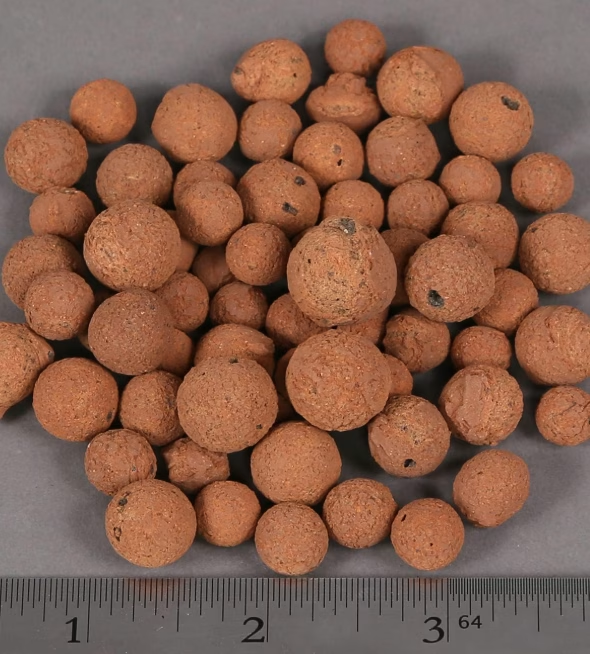
What it is: Lightweight, porous pellets made from heat-expanded clay, available in 8–16mm sizes.
Pros:
- Reusable for 5–7 years, reducing long-term costs.
- Excellent drainage and aeration (50% air space when wet).
- pH neutral and fully inert; won’t affect nutrient chemistry.
- Works in nearly all hydroponic systems.
Cons:
- Higher upfront cost ($1.50–$3 per pound).
- Requires thorough rinsing before reuse to remove algae and salt buildup.
- Dust particles can clog drip lines or aitstones.
Best for: Ebb and flow, drip systems, and commercial operations where reusability matters. Home growers with budget flexibility.
Cost: $25–$50 per 5-liter bag.
Expanded Clay Pebbles (LECA) is lightweight, reusable, pH neutral, great aeration and drainage, ideal for ebb and flow and drip systems. My favorite LECA is Hydroton Original Clay Pebbles – 10 Liter (affiliate link)
Perlite
What it is: Volcanic glass expanded by heating to create a lightweight, white, porous material.
Pros:
- Extremely lightweight and easy to handle.
- Excellent drainage and aeration (up to 95% air space).
- Inert and pH neutral.
- Affordable ($0.50–$1 per pound).
Cons:
- Low water retention; requires frequent watering and monitoring.
- Dust is a health hazard if inhaled; wear a dust mask when handling.
- Not reusable; single-use only.
- Can float in water, requiring submersion or anchoring in DWC systems.
Best for: DWC systems, mixed media blends, and growers prioritizing drainage and aeration. Ideal for beginners on tight budgets.
Cost: $15–$30 per bag.
Rockwool (Mineral Wool)
What it is: Spun mineral fibers compressed into cubes, slabs, or loose fill. Made from melted basalt and limestone.
Pros:
- Superior water retention (holds 80% moisture while maintaining 20% air space).
- Excellent for seedlings and clones; high germination rates (85–95%).
- Minimal dust compared to perlite.
- Long shelf life when stored dry.
Cons:
- Requires pH conditioning before use (lower pH to 5.0–6.0 by soaking in acidified water).
- Not reusable; disposed after one season.
- Can compact over time, reducing aeration.
- Higher cost per use ($2–$4 per pound).
Best for: Seed starting, clone propagation, ebb and flow systems, and growers prioritizing water retention. Best for intermediate to advanced growers.
Cost: $20–$40 per package.
Rockwool (Mineral Wool) has superior water retention and oxygenation, requires pH adjustment before use, often used for seedlings and flood/drain systems. A good option that comes with the net cups is these 1.2-Inch Rockwool Cubes with 30PCS 2-Inch Net Cups (affiliate link)
Coconut Coir
What it is: Fibrous material extracted from coconut husk, processed into blocks, chips, or loose fill.
Pros:
- Sustainable and eco-friendly alternative to peat moss.
- Good water retention with moderate aeration.
- Naturally anti-fungal and anti-bacterial.
- pH neutral to slightly acidic (5.5–6.5).
- Affordable at scale.
Cons:
- Variable quality across suppliers; batch inconsistency is common.
- May contain residual salt from processing; rinse thoroughly before use.
- Degrades over 1–2 seasons; not truly reusable.
- Requires buffer capacity adjustment; some growers need to add calcium to prevent deficiency.
Best for: DWC systems, mixed media blends, and environmentally conscious growers. Ideal for medium-scale operations.
Cost: $10–$25 per 5-liter block or bag.
Vermiculite
What it is: Hydrated silicate mineral expanded through heat treatment into lightweight, accordion-like particles.
Pros:
- High water and nutrient retention (holds 40–50% moisture).
- Good cation exchange capacity (CEC), naturally buffers pH.
- Lightweight and easy to handle.
- Affordable ($0.75–$1.50 per pound).
Cons:
- Compacts quickly; aeration decreases after 4–6 weeks.
- Not suitable as a standalone medium; works best mixed with perlite (50/50 blend).
- Can release potassium, skewing nutrient balance.
- Degrades within one season.
Best for: Mixed media blends (60% perlite + 40% vermiculite) for growers wanting balanced water retention and drainage. Less common in modern hydroponics.
Cost: $12–$20 per bag.
Growstones (Recycled Glass)
What it is: Lightweight pellets made from recycled glass, similar in size and function to clay pebbles.
Pros:
- Environmentally sustainable (100% recycled content).
- Reusable for 7+ years.
- Excellent water retention and aeration balance.
- pH neutral and fully inert.
- Lighter than clay pebbles, reducing shipping costs.
Cons:
- Newer product; less widely available than clay pebbles or perlite.
- Higher cost ($2–$4 per pound).
- Requires research-backed supplier vetting.
Best for: Eco-conscious growers and commercial operations seeking long-term sustainability. Best for ebb and flow and drip systems.
Cost: $30–$60 per 5-liter bag.
How to Match Growing Medium to Your Hydroponic System Type
Choosing the wrong medium for your system wastes nutrients, causes pH swings, and reduces yields. Here’s how to match media to systems:
| System Type | Best Media | Why | Secondary Options |
|---|---|---|---|
| Deep Water Culture (DWC) | Perlite, Coconut Coir | Roots submerged; media only anchors. Good drainage prevents waterlogging. | Vermiculite-perlite blend |
| Ebb and Flow | Clay Pebbles, Rockwool | Alternating wet/dry cycles need media that drains fast and retains enough moisture for dry periods. | Growstones |
| Nutrient Film Technique (NFT) | Rockwool cubes, Thin Perlite Layer | Roots need minimal substrate; media mainly supports seedlings before root establishment. | None; mostly medium-free |
| Drip Irrigation | Clay Pebbles, Perlite-Coir Blend | Constant but controlled water delivery needs balanced drainage and retention. | Growstones |
| Aeroponics | Foam plugs, Rockwool (seedlings only) | Roots suspended in air; media used only for initial propagation. | None; mostly medium-free |
How Growing Medium Affects Nutrient Management
The medium you choose directly influences how efficiently your plants access nutrients and how often you need to adjust your feeding schedule.
Water Retention and Nutrient Availability
High water retention media (rockwool, coco coir) hold nutrient solution longer, meaning:
- Watering frequency can drop to once daily or every 2–3 days.
- Salt and mineral buildup accumulates faster; flush media every 2–4 weeks.
- Risk of nutrient lockout increases if pH drifts or EC (electrical conductivity) rises above 1.8–2.0.
Low retention media (perlite, clay pebbles) require frequent watering:
- Watering frequency increases to 2–4 times daily in hot climates or under grow lights.
- Salt buildup is slower due to frequent flushing through the system.
- Risk of nutrient deficiency increases if watering schedule is missed.
Best practice: In Phoenix’s dry climate, I’ve found that high-retention media (coco coir, rockwool) reduce watering stress during summer, but require more diligent salt monitoring. Low-retention media demand consistent irrigation but offer cleaner nutrient control.
pH Stability and Buffering
Inert media (clay pebbles, perlite, growstones) do not buffer pH:
- Your nutrient solution’s pH remains stable within your target range (typically 5.5–6.5 for most crops).
- pH adjustments (using pH up or pH down) take effect immediately.
- Easier to troubleshoot nutrient deficiencies since pH swings are minimized.
Organic or semi-inert media (coco coir, rockwool pre-treated, vermiculite) have buffering capacity:
- Can shift pH by 0.2–0.5 points if not pre-conditioned.
- Rockwool specifically requires pre-soaking in pH 5.0–5.5 water before use.
- Coco coir may release residual potassium, skewing nutrient ratios.
Best practice: Test any new media batch before full deployment. Soak a sample in your target nutrient solution for 24 hours and measure pH and EC changes.
pH management in hydroponics → optimal ranges and troubleshooting guide
Growing Medium and Root Oxygenation
Oxygen availability at the root zone is critical for nutrient uptake and preventing root disease (root rot, pythium).
Media that promote high oxygenation (perlite, clay pebbles, growstones):
- Maintain 40–50% air space even when saturated with water.
- Support rapid root development (visible roots in 7–10 days).
- Best for active, high-oxygen systems like aeroponics and DWC.
Media with lower air space (rockwool, vermiculite, dense coco coir):
- Maintain 15–25% air space when wet.
- Require external aeration (air stones, diffusers) in DWC and ebb and flow systems to prevent anaerobic conditions.
- Best for passive systems or growers comfortable with supplemental aeration.
Pro tip: In a DWC system using low-aeration media, an air pump and air stone are non-negotiable. Root temperatures below 68°F and above 75°F reduce oxygen uptake, so maintain water temps between 65–72°F.
Cost Considerations for Hydroponics Growing Mediums
Startup Costs
| Media Type | Per-Unit Cost | Lifespan | Total Cost Over 3 Years |
|---|---|---|---|
| Clay Pebbles | $25–$50/5L | 5–7 years | $25–$50 (one-time) |
| Perlite | $15–$30/bag | 1 season | $45–$90 (replaces yearly) |
| Rockwool | $20–$40/package | 1 season | $60–$120 (replaces yearly) |
| Coco Coir | $10–$25/5L | 1–2 seasons | $30–$75 (replaces 1–2x yearly) |
| Vermiculite | $12–$20/bag | 1 season | $36–$60 (replaces yearly) |
| Growstones | $30–$60/5L | 7+ years | $30–$60 (one-time) |
System-Specific Costs
A typical home DWC setup requires 2–3 liters of media, while an ebb and flow table (4’×4′) needs 10–15 liters.
Home scale (DWC, wick): Media costs $15–$75 for startup.
Mid-scale (ebb and flow, small drip): Media costs $50–$200 for startup.
Commercial operations (large drip, multiple systems): Media costs $1,000–$10,000+ depending on reusability.
Total System Budget (First Year)
| System Type | Media Cost | Nutrients | Electricity | Total |
|---|---|---|---|---|
| Basic DWC | $25–$50 | $50–$100 | $20–$50 | $95–$200 |
| Home Ebb & Flow | $75–$150 | $100–$200 | $50–$150 | $225–$500 |
| Commercial Drip (0.5 acre) | $2,000–$5,000 | $1,000–$3,000 | $2,000–$5,000 | $5,000–$13,000 |
Water savings: Hydroponics uses 90–98% less water than soil farming. In Arizona, where water costs $1.50–$3 per 1,000 gallons, this saves $500–$2,000+ annually for commercial operations.
Common Mistakes When Choosing and Using Growing Mediums
Mistake 1: Reusing Non-Reusable Media
Many growers try to reuse perlite or rockwool, leading to compaction, salt buildup, and disease carryover.
Fix: Use only truly reusable media (clay pebbles, growstones) if cost is a concern. Single-use media should be composted or discarded after one season.
Mistake 2: Skipping Media Pre-Treatment
Rockwool and coco coir contain residual salts and pH imbalances from manufacturing.
Fix: Pre-soak rockwool in pH 5.0–5.5 water for 30 minutes. Rinse coco coir thoroughly 2–3 times before use.
Mistake 3: Choosing Media Based on Cost Alone
The cheapest medium isn’t always the best long-term investment if it requires frequent replacement or causes system problems.
Fix: Calculate cost per use over 3 years. Clay pebbles ($50 one-time) cost less than buying perlite three years in a row ($90 total).
Mistake 4: Mixing Media Without Testing
Blending perlite and vermiculite or coir and perlite can create unpredictable drainage patterns.
Fix: Test custom blends in small batches. A 60/40 perlite-vermiculite mix works well; test water retention and aeration before scaling up.
Mistake 5: Ignoring System Compatibility
Using high-retention media in a DWC or aeroponics system risks waterlogging and root rot.
Fix: Reference the media-to-system matching table above. When in doubt, choose slightly more drainage than you think you need.
Advanced Tips for Optimizing Growing Medium Performance
Tip 1: Layer Your Media
Create a three-layer structure in large containers or flood tables:
- Bottom layer (20%): Coarse perlite or clay pebbles for drainage.
- Middle layer (60%): Your primary medium (rockwool, coir, mixed blend).
- Top layer (20%): Fine perlite or rockwool for seed contact and moisture retention.
This setup balances drainage, retention, and aeration while minimizing compaction.
Tip 2: Monitor Electrical Conductivity (EC)
Salt buildup in reusable media shows up as high EC readings (above 1.8–2.0 for most crops).
Action steps:
- Measure EC of your nutrient solution weekly.
- If EC rises 0.3–0.5 points above baseline in 2–3 weeks, flush your media with pH-balanced water.
- Replace 20–30% of your media annually in ebb and flow or drip systems.
Tip 3: Adjust Media Based on Climate
In Phoenix’s dry heat, I’ve found that high-retention media (coco coir, rockwool blends) reduce water loss from evaporation and allow longer intervals between watering cycles—helpful during power outages or missed feedings.
In humid climates, low-retention media (perlite, clay pebbles) are safer to prevent fungal diseases.
Tip 4: Use Media-Specific Nutrient Formulations
Some growers use slightly different nutrient ratios based on media:
- For coco coir: Add 10–15% extra calcium (Ca) and magnesium (Mg) to offset the medium’s buffering capacity.
- For rockwool: Use a balanced vegetative nutrient formula; rockwool’s water retention reduces nutrient uptake rate.
- For clay pebbles or perlite: Standard nutrient formulas work well; adjust based on EC readings.
Hydroponic nutrients guide → Complete guide to nutrient management
Tip 5: Compost Spent Media Responsibly
Non-reusable media (perlite, rockwool, coco coir) can be added to compost or potting soil:
- Rockwool breaks down slowly; chop into small pieces.
- Coco coir is excellent for outdoor soil amendment.
- Perlite can be reused in potting mixes but loses efficacy after one season.
Hydroponic Growing Medium FAQ
Q1: What is the best hydroponic growing medium for beginners?
A: Clay pebbles or a 50/50 perlite-vermiculite blend. Clay pebbles are reusable and forgiving; perlite blends are affordable and easy to work with. Both are compatible with most system types.
Q2: Can I reuse hydroponic growing medium?
A: Only clay pebbles and growstones are truly reusable (5–7+ years). Perlite, rockwool, coco coir, and vermiculite should be replaced annually or after one season to prevent disease and salt buildup.
Q3: How often should I water if I use high-retention media like rockwool?
A: In most systems, water 1–2 times daily. Monitor moisture visually; rockwool should feel moist but not soaked. Adjust frequency based on temperature and plant size.
Q4: Does growing medium affect nutrient uptake?
A: Yes. Media with high aeration (perlite, clay pebbles) improve oxygen availability and nutrient uptake speed. Media with high water retention (rockwool, coco coir) may slow uptake if pH or EC aren’t optimized.
Q5: What pH should I use to pre-treat rockwool?
A: Soak rockwool in water with a pH of 5.0–5.5 for 30 minutes before use. This prevents pH swings in your nutrient solution.
Q6: Can I mix different hydroponic growing mediums together?
A: Yes, but test the blend first. Common successful blends: 60% perlite + 40% vermiculite, or 70% coco coir + 30% perlite. Avoid mixing more than two media types initially.
Q7: What growing medium prevents root rot best?
A: Media with excellent aeration and drainage (clay pebbles, perlite, growstones) combined with proper water temperature (65–72°F) and supplemental aeration (air stones in DWC) prevent root rot most effectively.
Q8: How much growing medium do I need for a DWC system?
A: A single DWC bucket typically needs 2–4 liters. A 4-plant DWC table needs 8–12 liters. Measure your container volume and add 10% extra for settling and spillage.
Q9: Is coconut coir or perlite better for hydroponics?
A: It depends on your system. Coco coir retains water better (good for ebb and flow, passive systems); perlite drains faster (good for DWC, aeroponics). For most growers, a blend works best.
Q10: How do I know if my growing medium is causing nutrient deficiencies?
A: If pH and EC are stable but plants show yellowing (nitrogen), purple stems (phosphorus), or interveinal chlorosis (iron), the issue is likely nutrient imbalance, not medium. Test a different nutrient ratio while keeping the medium constant.
Choosing the Right Growing Medium: Decision Tree
Step 1: What system are you using?
- DWC → Go to Step 2a
- Ebb & Flow → Go to Step 2b
- NFT → Go to Step 2c
- Drip → Go to Step 2d
- Aeroponics → Go to Step 2e
Step 2a (DWC): Do you prefer frequent watering or water retention?
- Frequent watering (1–4x daily) → Perlite or clay pebbles
- Less frequent (once daily) → Coco coir or perlite-vermiculite blend
Step 2b (Ebb & Flow): What’s your budget?
- Low ($25–$50) → Perlite
- Medium ($50–$100) → Clay pebbles
- High ($100+) → Growstones (best reusability)
Step 2c (NFT): Do you need seedling support?
- Yes → Rockwool cubes
- No → No medium needed
Step 2d (Drip): Do you want reusable media?
- Yes → Clay pebbles or growstones
- No → Perlite-coir blend or perlite alone
Step 2e (Aeroponics): Mostly medium-free; use foam plugs or rockwool only for seedling propagation.
Final Takeaways
The right hydroponic growing medium is the foundation of a healthy, productive system. Inert media like clay pebbles and perlite give you precise pH and nutrient control, while organic options like coco coir offer sustainability and water retention. Match your medium to your system type, budget for replacement costs, and monitor pH and EC regularly to prevent nutrient lockout or deficiency.
For beginners, start with clay pebbles or a perlite-vermiculite blend. For environmentally conscious growers, consider coco coir or growstones. For commercial operations, clay pebbles and growstones offer the best long-term ROI due to reusability.
Test any new medium in a small batch before scaling up. Track your watering frequency, EC, and pH closely for the first 4–6 weeks, and adjust your nutrient formula as needed. With the right medium and monitoring, your hydroponic garden will thrive year-round.
Hydroponic troubleshooting guide → Nutrient deficiencies, pH drift, and root disease prevention]
About the Author
This guide is written by a hydroponics educator and content creator based in Phoenix, Arizona, with of hands-on experience building and optimizing hydroponic systems for home growers. My focus is helping urban gardeners and beginners overcome the technical barriers to successful hydroponics while building sustainable food production systems. Visit Soil Free Harvest for more guides on nutrients, system design, and indoor farming automation.
For more information on hydroponic system types we have more detailed guides:
- Complete Guide to DWC Hydroponics: How to Master Deep Water Culture
- Ebb & Flow Hydroponics – What Is It and How to Build Your Own
- Complete Guide to NFT Hydroponics Systems
If you are looking for an affordable home setup check out our previous post Best Hydroponic Starter Kits for Herbs & Microgreens
Share this:

Discover more from Soil Free Harvest
Subscribe to get the latest posts sent to your email.






14 Comments