The Ultimate Guide to Hydroponic Nutrients: Types, Roles, Application, and Optimization
Quick Answer
Hydroponic nutrients are water-soluble solutions containing macronutrients (nitrogen, phosphorus, potassium), secondary nutrients (calcium, magnesium, sulfur), and micronutrients (iron, boron, manganese, zinc) that deliver plant food directly to roots. The right nutrient balance depends on your plant type and growth stage, pH stability between 5.5 and 6.5, and monitoring electrical conductivity (EC) to prevent deficiencies or toxicity.
TL;DR: Hydroponic nutrients come in three main types: synthetic (fast-absorbing, precise), organic (sustainable, flavor-enhancing), and base vs. specialized formulas (grow for leafy stages, bloom for flowering). Success requires matching nutrient strength to your system, tracking pH and EC weekly, adjusting for plant stage, and learning to spot deficiency symptoms before they stunt growth.
What Are Hydroponic Nutrients and Why Do They Matter?
In soil-based gardening, plant roots dig through organic matter and mineral particles to extract nutrition slowly. Hydroponic systems skip soil entirely, placing roots in water where dissolved nutrients must be delivered in precise concentrations.
Hydroponic nutrients are specially formulated plant food solutions designed for direct root uptake in water-based systems. Unlike soil nutrients that bind to organic matter and release gradually, hydroponic nutrients dissolve completely and are absorbed almost immediately. This speed demands more active management from growers but enables faster growth rates and higher yields when done correctly.
The difference matters because:
- Plants can absorb nutrients within hours of being dissolved in water
- Nutrient deficiencies and toxicities show up faster and more severely than in soil
- Growers have tighter control over feeding schedules and dosages
- Yields can increase 20-40% compared to soil when nutrient levels are optimized
What Nutrients Do Plants Actually Need?
All plants require 17 essential elements to grow. In hydroponics, you control all of them through your nutrient solution.
Macronutrients (needed in large quantities):
- Nitrogen (N): Drives leafy green growth and chlorophyll production. Plants pull hard on nitrogen during vegetative stages. Deficiency shows as yellowing older leaves.
- Phosphorus (P): Powers root development, energy transfer (ATP), and flower/fruit formation. Deficiency causes purple or reddish leaf discoloration.
- Potassium (K): Regulates water uptake, cell strength, and disease resistance. Low potassium creates brown leaf edges and weak stems.
Secondary Nutrients (still critical, needed in moderate amounts):
- Calcium (Ca): Builds cell walls and prevents tip burn in lettuce and other crops. Locked out by high potassium or excessive ammonium.
- Magnesium (Mg): The center of every chlorophyll molecule. Deficiency causes yellowing between leaf veins while veins stay green.
- Sulfur (S): Supports amino acid formation and enzyme function. Rarely deficient in hydroponic systems but important for overall health.
Micronutrients (needed in trace amounts but absolutely essential):
- Iron (Fe), Boron (B), Manganese (Mn), Zinc (Zn), Copper (Cu), Molybdenum (Mo)
A single missing micronutrient will stall growth or cause specific leaf problems even if macronutrient levels look perfect.
Types of Hydroponic Nutrient Solutions: Which Should You Use?
Nutrient formulas fall into distinct categories. Your choice shapes feeding frequency, cost, and final harvest quality.
Synthetic (Chemical) Nutrients
What they are: Laboratory-formulated nutrient salts designed for rapid dissolution and uptake.
Best for: Beginners, commercial growers, or anyone prioritizing precision and consistency.
Pros:
- Fully water-soluble, no mixing required beyond water
- Precise NPK ratios printed on every bottle
- Shelf-stable for years when stored cool and dry
- Rapid nutrient availability means fast growth
- Works in all hydroponic system types (DWC, NFT, ebb-and-flow, drip)
Cons:
- No organic matter for beneficial bacteria (if that’s important to your system)
- Can taste less flavorful in herbs and leafy greens vs. soil-grown
- Higher salt buildup over time may require more frequent water changes
Examples: General Hydroponics Flora Series, Masterblend, Hydrofarm FloraMicro.
Organic Nutrients
What they are: Nutrient solutions derived from fish emulsion, seaweed, compost extract, bone meal, or other natural sources.
Best for: Growers who prioritize sustainability, flavor in edibles, or working with beneficial microbes.
Pros:
- Improves taste and nutritional quality of herbs, lettuce, and fruiting crops
- Often include natural acids and biostimulants that boost soil microbes (if using a hybrid system)
- Sustainable sourcing appeals to eco-minded growers
- Less salt residue
Cons:
- Slower dissolution and less predictable nutrient availability
- Bottles can degrade over months if not refrigerated
- Often more expensive per liter
- May require more frequent water testing to confirm actual nutrient levels
- Can clog fine misting systems or drip lines (use coarse filters)
Examples: Hydro Organics (now owned by General Hydroponics), Neptune’s Harvest, Maxicrop seaweed extract.
Base Nutrients vs. Grow/Bloom Specialization
All nutrient brands distinguish between formulas optimized for different plant stages.
Base Nutrients are all-purpose solutions with balanced macro- and micronutrients. Use them for the first 2-3 weeks of a plant’s life when you’re building roots and establishing baseline growth. Base nutrients typically have NPK ratios around 10-10-10 or similar.
Grow Phase Nutrients emphasize nitrogen to support stem elongation and leaf area expansion during the vegetative stage. Look for NPK ratios like 7-9-5 or 10-5-5 (higher first number).
Bloom Phase Nutrients shift emphasis to phosphorus and potassium to trigger and support flowering, fruiting, and seed development. NPK ratios drop nitrogen and raise the other two, such as 5-12-8 or 2-8-4.
Switching from grow to bloom at the right time (usually 4-8 weeks into growth, depending on species) can boost flower count by 15-30% and improve fruit size.
How to Choose Nutrients Based on What You’re Growing
Different plants have vastly different nutrient needs at each stage.
Leafy Greens (Lettuce, Spinach, Kale, Arugula)
- Nutrient profile: High nitrogen, moderate phosphorus and potassium
- Typical EC range: 1.0 to 1.6 (electrical conductivity, a measure of dissolved nutrients)
- Best formula: General-purpose grow nutrient or base nutrient
- Why: Leafy greens don’t flower, so they stay in a vegetative state the entire crop cycle. Extra nitrogen keeps leaves tender and fast-growing. Phosphorus and potassium should be lower to avoid nutrient imbalance.
- Timeline: 30-60 days from seed to harvest depending on variety
Fruiting Plants (Tomatoes, Peppers, Cucumbers, Strawberries)
- Nutrient profile: Balanced grow phase (3-4 weeks), then high phosphorus and potassium in bloom/fruit phase
- Typical EC range: 1.4 to 2.2 during bloom (higher than leafy greens)
- Best formula: Two-part or three-part system that lets you adjust nutrients as plants transition
- Why: These plants need strong vegetative growth first (roots, stems), then a dramatic nutrient shift to produce flowers and fruit. The shift stresses the plant slightly in a good way, signaling it to reproduce.
- Timeline: 8-12 weeks to first fruit, 16-20+ weeks to full production
Herbs (Basil, Cilantro, Mint, Parsley)
- Nutrient profile: Similar to leafy greens; higher nitrogen
- Typical EC range: 0.8 to 1.4
- Best formula: Base nutrient or grow formula at reduced strength
- Why: Herbs are typically harvested continuously for leaves, not for seeds or flowers, so they benefit from ongoing vegetative feeding.
- Timeline: 3-4 weeks to first harvest, 2-3 months for full plant size
Root Vegetables (Radish, Beet, Carrot in shallow DWC)
- Nutrient profile: Balanced but slightly higher potassium to support root sizing
- Typical EC range: 1.2 to 1.8
- Best formula: Grow or base nutrient
- Why: Root crops respond well to adequate potassium, which strengthens cell walls in the edible root. Nitrogen should be lower than for leafy crops.
- Timeline: 30-50 days depending on variety
How to Set Up and Monitor Hydroponic Nutrients in Your System
Materials and Tools You’ll Need
- Nutrient solution (synthetic, organic, or both)
- pH testing kit or digital pH meter (meter is more reliable; expect $25-50)
- EC/TDS meter (Total Dissolved Solids meter, $15-35 for beginner models)
- Clean water source (tap water, RO water, or collected rainwater filtered)
- Measuring cup or syringe for accurate dosing
- Record notebook or spreadsheet to log weekly readings
- Small containers or cups for mixing concentrated nutrients before adding to main tank (optional but safer)
- Air pump and stone (if using passive systems like DWC) to maintain dissolved oxygen
Step-by-Step Nutrient Setup and Maintenance
Step 1: Prepare Your Reservoir
Fill your system with fresh water. If using tap water, let it sit for 24 hours to allow chlorine to evaporate (or use a carbon filter). If using collected rainwater, strain through a fine filter to remove debris. Record the water volume so you can calculate nutrient doses accurately.
Step 2: Measure Your Starting pH and EC
Test a sample of your water before adding nutrients. Most tap water in Arizona (Phoenix area) ranges from pH 7.2 to 7.8 and has an EC of 0.3 to 0.6 due to dissolved minerals. Rainwater or RO water will be closer to pH 6.0 and EC 0.0 to 0.1. This baseline helps you plan your nutrient amount.
Step 3: Add Nutrients According to Package Instructions
Read your nutrient brand’s dosing guide (e.g., “2 mL per gallon for vegetative stage”). Most quality brands specify doses by system volume (gallons or liters) AND by desired EC target. For example: “To achieve EC 1.2, add 560 ppm (parts per million) of Flora Micro, 700 ppm Flora Gro, 700 ppm Flora Bloom.”
If your brand doesn’t give EC targets, aim for:
- Leafy greens: EC 1.0 to 1.4
- Fruiting plants (vegetative): EC 1.2 to 1.6
- Fruiting plants (flowering/fruiting): EC 1.6 to 2.2
- Herbs: EC 0.8 to 1.2
Add nutrients to water gradually while stirring. Many brands recommend dissolving concentrate in a small batch of warm water first, then adding to the main tank. This prevents nutrient salt crystals from sitting at the tank bottom.
Step 4: Adjust pH to Target Range
After nutrients are fully dissolved, test pH. Your target is 5.5 to 6.5 for nearly all hydroponic crops. At this pH, all 17 essential elements are most available to plant roots.
- If pH is above 6.5, add pH Down (phosphoric acid is gentlest for hydro). Start with 1 mL per 5 gallons, wait 15 minutes, retest.
- If pH is below 5.5, add pH Up (potassium hydroxide for hydro). Start with 0.5 mL per 5 gallons, wait 15 minutes, retest.
Most Arizona tap water (being alkaline) will need pH Down to reach the 5.5-6.5 range.
Step 5: Confirm EC Is Appropriate for Your Plant Stage
Once pH is set, retest EC. It will shift slightly as you add pH adjusters. Aim for your target EC based on the plant type and stage (see plant-specific section above).
Step 6: Document Everything
Record the date, water volume, nutrient brand and amount added, pH result, EC result, and any plant observations. This log becomes invaluable when troubleshooting problems or planning future crops. Many growers use a simple spreadsheet or a dedicated grow journal app.
Step 7: Weekly Monitoring and Adjustment
Every 7 days, test pH and EC again. In established systems with plants actively growing:
- pH will drift upward as plants consume nutrients unevenly. Adjust down weekly if needed.
- EC will decline as plants absorb water and nutrients faster than water evaporates. Top off with fresh water without nutrients to maintain EC, OR add a small nutrient dose every 2 weeks if EC drops below target.
Never add more nutrients to fix EC decline caused by water uptake alone. You’ll overdose potassium and phosphorus while nitrogen gets depleted. Always top off water loss with plain water first; only add nutrients if EC has genuinely dropped below target after water loss is accounted for.
Step 8: Plan Full Water Changes
Every 4-6 weeks (sooner in warm climates like Arizona), completely drain your system and refill with fresh water and new nutrients. Salts and unused nutrients accumulate in the water, creating imbalances and micronutrient lockout. A full water change resets the system and prevents long-term problems.
How to Mix Your Own Hydroponic Nutrient Solutions
For growers seeking maximum control, cost savings, and customization, mixing your own nutrient solutions from individual salts is entirely feasible. This approach requires precision, basic chemistry knowledge, and careful record-keeping, but can reduce your nutrient cost by 40-60% compared to pre-made solutions.
Why Mix Your Own Nutrients?
- Cost: A 5-pound batch of dry salts can dose 500+ gallons, costing less than $30 total
- Customization: Tailor nutrient ratios to specific crops or growing conditions
- Sustainability: Reduce plastic packaging waste from bottled nutrients
- Learning: Deeper understanding of plant chemistry and nutrient interactions
- Storage: Dry powders shelf-stable for years vs. liquid nutrients that degrade
Materials You’ll Need
- Scale (0.1 gram precision minimum; digital kitchen scales work for batches under 500g)
- Measuring cups and spoons (dedicated to nutrients, not food)
- Small mixing containers (glass beakers, plastic cups, or old nutrient bottles)
- Stirring rods or spoons (glass or plastic, non-reactive)
- Distilled water or RO water for dissolving salts (tap water may contain chlorine or minerals that interfere)
- Nutrient salt compounds (purchased in bulk from hydroponics suppliers or chemical distributors)
- Labels and marker for identifying mixed solutions
- Gloves and safety glasses (some salts are irritating or caustic)
- Notebook or spreadsheet to record formulations and batch dates
Core Nutrient Salts Used in Hydroponic Formulas
The table below shows the 10-12 essential salts most hydroponic formulas are built from:
| Salt Name | Chemical Formula | Primary Elements | Typical Purity | Notes |
|---|---|---|---|---|
| Calcium Nitrate | Ca(NO3)2 | Calcium, Nitrogen | 95%+ | Most common calcium source; hygroscopic (absorbs moisture) |
| Potassium Nitrate | KNO3 | Potassium, Nitrogen | 98%+ | Stable, dry, less hygroscopic than calcium nitrate |
| Magnesium Sulfate | MgSO4 (Epsom salt) | Magnesium, Sulfur | 99%+ | Inexpensive; highly soluble; food-grade safe |
| Monopotassium Phosphate | KH2PO4 | Potassium, Phosphorus | 98%+ | Critical for bloom phase; slightly acidic (lowers pH) |
| Dipotassium Phosphate | K2HPO4 | Potassium, Phosphorus | 98%+ | Alkaline; used to raise pH; less common in hydro |
| Iron DTPA (Chelated Iron) | Fe-DTPA | Iron | 9-11% Fe | Essential micronutrient; prevents chlorosis (yellowing) |
| Manganese Sulfate | MnSO4 | Manganese | 98%+ | Micronutrient; stabilizes photosynthesis |
| Zinc Sulfate | ZnSO4 | Zinc | 98%+ | Micronutrient; supports enzyme production |
| Copper Sulfate | CuSO4 | Copper | 98%+ | Micronutrient; use sparingly (toxic in excess) |
| Boric Acid | H3BO3 | Boron | 99%+ | Micronutrient; supports cell division; slightly soluble |
| Ammonium Molybdate | (NH4)6Mo7O24 | Molybdenum, Nitrogen | 54% Mo | Micronutrient; smallest dose of any salt |
Masterblend Recipe: The Most Popular DIY Formula
The Masterblend formula is a proven all-in-one dry powder mix that costs roughly $20-25 for 5 pounds (dosing 100+ gallons). Here’s how to make it:
Ingredients per 5-pound batch:
- 2.5 lb Calcium Nitrate (fertilizer grade)
- 1.25 lb Potassium Nitrate (fertilizer grade)
- 0.75 lb Monopotassium Phosphate (MKP or KH2PO4)
- 0.25 lb Magnesium Sulfate (Epsom salt)
- 1/8 tsp Iron DTPA (or 0.125 grams)
- 1/8 tsp Manganese Sulfate
- A pinch of Zinc Sulfate
- A pinch of Copper Sulfate
- A tiny pinch of Boric Acid
- 1/16 tsp Ammonium Molybdate
Mixing Instructions:
- Weigh all dry salts on a scale. Combine calcium nitrate, potassium nitrate, and monopotassium phosphate in a large bowl.
- Mix thoroughly to distribute evenly.
- In a separate small container, pre-mix the micronutrients (iron, manganese, zinc, copper, boron, molybdenum) by stirring them into a small amount (2-3 tablespoons) of the Epsom salt. This helps distribute trace elements evenly since they’re used in such small quantities.
- Add the micronutrient-Epsom salt mixture to the main batch.
- Stir thoroughly for 2-3 minutes to ensure uniform distribution.
- Store in an airtight, labeled container away from moisture and direct sunlight.
Using Masterblend:
Dissolve 1 teaspoon of the dry mix per gallon of water to create a stock solution, or add directly to your reservoir:
- For a 20-gallon system: 20 teaspoons (about 5 tablespoons or 100 mL) mixed into a small amount of warm water, then added to the reservoir
- Target EC will be approximately 1.2 to 1.4 depending on your starting water hardness
If your EC is too high, dilute with plain water. If too low, add more mix.
Custom Vegetative vs. Bloom Formulas
Once you’re comfortable with Masterblend, you can create separate high-nitrogen (grow) and high-phosphorus (bloom) formulas by adjusting salt ratios:
Vegetative Formula (High Nitrogen):
| Salt | Amount per 5 lb batch | EC Contribution |
|---|---|---|
| Calcium Nitrate | 3.0 lb | Provides extra nitrogen |
| Potassium Nitrate | 0.75 lb | Reduced to avoid excess potassium |
| Monopotassium Phosphate | 0.5 lb | Lower phosphorus |
| Magnesium Sulfate (Epsom) | 0.5 lb | Slightly increased |
| Micronutrients (as above) | Same | Iron, manganese, zinc, copper, boron, molybdenum |
Blooming Formula (High Phosphorus/Potassium):
| Salt | Amount per 5 lb batch | EC Contribution |
|---|---|---|
| Calcium Nitrate | 1.5 lb | Reduced nitrogen |
| Potassium Nitrate | 2.0 lb | Increased for potassium |
| Monopotassium Phosphate | 1.25 lb | Increased phosphorus |
| Magnesium Sulfate (Epsom) | 0.25 lb | Reduced |
| Micronutrients (as above) | Same | Iron, manganese, zinc, copper, boron, molybdenum |
Switch from Vegetative to Blooming formula at week 4-6 of growth (timing varies by crop). The shift in NPK ratio signals reproductive development and improves flower/fruit set by 15-30%.
Common DIY Mistakes and How to Avoid Them
Mistake 1: Inaccurate Weighing
Micronutrients are dosed in fractions of a gram. A kitchen scale accurate only to 1 gram will cause significant errors. Invest in a scale with 0.1 gram precision ($15-25), or pre-purchase micronutrient premixes from suppliers like Hydrofarm or GreenCure to reduce manual weighing.
Mistake 2: Poor Mixing
Clumped micronutrients don’t distribute evenly, causing some batches to be nutrient-deficient and others to be toxic. Always pre-mix micronutrients into a small amount of Epsom salt or other dry carrier before adding to the main batch. Stir for at least 3 minutes.
Mistake 3: Using Tap Water to Dissolve
Tap water contains chlorine, chloramine, and dissolved minerals that interfere with nutrient solubility and EC measurements. Always use distilled, RO, or filtered water. If forced to use tap water, let it sit 24 hours uncovered to allow chlorine to evaporate.
Mistake 4: Mixing All Salts Directly in the Reservoir
Pouring dry salts directly into a tank can create clumps at the bottom that never fully dissolve. Always dissolve salts in a small amount of warm water (65-75F) first, then add to the reservoir while stirring. This takes 5 extra minutes but prevents clogged lines and uneven nutrient distribution.
Mistake 5: Forgetting to Account for Starting Water Hardness
If your tap water has EC 0.4 (moderate hardness), adding Masterblend to achieve EC 1.2 total means your salts contributed only EC 0.8. Over 4-6 weeks, as plants consume selective nutrients, calcium and magnesium from your tap water may accumulate, creating imbalances. Test your starting water hardness and adjust salt quantities slightly downward if using hard water.
Mistake 6: Not Recording Batch Details
If you mix a batch on January 15 and it works beautifully, you need to recreate it exactly. Record the date, all salt weights, water source, micronutrient brand/lot, and target EC. Store this record with your dried mix.
Sourcing Bulk Nutrient Salts in Arizona
Reliable suppliers for individual nutrient salts include:
- Greenway Biotech (online): Individual salts, micronutrient premixes, competitive pricing
- Masterblend (official supplier): Complete pre-bagged Masterblend kits for self-mixing
- Local hydroponics stores (Phoenix area): Often carry bulk salts; ask about small quantities
- Agricultural chemical distributors: Often sell fertilizer-grade salts at bulk discounts (purity 95%+)
For Phoenix, check with Arizona Moonlight Grow or similar local retailers for locally-sourced salts and micronutrient premixes to reduce shipping costs.
When NOT to Mix Your Own
DIY mixing isn’t ideal if:
- You’re a complete beginner (start with pre-made to learn first)
- You have fewer than 20 gallons of growing volume (pre-made is cheaper in small quantities)
- You lack access to a 0.1 gram scale or reliable distilled water
- You grow multiple crop types simultaneously needing different nutrient profiles (complexity increases)
- You don’t maintain detailed records (recipes won’t be reproducible)
Common Nutrient Problems and How to Fix Them
Nitrogen Deficiency
Symptoms: Older leaves yellow while new growth stays green. Stunted stem growth.
Cause: Underfeeding, very high pH (above 7.0) locking out nitrogen uptake, or rapid nutrient depletion in fast-growing crops.
Fix: Increase EC by 10-15%, confirm pH is 5.5-6.5, and verify you’re not overwatering (which dilutes nutrients). If using RO or rainwater, ensure you’re not underestimating nutrient dose because your starting water has zero ppm.
Prevention: Monitor weekly and dose conservatively at startup; you can always add more nutrients, but it’s hard to remove them.
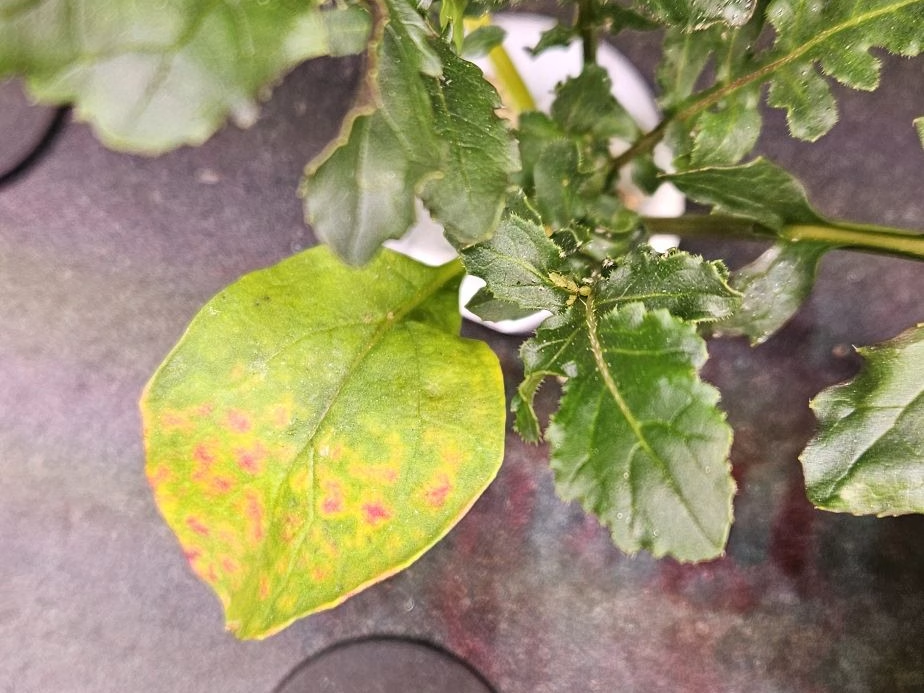
Phosphorus Deficiency
Symptoms: Leaves take on a purple, dark red, or burgundy tint, especially on older foliage. Flowering is delayed.
Cause: Cold water (below 60F, slows nutrient uptake), very high EC (salt stress), or using a grow formula when you should switch to bloom.
Fix: Ensure water temperature is 65-72F (use a small aquarium heater if needed). Reduce EC by a partial water change if above 2.0. Switch to a bloom-phase nutrient formula if flowering plants are not transitioning properly.
Potassium Deficiency
Symptoms: Brown or scorched edges on older leaves. Weak, floppy stems. Fruit doesn’t size well.
Cause: Low EC, underfeeding, or very high nitrogen (which can inhibit potassium uptake). Common in fast-growing fruiting crops late in the season.
Fix: Increase EC, shift to bloom formula (higher potassium), and ensure your nutrients are balanced. For emergency recovery, a partial water change with fresh nutrients often resets the system fastest.
Calcium Deficiency (Tip Burn)

Symptoms: Brown, papery edges on new leaf tips (especially in lettuce and herbs). “Blossom end rot” on tomatoes and peppers (dark sunken spots on the fruit bottom).
Cause: Inconsistent watering (calcium needs regular water movement to be transported into new leaves), high potassium or ammonium levels blocking calcium uptake, or inadequate air circulation near leaves.
Fix: Maintain consistent water pH and moisture. Ensure your bloom formula doesn’t have excessively high potassium. Increase air movement around plants. Use a calcium-rich nutrient supplement if the problem is severe and your base nutrient isn’t calcium-sufficient.
Magnesium Deficiency (Interveinal Chlorosis)
Symptoms: Yellowing between leaf veins while veins stay bright green. Creates a striped pattern on older leaves.
Cause: Low EC, very high potassium, or pH above 6.5 (which locks out magnesium).
Fix: Lower pH to 5.8-6.2, increase EC if it’s below target, and ensure your nutrient formula contains adequate magnesium (most quality brands do). A small dose of Epsom salt (magnesium sulfate) at 50 ppm can help in emergencies.
Micronutrient Deficiency
Symptoms: Specific patterns (e.g., iron deficiency shows yellowing new leaves with green veins; boron deficiency causes twisted or stunted new growth; zinc deficiency causes small, mottled leaves).
Cause: Very high pH (above 7.0), overfeeding (salt stress), or using incomplete nutrient formulas.
Fix: Confirm your nutrient brand includes all micronutrients. If deficiency persists despite correct pH and EC, use a chelated micronutrient supplement designed for hydroponics (e.g., Hydrofarm Micro Essentials or similar).
Nutrient Burn (Toxicity)
Symptoms: Leaf edges brown and crispy. Wilting even though water is available. Stunted growth despite high nutrient levels.
Cause: EC too high, overly concentrated nutrient solution, or salt accumulation from infrequent water changes.
Fix: Perform a partial or complete water change with fresh, low-EC water. Increase air circulation to reduce stress. Slow your EC increase in future crops (don’t jump from 1.0 to 2.0 suddenly; step up gradually).
Advanced Tips for Optimizing Nutrient Performance
Adjust EC Based on Water Uptake vs. Evaporation
In Arizona’s dry climate, evaporation often exceeds plant water uptake. As water evaporates, nutrients stay behind and EC climbs. Every 2-3 days, top off with plain water to maintain EC at your target. Only add concentrated nutrients if EC falls below target after accounting for water top-off.
Use a Separate Vegetative and Flowering Reservoir (For Serious Growers)
If you’re growing multiple crops simultaneously at different life stages, consider maintaining two nutrient solutions: one optimized for grow (higher nitrogen, lower K and P) and one for bloom (lower nitrogen, higher K and P). This eliminates mid-cycle transitions and prevents nutrient imbalances.
Monitor Calcium and Magnesium Separately
Many beginner nutrient formulas under-deliver calcium and magnesium in relation to potassium. If you’re growing high-demand crops like tomatoes or peppers long-term, monitor for calcium and magnesium deficiencies every 4 weeks. Have a supplemental calcium and magnesium product on hand (Cal-Mag) for quick fixes.
Test Water Hardness (For Advanced Diagnostics)
If you’re using tap water, hard water (high dissolved minerals like calcium and magnesium) can skew your nutrient balance. A water hardness test ($5-10) tells you exactly how much calcium and magnesium are already in your water, so you can adjust nutrient dosing. Soft water (RO or rainwater) gives you full control but requires careful dosing.
Keep a Nutrient Runoff Log for 4-Week Cycles
Every 4 weeks, collect a small sample of your nutrient solution directly from the root zone (in drip systems) or from your tank (in DWC). Test its EC, pH, and if possible, send a sample for a detailed nutrient analysis (NPK, calcium, magnesium, micronutrients). This shows exactly what your plants are consuming and helps you fine-tune future formulations.
Experiment With Organic Amendments in Hybrid Systems
If you’re using a recirculating system, try adding small doses of liquid fish emulsion or seaweed extract (1-2% of nutrient volume) alongside your synthetic base. Many growers report improved flavor and vigor. Start small because organics can clog systems if overdone.
FAQ: Hydroponic Nutrient Questions
Q: Can I use gardening soil fertilizer in my hydroponic system?
A: No. Soil fertilizers are designed to dissolve slowly and bind to soil particles. In hydroponics, they’ll create cloudy water, clog lines, and won’t dissolve properly for root uptake. Always use hydroponic-specific nutrients, which are fully water-soluble.
Q: How often should I change my nutrient solution?
A: Every 4-6 weeks, depending on system size, plant density, and water uptake. In Arizona’s heat, evaporation is faster, so you may need to change every 3-4 weeks. A full change resets salt buildup and prevents lockout.
Q: What’s the difference between PPM and EC?
A: PPM (parts per million) and EC (electrical conductivity) are two ways to measure nutrient concentration. EC is more reliable and doesn’t require brand-specific conversion charts. One EC unit ≈ 500 PPM (varies slightly by brand). Most modern growers use EC because it’s brand-agnostic.
Q: Is it okay to mix different nutrient brands?
A: Not recommended. Different brands have different nutrient ratios and salt formulations. Mixing them can cause precipitation (salts clumping together and falling out of solution) and nutrient imbalances. Stick to one brand per crop cycle.
Q: Can I use the same nutrient formula for all my crops?
A: Technically yes, but not optimal. A single all-purpose formula (like a balanced 1-1-1 or 1-1-2 ratio) will work for any plant, but you’ll achieve better results by using a grow formula early and a bloom formula during flowering. The yield difference can be 20-30%.
Q: What’s the best water source for hydroponic nutrients?
A: RO (reverse osmosis) water or rainwater are ideal because they start at zero PPM, letting you control nutrients completely. Tap water works but may be high in chlorine, chloramine, or minerals that skew your nutrient balance. Let tap water sit 24 hours or filter through carbon before use.
Q: How long does a bottle of nutrient solution last?
A: Depends on volume, plant count, and EC target. A 500 mL bottle of General Hydroponics Flora Series might dose 50-100 gallons depending on growth stage. A typical small home system (20-30 gallons) might use one bottle per 4-6 week crop cycle.
Q: Should I buy a three-part nutrient system or a one-part all-in-one?
A: Three-part systems (like Flora Micro, Gro, Bloom) offer more control and are cheaper per crop. One-part systems are convenient but less flexible for adjusting nutrient ratios between growth stages. For beginners, three-part is better value and easier to learn.
Q: What’s the ideal pH for all hydroponic crops?
A: 5.5 to 6.5, with 5.8-6.2 being optimal for most. At this range, all 17 essential nutrients are maximally available. Different crops have slight preferences (lettuce slightly lower, root crops slightly higher), but staying in this range works for nearly everything.
Q: Can I save nutrient solution between crop cycles?
A: If stored in a cool, dark, sealed container, most synthetic nutrients last 6-12 months. Organic nutrients degrade faster (1-3 months) especially if not refrigerated. If you save solution, test pH and EC before using; they may shift over time.
Q: Is mixing my own nutrients really worth the hassle?
A: Yes, if you run systems larger than 20 gallons or grow multiple consecutive crops. The cost savings compound quickly (40-60% reduction in nutrient expenses), and you gain full customization. For small or occasional growers, pre-made solutions are simpler.
Q: What’s the shelf life of dry nutrient salts?
A: Properly stored (cool, dry, airtight), most nutrient salts remain viable for 3-5 years or longer. Calcium nitrate and magnesium sulfate are hygroscopic (absorb moisture), so store in sealed containers with desiccant packs if your climate is humid (Arizona’s dryness is ideal). Check for clumping before each use; clumps indicate moisture infiltration.
Best Nutrient Products for Beginners and Experienced Growers
For Beginners (Simplicity and Value)
General Hydroponics Flora Series (Three-Part)
- Why: Industry standard for 30+ years. Three-part formula lets you adjust nutrients by growth stage. Works in all system types. Affordable for small systems.
- EC Range: 1.0 to 2.0 depending on crop
- Cost: ~$35-45 for a complete starter kit
- Best For: Any first crop; leafy greens through fruiting plants
- Why: Single dry powder mixes with water and Epsom salt. No three-part juggling. Excellent value for large systems.
- EC Range: 1.2 to 1.8 depending on water volume
- Cost: ~$20-30 for 5 lbs (can dose 100+ gallons)
- Best For: Growers who want to mix their own; cost-conscious scaling
For Advanced Growers (Precision and Specialty Crops)
General Hydroponics FloraNova (Concentrated Liquid)
- Why: Ultra-concentrated formulas; smaller bottle volume, less storage space. Works well in deep water culture and nutrient film technique.
- EC Range: Customizable from 0.8 to 2.2+
- Cost: ~$25-40 per bottle
- Best For: Experienced growers fine-tuning nutrient ratios
Hydro Organics (Fish-Based Organic)
- Why: Improves flavor in edibles and herbs. Contains natural bioavailable nutrients and beneficial compounds.
- EC Range: 1.0 to 1.6 (less predictable than synthetics)
- Cost: ~$18-28 per bottle
- Best For: Basil, mint, lettuce where flavor is priority
About the Author
This guide was written by a hydroponic systems engineer and sustainable agriculture specialist based in Phoenix, Arizona.
Key Takeaways
- Hydroponic nutrients must be water-soluble and dosed precisely; soil fertilizers will not work.
- Three macronutrients (N, P, K), three secondary nutrients (Ca, Mg, S), and nine micronutrients are essential.
- Synthetic nutrients offer precision and speed; organic nutrients offer flavor and sustainability.
- Leafy greens need higher nitrogen; fruiting crops need a grow phase, then a bloom phase with higher phosphorus and potassium.
- Target pH 5.5-6.5 and monitor EC weekly; adjust nutrient strength based on plant stage and water uptake.
- Deficiencies and toxicities appear fast in hydroponics; keep a weekly log and act quickly.
- Perform full water changes every 4-6 weeks to prevent salt accumulation and nutrient lockout.
- DIY nutrient mixing reduces costs 40-60% but requires precision, accurate scales, and detailed record-keeping.
Affiliate Disclosure: This article contains affiliate links. Purchases made through these links support soilfreeharvest.com at no extra cost to you, enabling continued research and content creation.
Share this:

Discover more from Soil Free Harvest
Subscribe to get the latest posts sent to your email.






22 Comments